Poetry at the Post: Fire Safety with Joshua Mehigan & The NFPA

Fire Safety
BY JOSHUA MEHIGAN
Aluminum tank
indifferent in its place

behind a glass door
in the passageway,

fire 1

Deep Spring cleaning—ugh!

Tuesday we tackled the kitchen pantry—pulled everything out, painted the shelving,  sifted through the expired spices and dusted off the fire extinguisher.

The National Fire Protection Agency’s code says portable fire extinguishers should be inspected monthly and should undergo thorough maintenance once a year. And while the yearly maintenance should be performed by a professional, you can perform the monthly checks

Oops!  Ok—good news!  The pressure gage indicator was still in the green … but barely. Professionally inspected? Never. Seriously. This is bad.

fire 2

OK! I’ve replaced my fire extinguisher and am keeping the monthly inspection tag handy. I’m going to do better in the future.

So—when was the last time YOU checked your fire extinguisher? Do it now and tell your friends.

320px-RobertFrost

I can’t resist. Here’s one more fire poem. (10 cent stamp! When was that?)*

Fire and Ice
BY ROBERT FROST

Some say the world will end in fire,
Some say in ice.
From what I’ve tasted of desire
I hold with those who favor fire.

*1974-75
Poetry at the Post: Music & Vergil

Passages from Virgil’s First Georgic
BY ROBERT FITZGERALD
I. Until Jove let it be, no colonist
Mastered the wild earth; no land was marked,
None parceled out or shared; but everyone
Looked for his living in the common world.

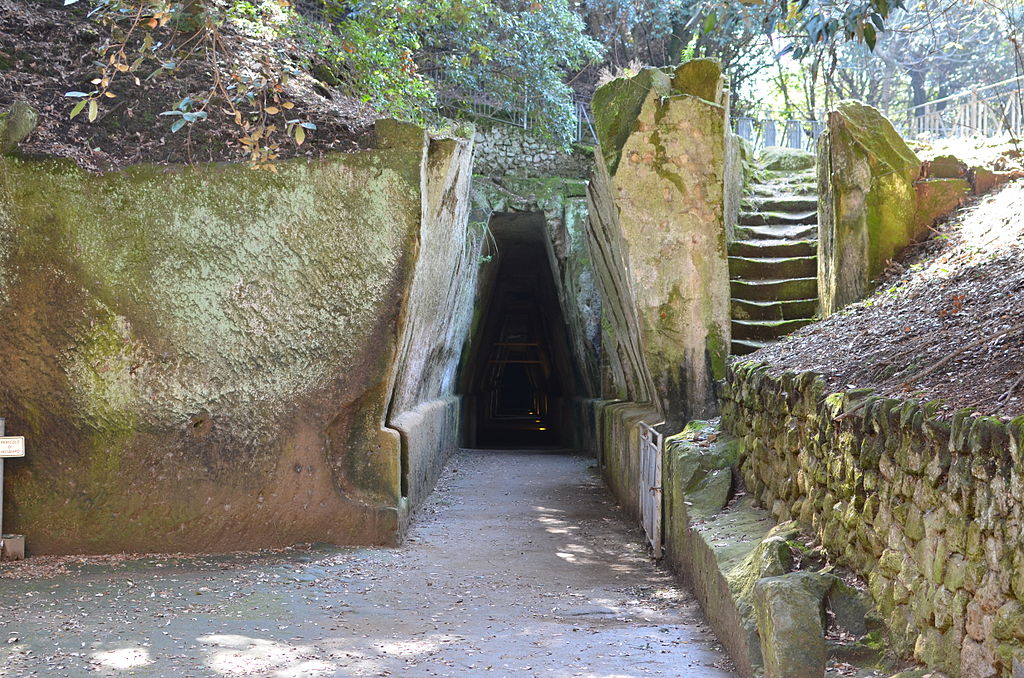
“Cumae Cave of the Sibyl AvL” by AlexanderVanLoon – Own work. Licensed under CC BY-SA 3.0 via Wikimedia Commons –

CALL FOR PAPERS!

Music in the Time of Vergil Symposium Cumanum 2016 June 21-24, 2016

Director: Timothy J. Moore (Washington University in St. Louis)

The Vergilian Society invites proposals for papers for the 2016 Symposium Cumanum at the Villa Vergiliana in Cuma, Italy.

The last twenty-five years have seen a marked increase in scholarship dedicated to ancient Greek and Roman music. These studies have tended to concentrate on music in the Greek world, or to Rome of the early to mid-Republic, the time of Nero, or late antiquity. Yet music clearly played a highly significant role in the life and literature of Augustan Rome. Vergil and his contemporaries refer repeatedly to singing and to musical instruments; the Augustan age marked important developments in pantomime, which was to become the most popular form of musical entertainment in the Empire; images of music appear often in Augustan art; and this period witnessed refinements in the music that accompanied private convivia. This conference will bring together scholars from across the world to evaluate the musical context of Vergil’s poems.

Virgil Reading the Aeneid to Augustus, Octavia, and Livia by Jean-Baptiste Wicar, Art Institute of Chicago

Papers might address topics such as theatrical music, music in Augustan literature, archaeological evidence for music, ways in which Augustans responded to the musical influence of Greece, or musical performances of Vergil’s works.

Papers will be 20 minutes long with ample time for discussion. The symposium will include three days of papers, discussion, and visits to Vergilian sites.

Jupiter and Juno, by Annibale Carracci.

Presenters will include Andrew Barker (Keynote Address), Timothy Power, and Eleonora Rocconi.

Interested scholars should send an abstract of no more than 300 words to tmoore26@wustl.edu by December 1, 2015.

Poetry at the Post: Paraguay? Say What?

Ayvu Membyre;
Hijo de aquel verbo;
Offspring of the Distant Word
Guaraní and Spanish poems
by Susy Delgado
English translations by Susan Smith Nash

En un despertar
se pegó
a mi lengua
estalló
en mi boca,
cosa insospechada,
el habla.

Petei ko’éme
oja vaekue
che kure,
opu vaekue
che jurúpe,
mba’e guasuete,
ñe’e.

In an awakening
it glued itself
to my tongue
it lingered
in my mouth,
an unexpected thing,
the spoken word.

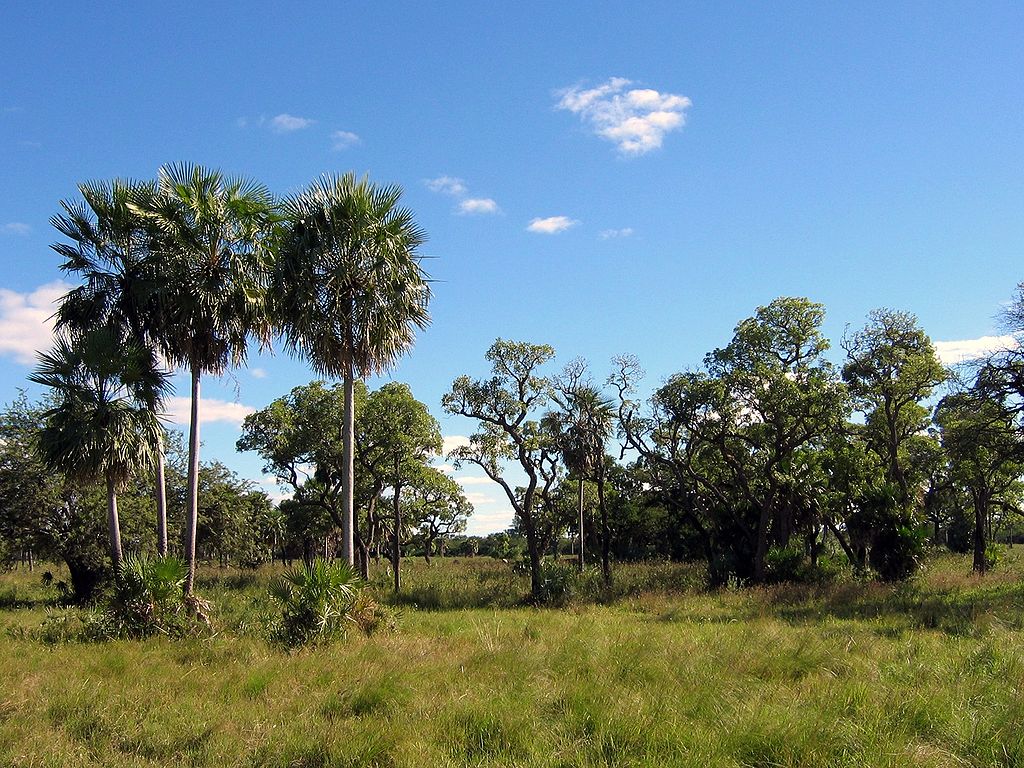
Landscape in the Gran Chaco, Paraguay, May 2004. Photo by Ilosuna. CC by 1.0
Landscape in the Gran Chaco, Paraguay, May 2004.
Photo by Ilosuna. CC by 1.0

How much do you know about Paraguay?

I admit it. I know little so I’m currently on the hunt for Paraguayan poets. (I’ve discovered you can learn a lot about a place though its poetry.)

Voila! Susy Delgado is my first encounter.

I’m continuing my search for more poets so if you have any suggestions, please send them along. If the poems are in español, no problema. 

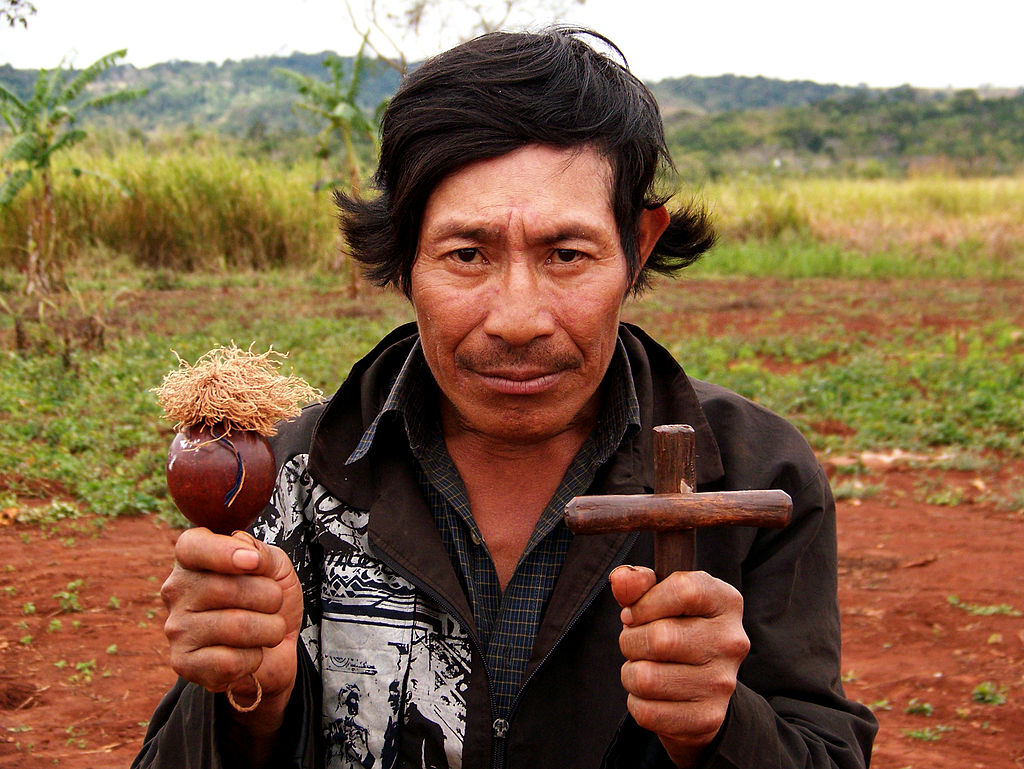
Guarani spiritual leader holding cross and gourd rattle, Paraguay, 2006 photo courtesy of Frank O'Weaver CC by SA 3.0
Guarani spiritual leader holding cross and gourd rattle, Paraguay, 2006
photo courtesy of Frank O’Weaver CC by SA 3.0

“Much of the nation’s literature is written in Guaraní, a native American language which was old when the Spanish conquistadors arrived nearly 500 years ago. Although other AmerIndian languages still continue to be spoken throughout Latin America, this may be the last one to still be part of a mainstream literary culture.” ( First Light: : An Anthology of Paraguayan Women Writers, edited by Susan Smith Nash)

Asunción's Downtown in 1872
Asunción’s Downtown in 1872

Thinking of a visit to Asunción—the capital of Paraguay? Here’s what the New York Times had to say a couple of years ago,

By Embajada de EEUU en Paraguay [CC BY 2.0]

Poetry at the Post: 1215—A Very Good Year!

The Stag at Eve
BY LESLEY JENIKE
In my cries I don’t cease (some dumb bird)
when from the swinging trees a stag at eve

comes prancing, body dappled by the shadows
of dripping leaves…

King John on a stag hunt.

Midwest Medieval History Conference

October 9–10, 2015
Indiana State University, Terre Haute

CALL FOR PAPERS!

It Was A Very Good Year: The Impact of 1215 on the Medieval World

Keynote Speaker: Professor Richard Helmholz, University of Chicago

The year 1215 will be known forever among medieval historians for two groundbreaking events, the Fourth Lateran Council of Pope Innocent III and the creation of Magna Carta by the barons rebelling against King John of England.

Pope Innocent III wearing a Y-shaped pallium.

MMHC welcomes papers on any topic of medieval history, especially proposals for papers on topics relevant to the theme of the impact of 1215. In addition, we welcome paper proposals focusing on the debate surrounding the notion of the development of a “persecuting society” in medieval Europe especially after 1215.

Please send abstract (300 words maximum) via email attachment to Linda Mitchell, Program Chair, mitchellli@umkc.edu. Deadline for paper proposals: June 30, 2015.

For information about the conference or local arrangements, please email local host, Steve Stofferahn (Steven.Stofferahn@indstate.edu) and/or program chair, Linda Mitchell (mitchellli@umkc.edu).

The Magna Carta (originally known as the Charter of Liberties) of 1215, written in iron gall ink on parchment in medieval Latin, using standard abbreviations of the period, authenticated with the Great Seal of King John. The original wax seal was lost over the centuries.[1] This document is held at the British Library and is identified as
The Magna Carta (originally known as the Charter of Liberties) of 1215, written in iron gall ink on parchment in medieval Latin, using standard abbreviations of the period, authenticated with the Great Seal of King John. The original wax seal was lost over the centuries.[1] This document is held at the British Library and is identified as “British Library Cotton MS Augustus II.106
Continue reading “Poetry at the Post: 1215—A Very Good Year!”

Poetry at the Post: The Summer of 1816—The Year Without a Summer

UPDATE: Look who just acquired Mary Shelley first editions. 

Mary Shelley Acquisitions
We’re delighted to announce that the Rosenbach has recently acquired a rare first edition (1818) of Mary Shelley’s Frankenstein: or, The Modern Prometheus, as well as first editions of Shelley’s novels Valperga (1823), The Last Man (1826), The Fortunes of Perkin Warbeck (1830), and Falkner (1837). (Rosenbach, Philadelphia)

Alastor; or, The Spirit of Solitude
BY PERCY BYSSHE SHELLEY
Nondum amabam, et amare amabam, quaerebam quid amarem, amans amare.—
Confess. St. August.

Earth, ocean, air, belovèd brotherhood!
If our great Mother has imbued my soul
With aught of natural piety to feel
Your love, and recompense the boon with mine;

Percy Bysshe Shelley, by Alfred Clint (1819)

1816, THE YEAR WITHOUT A SUMMER

To be alive in the years 1816-18, almost anywhere in the world, meant to be hungry. Across the globe during the so-called “Year Without a Summer”—which was, in fact, a three-year climate crisis—harvests perished in frost and drought or were washed away by flooding rains. (From 1816, The Year Without a Summer)

Mt. Tambora Sumbawa, Indonesia Its eruption in 1815 caused global anomalies, including the year without a summer in 1816.
Mt. Tambora
Sumbawa, Indonesia
Its eruption in 1815 caused global anomalies, including the year without a summer in 1816.

Continue reading “Poetry at the Post: The Summer of 1816—The Year Without a Summer”

Kzoo 2016 cfp: Late Old English Verse

A call for papers for 2016 re Old English poetry datable to between c. 950 and 1150!

Eric Weiskott's avatarEric Weiskott

A call for papers for a Special Session at the 51st International Congress on Medieval Studies in Kalamazoo, MI (May 12-15, 2016). Send abstracts to eric.weiskott@bc.edu by September 15, 2015.

Late Old English Verse

This session focuses on Old English poetry datable to between c. 950 and 1150. Many of these poems are embedded in late annals in the Anglo-Saxon Chronicle; most of them were snubbed by being excluded from the standard edition of Old English verse, the Anglo-Saxon Poetic Records (Columbia Univ. Press, 1931-53). As a result, late Old English poems as a group are severely understudied. Indeed, because Old English verse is written out in unlineated text blocks in manuscript, and because most theories of Old English meter are based on putatively pre-950 poems like Beowulf, scholars disagree about the exact number of extant late Old English poems. As recently as 2007, Thomas Bredehoft could identify an entirely new, never-before-discussed poem. This session…

View original post 59 more words

Poetry at the Post: The Lizard In Us All

A Lizard in Spanish Valley
BY WENDY VIDELOCK
A lizard does not make a sound,
it has no song,
it does not share my love affairs
with flannel sheets,
bearded men,…

Feral Jackson's chameleon from a population introduced to Hawaii in the 1970s
Feral Jackson’s chameleon from a population introduced to Hawaii in the 1970s

The lizards are out in my neighborhood—on footpaths, sidewalks and in the garage. I kind of like them—the way they scurry to and fro…

From Professor Wikipedia I have learned that “many lizards have highly acute color vision. Most lizards rely heavily on body language, using specific postures, gestures, and movements to define territory, resolve disputes, and entice mates.”

Now I watch my lizards more closely to see what they are up to. Mine are, of course, not so brightly defined as the Jackson’s chameleon. They are only little brown squamate reptiles yet they are no less charming.

But sitting here the afternoon,
I’ve come to believe
we do share a love affair
and a belief —
in wink, blink, stone,

#mylifeisabestiary

Poetry at the Post: The Chapel of Love and A Marriage Proposal at the White Buffalo Bar

The Garden of Love
BY WILLIAM BLAKE
I went to the Garden of Love,
And saw what I never had seen:
A Chapel was built in the midst,
Where I used to play on the green.

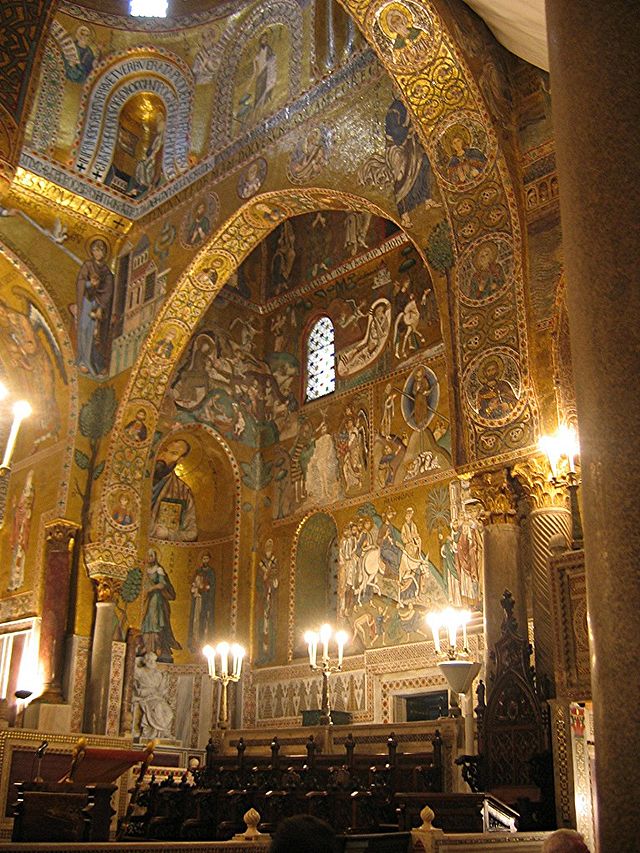
“Chapelle Palatine”. Licensed under CC BY-SA 3.0 via Wikimedia Commons – photo courtesy of Urban

The White Buffalo Bar at the Gage Hotel was hopping last night. There were tourists from Illinois and Massachusetts, several bikers (always), and a group of a dozen some ladies marking a friend’s birthday. We were  enjoying pre-dinner drinks when a random man  stood up and announced, “Attention, please! I have something important to say.” His look was urgent so the room grew suddenly silent.

“I just proposed to this beautiful woman,” he began, “and she said yes. To celebrate,  I’d like to buy you all a drink.” We clapped hands and cheered. Of course! One of the biker guys walked over to the soon-to-be-groom and shook his hand. “Congratulations, man” while the group of ladies who were beginning to feel their margaritas began to sing “Chapel of Love.”  (Click the link!) How fun was that! Ok,  I admit, you probably had to be there …. but it does take us back to William Blake.

Blake is a slippery fellow. His poems begin here  but before you know it you’re there and sometimes you’re not sure where there is. In “The Garden of Love,” we begin with a chapel constructed where the speaker “used to play on the green” and soon we’re staring at clergy and death and theological restriction.

But, really William! Life can just be fun, too—margaritas, a marriage proposal and a round of “Chapel of Love.”

Blake's The Lovers' Whirlwind illustrates Hell in Canto V of Dante's Inferno
Blake’s The Lovers’ Whirlwind illustrates Hell in Canto V of Dante’s Inferno

Continue reading “Poetry at the Post: The Chapel of Love and A Marriage Proposal at the White Buffalo Bar”

Poetry at the Post: Why I’ve Taken to Wearing Aprons

THE FLORAL APRON by Marilyn Chin

The woman wore a floral apron around her neck,
that woman from my mother’s village
with a sharp cleaver in her hand.
She said, “What shall we cook tonight?

Embroidered Aprons from Oaxaca, Photo Credit: Lola's Cocina
Embroidered Aprons from Oaxaca, Photo Credit: Lola’s Cocina

I did not grow up with the cultural heritage of aprons. The only time I can recall my mother wearing an apron was on Thanksgiving Day. For her, that apron was a small symbol of protest. Moms did not have days off. She had to work while the rest of the family crowded around the TV set to watch the Macy’s Thanksgiving Day Parade. 

I must admit. She had a point. None of us ever offered to help.

It was in Oaxaca that I rediscovered the apron. So beautifully crafted, the aprons of Oaxaca are omnipresent. I’ve come to understand their utility. When a woman puts on her apron, she is saying to the world, “Ok, now I’m getting ready to do some important work.” Yes, that’s why I’ve taken to wearing aprons. They assert a division in the day’s labor.

Want to know more about the aprons of Oaxaca? You can read about Martha, an apron maker from San Miguel del Valle, Oaxaca here.

Poetry at the Post: Setting Goals for Running, or Memorizing Poems Part I

from the Last Canto of Paradiso
BY DANTE ALIGHIERI
TRANSLATED BY ROBERT PINSKY
Read the translator’s notes
xxxiii, 46-48, 52-66

As I drew nearer to the end of all desire,
I brought my longing’s ardor to a final height,
Just as I ought. My vision, becoming pure,

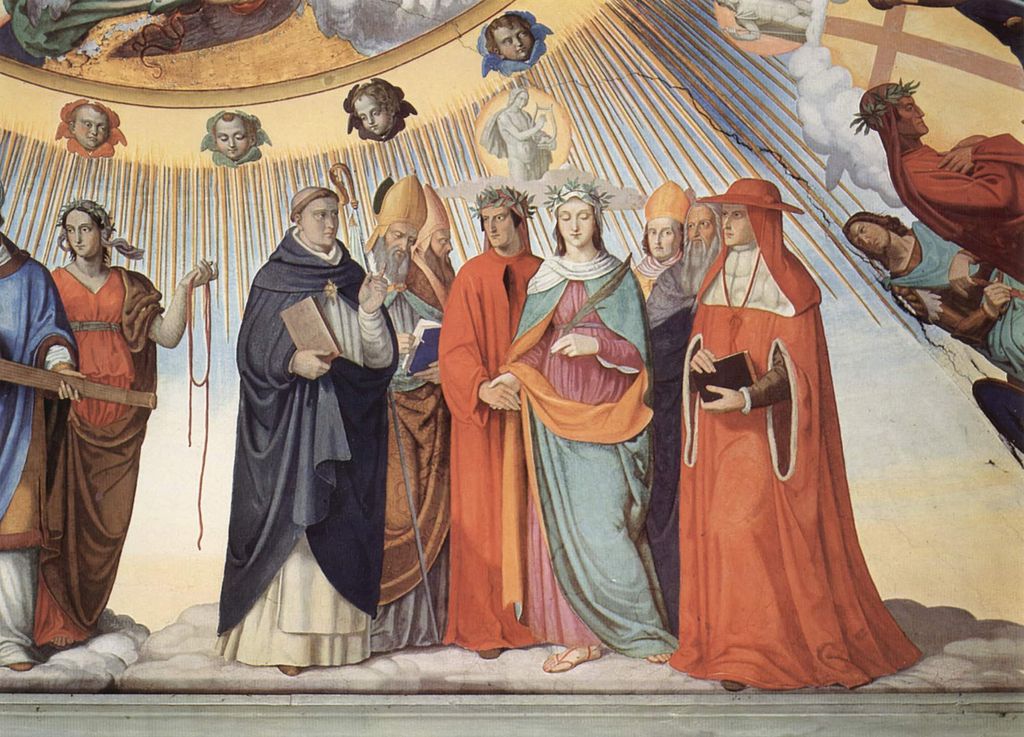
Dante and Beatrice speak to the teachers of wisdom Thomas Aquinas, Albertus Magnus, Peter Lombard and Sigier of Brabant in the Sphere of the Sun (fresco by Philipp Veit), Canto 10.

Although I’m good at establishing deadlines and deliverables in my work, I tend to fall apart when it comes to personal goal setting. Perhaps, you are like this too.  So—instead of bemoaning my failure as a human being, I decided to be bold and dynamic. I find short-term goals are more doable than long so here are this month’s goals:

1. Work up to running (jogging?) the 3 mile loop in my hood. I’m a walker not a runner so vamos a ver on this one.
2. Memorize a stanza from Paradiso each morning–in English and Italian.  As Caroline Kennedy explains, “If we learn poems by heart, we will always have their wisdom to draw on, and we gain an understanding that no one can take away.”

I’ll be reading from the Paradiso each morning at 7 am at the Post before my walk/run. Come join me!

What are your goals this month? this summer?

May 25, 2014
May 25, 2014