Poetry at the Post, Day 7: Here’s to the Tomato!

“Ode to Tomatoes” by Pablo Neruda, as translated by Margaret Sayers Peden

The street
filled with tomatoes,
midday,
summer…

“It’s time” or soon it will be time for tomato season in Texas. Neruda’s poem “Ode to Tomatoes” reminds me of how much I enjoy garden grown tomatoes. There is just no substitute. Greenhouse tomatoes fill the gap in a pinch but they are just not the same. In Chile, the season is December and the tomato “unabated/invades the kitchen.”

You can read the full poem here in both Spanish and English: http://www.soupsong.com/ftomato2.html

I first read this poem several years ago. What I learned about craft from this poem and the others in the collection Odas Elementales , or Odes to Common Things is that you can write a poem about anything: a tomato, an onion, a lemon, even a pair of socks. I wrote an “Ode to High Heels”, modeled on Neruda’s “Ode to Tomatoes,” because I have a fondness for heels. They make me feel majestic. The perfect heel, for me, is 2 3/4″—not always so easy to find.

So much has been written about Neruda that I have nothing new to add, except that I read today that Neruda chose his pen name after the Czech poet, Jan Neruda.

Jan Neruda's grave Vysehrad Cemetery, Prague  Photo courtesy of Miaow Miaow , October 2005
Jan Neruda’s grave Vysehrad Cemetery, Prague
Photo courtesy of Miaow Miaow , October 2005

Since no one has been joining me at the post each morning, I decided to read to a couple of my neighbors. They really liked this poem.
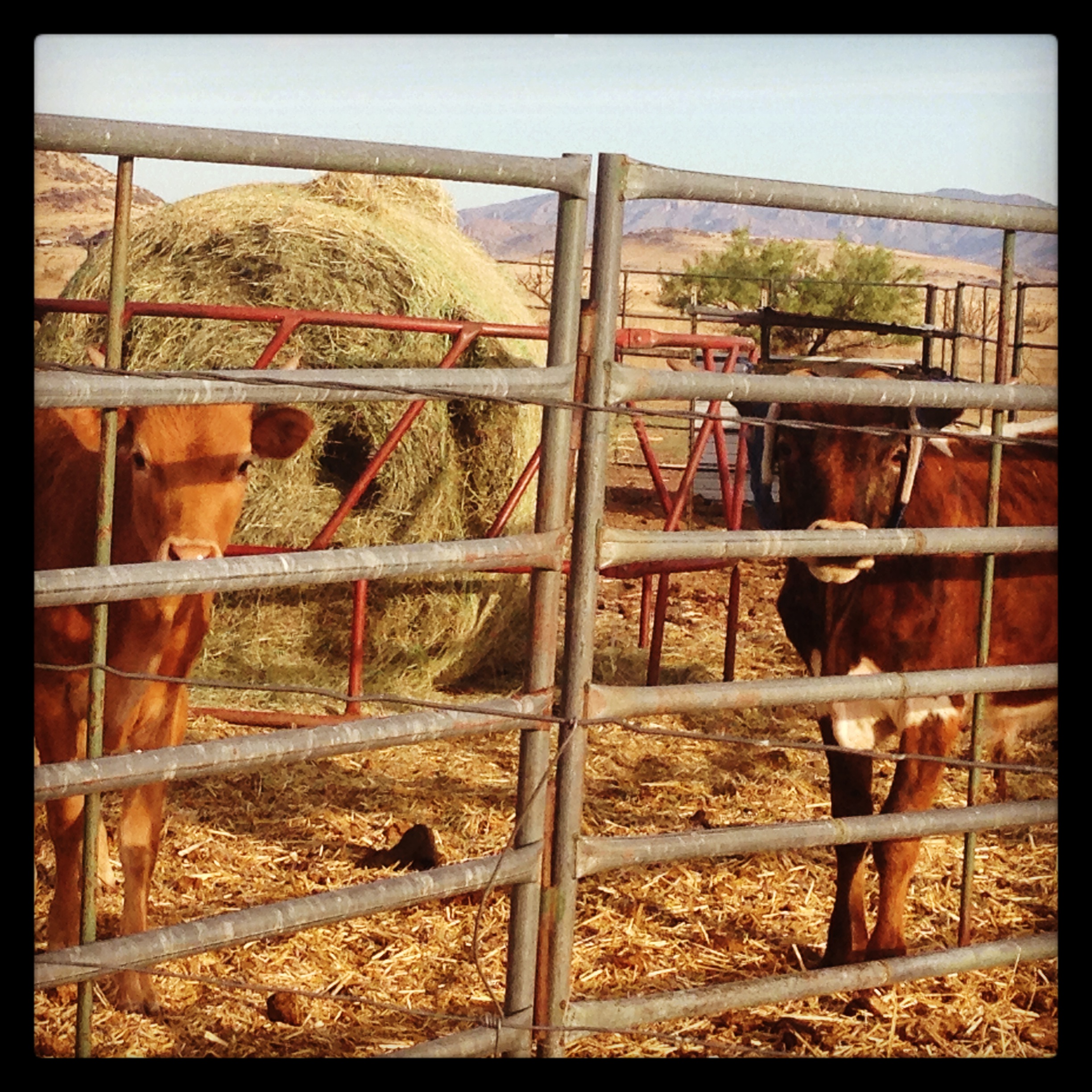
If you happen to be in the Austin, TX area and are looking for a full time seasonal job, Johnson’s Backyard Garden is hiring Tomato Packing Crew Members now.

https://www.jbgorganic.com/blog/2013/05/jbg-is-hiring-for-summer/

Thanks to Julie Haines for her request for Neruda. It was so much fun to reread this poem.
Poetry at the Post, Day 6: Where is Sogamoso?

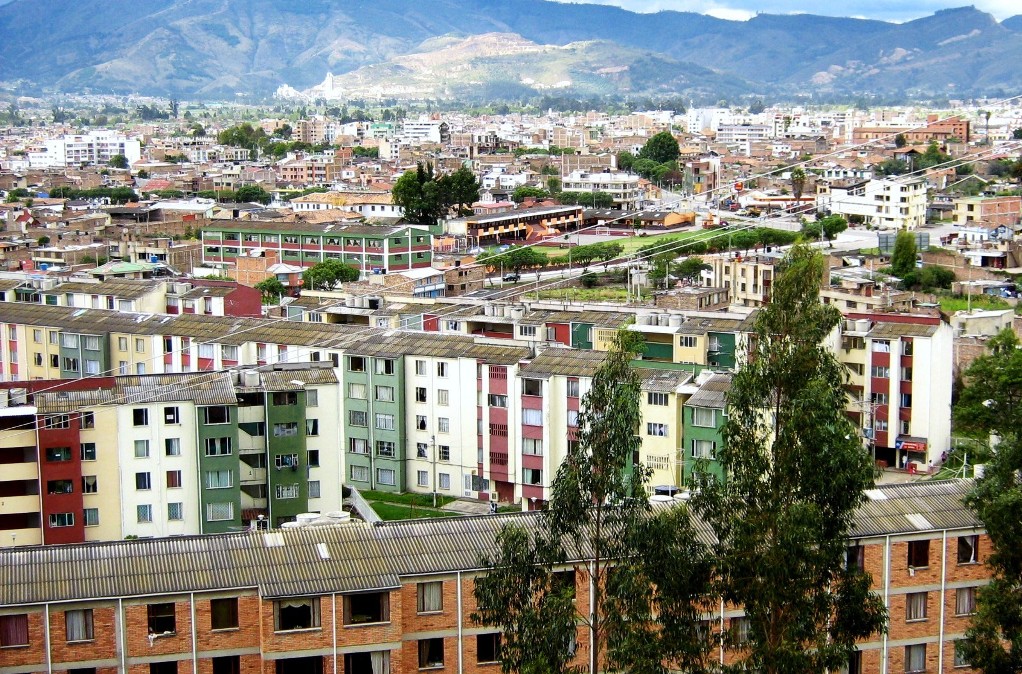
Panoramico Sogamoso Luis Photo courtesy of Enrique Alvarez Licence Art Libre
Panoramico Sogamoso Photo courtesy of Luis Enrique Alvarez Licence Art Libre

“At Twilight on the Road to Sogamoso” by Maurice Kilwein Guevara

The sun ins beginning to go down
over a field of yellow onions…

Although it was just after sunrise, I elected Guevara’s poem because I was curious. Where IS Sogamoso? Well, as it turns out it is a city in Colombia, Guevara’s native country.

Located in the valley of Iraca, according to Chibcha mythology, it is the place of the creation of the Sun.

Somedays I feel as if the center of the Sun is right here in Mano Prieto, Texas—and today it is very plump and jolly!

Sadly, “At Twilight on the Road to Sogamoso” leads us to a different reality. You can read the entire poem here: http://www.poetryfoundation.org/poem/247396

May 28, 2014
May 28, 2014

Poetry at the Post, Day 5: Belly Dancer by Diane Wakoski

May 27, 2014
May 27, 2014

I had the pleasure of meeting Diane Wakoski a few years back in Tulum, Mexico. We were staying at the same small inn downtown. In Tulum for the program, US POETS IN MEXICO, Diane gave a reading one night in a palapa by the beach. I was mesmerized by the poems, her presence.

Belly dancers bedazzle me too. I almost signed up to take belly dance lessons one year in San Antonio, Texas. That was the year I tried lots of strange stuff. While reading “Belly Dancer” this morning at the post, I could still recall that desire to wear the long silk skirt, the beaded fringe.

Where does this thin green silk come from that covers my body?
Surely any woman wearing such fabrics
would move her body just to feel them touching every part of her.

You can read the entire poem here: http://www.poetryfoundation.org/poem/176001
And for more information on US POETS IN MEXICO, visit http://www.uspoetsinmexico.org. In 2014, the program will be held in Oaxaca, Mexico October 27-31.

Poetry at the Post, Day 4: Dante’s Inferno

May 26, 2014

May 26, 2014
May 26, 2014

This morning I picked up Mary Jo Bang’s contemporary version of Dante’s Inferno and took it to the post. I let the wind select the passage.

I ended up on page 74, deep in mud and in the 5th level of hell. This is place reserved for those who lived sullen or angry lives.

I was standing there staring
At a swamp of naked people covered in mud,
All of whom looked as if they were furious.

What I love about Dante is that he reels me into this fantastic journey down into the depths of hell but I end up in the innards of my own life—and how I live it. I must admit. I struggle with anger. Fortunately, there are ways put it aside. For me, it is with yoga.

So, today I give thanks for The Well and Prana Yoga. If you find yourself in Marfa, Texas or Oaxaca, Mexico, check them out. They are both very special places.

http://thewellmarfa.com

http://pranayogaoaxaca.com

*We’ll be will be reading Dante’s Purgatorio in the virtual literary salon. Date: TBD. Visit the The Global Reading Group tab more more information. Anyone have a favorite translation?

Alice-Catherine Press Sets Up Shop in Far West Texas

ACPress1

supplies were located, unpacked and sorted
know what I have and need.
a few glitches—
like a mouse invasion (yikes!)—
production should begin soon
at Alice-Catherine Press-El Norte

Alice-Catherine Press is a kitchen-table publisher of hand-made books of poetry.
Casa 300
Off the road between Marfa & Fort Davis, Texas

Poetry at the Post, Day 3: “Ode” by Arthur O’Shaughnessy

Kensai Greem Cemetery, December 2005 Photo courtesy of Justin Cormack Creative Commons Attribution-Share Alike 2.0 Generic license.
Kensai Greem Cemetery, December 2005
Photo courtesy of Justin Cormack
Creative Commons Attribution-Share Alike 2.0 Generic license.
“Ode” by Arthur O’Shaughnessy (1844-81)

We are the music makers,
And we are the dreamers of dreams,

A British poet of Irish descent, O’Shaughnessy earned his living as an herpetologist at the British Museum. His real love, however, was not the frogs and snakes but literature, especially poetry.

For me, this poem is special because it reminds me of the importance of beginning new dreams. Instead of focusing on the past—its successes and failures– and the passage of time and generations, I like to think of the dream that is being conceived. (And, Yes! My dream is coming true! #lateantiquitystudiesBudapest2014)

For each age is a dream that is dying,
Or one that is coming to birth.

Sadly, O’Shaughnessy died of a “Chill” at the age of 36. He is buried at Kensai Green Cemetery in London. For the full poem and a bit of fairy dust, visit http://www.poetryfoundation.org/poem/242554

May 25, 2014
May 25, 2014

Poetry at the Post Day 1: “Rain” by Edward Thomas

Rain
BY EDWARD THOMAS
Rain, midnight rain, nothing but the wild rain

poetryathepostday1.3

Yes, I thought. “Rain” would be the perfect poem for Day 1 of Poetry at the Post as I was celebrating last night’s rain, a welcome gift, upon my return to my home in Far West Texas. Rain in the desert is good but rain in May in the Chihuahuan desert is super!

I continued to read on. There was rain but there was something more. This was a poem about death and dying—and war. Here is a piece that grounds us in the oft forgotten realities of this Memorial Day Weekend.

Born in 1878 in London to Welsh parents, Edward Thomas graduated from Oxford and earned his living as literary reviewer. Although he thought highly of poetry, Thomas did not write his first poem until the age of 36—only after being urged on by his friend and neighbor, the American poet, Robert Frost. His poetry career was brief, a mere three years. In 1915, Thomas enlisted in the infantry and was killed in action in the Battle of Arras in 1917 shortly after arriving in France.

But here pray that none of whom once I loved
Is dying tonight or lying still awake
Solitary, listening to the rain…

.

photo by John M. Jennings

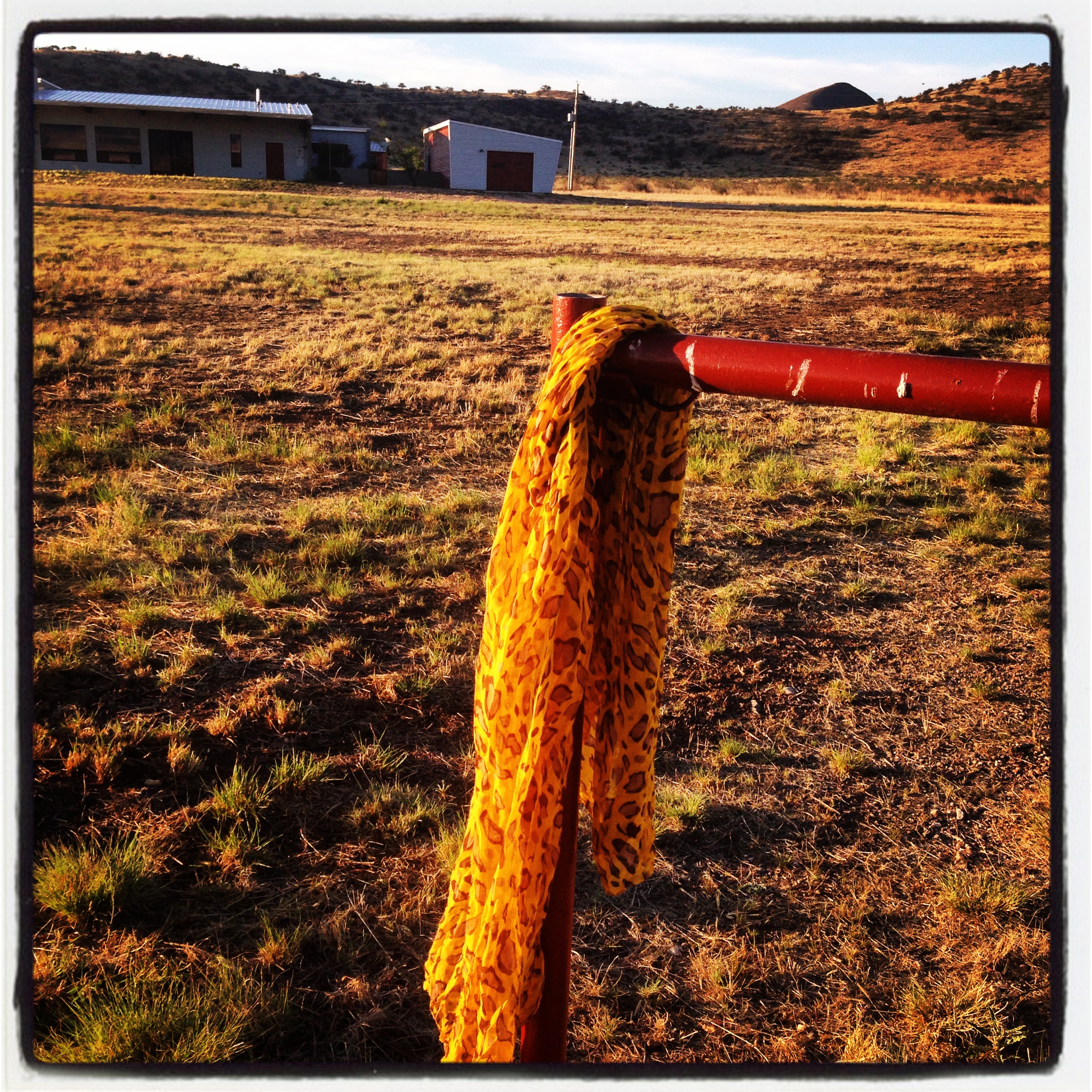
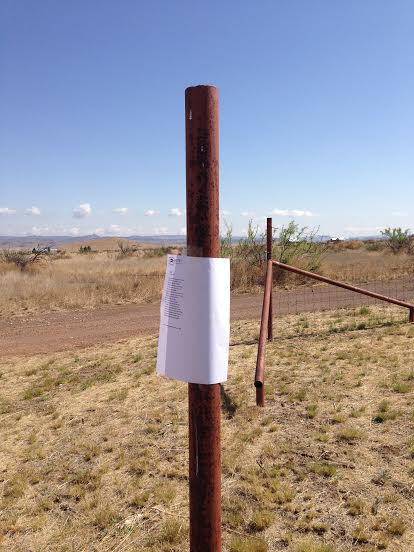
While in residence, I’ll be reading poem a day at the post in Mano Prieto. If you are in the area, stop by for the reading. Times vary each morning so check in first before you make the drive. You’ll be able to see each day’s post under the tab, “Poetry at the Post.”

Eagles, Parsley & Greaves

May 10, 2014

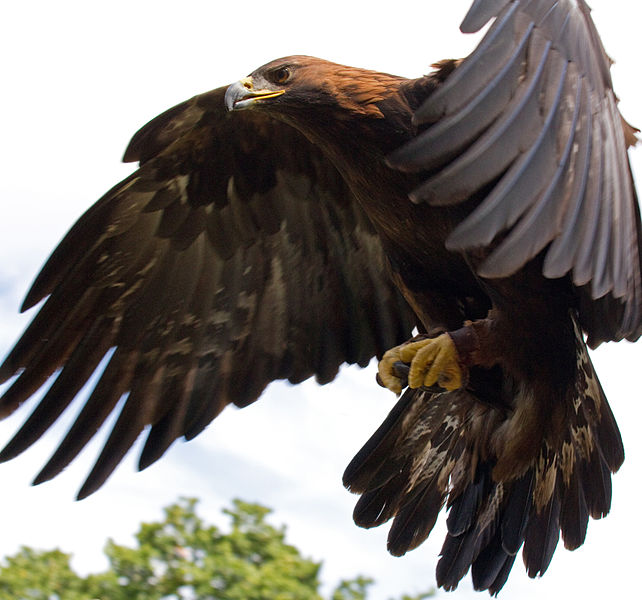
Golden Eagle  Photo courtesy of Tony Hisgett from Birmingham, UK

Golden Eagle
Photo Courtesy of Tony Hisgett from Birmingham, UK
Creative Commons Attribution 2.0 Generic license

Let’s talk birds! Well, eagles specifically and their symbolism in THE ILIAD.
http://birdnote.org/show/birds-omens-iliad
As we journey with Homer to war, we’re also talking parsley, goat cheese & greaves!

Join us for part 2 of our special 2-book literary salon with OMERUS by Derek Walcott:June 1-15th, 2014. Send a note to alicecatherinej@gmail.com to join. Free and open to all.

The Poetics of Laundry—A Garden Looking To Be Tamed

laundry1

Doing the laundry is akin to reading The Iliad. There is the ritual of loading the washer. If not done regularly, the task of clean clothes becomes a burden. Such is the work of The Iliad. If a commitment to read daily is not made, your charge to push through to the end of it seems overwhelming.

A charge it is as the description of war takes up at least half of The Iliad. And no two battles are the same. “…every battle rises above the last in greatness, horror, and confusion.” (Alexander Pope)

Achilles Lamenting the Death of Patroclus by Nikolai Ge

In Oaxaca, my life is easy. I stuff my clothes in a bag and carry them up a cobbled pathway and drop them off at Lavanderia Burbumatic. Some days, it is loco at the laundry. The mound of clothes is a Mount Olympus.

I imagine the lavandera lifting her head from those mounds and crying “Oh dear brother, help us! Give us your horses—so I can reach Olympus….” (The Iliad, 5: 359-60, as translated by Robert Fagles.)

I don’t know how they keep it all straight yet week after week whatever I put in in that bag, I get back—unlike at home. There a sock-eating Cyclops that lives inside my washing machine. He must. How else could so many sock “singlets” go missing?

My comrades left me here in the Cyclops’ vast cave…It’s a house of blood and gory feasts, vast and dark inside. (The Aeneid, as translated by A. S. Kline) Oops! Mixing classics.

The Cyclops by Odilon Redon

Burbumatic must be monster free as my socks, like vowels in Ionic diphthongs, are reunited and layered between the pants and leggings. Each piece of clothing is folded art, a cotton origami.

Budapest is in my future. I’m very excited. I will miss Oaxaca, my neighborhood laundry, yet soon I’ll be walking the streets of Buda looking for my local patyolat. Patyolat??

Spoiler alert! At last, when young Dawn with her rose-red fingers shown once more, …the Trojans buried Hector breaker of horses. (The Iliad, 24:926, 944, as translated by Robert Fagles.)

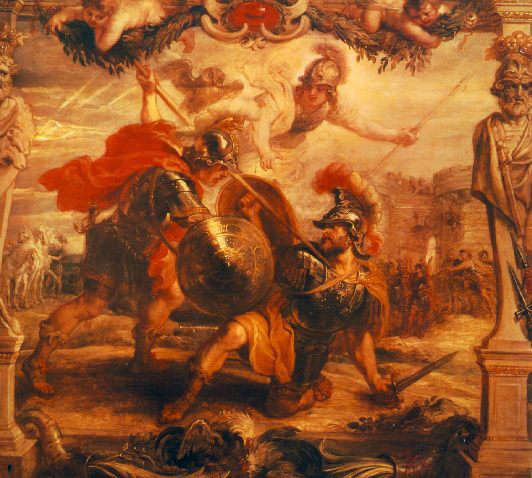
Achilles Slays Hector

We’re reading The Iliad this May in the Global Reading Group, a virtual literary salon. Contact me to join @ alicecatherinej@gmail.com. And, it’s not all battles! We’re looking at food too!

http://www.kalofagas.ca/2009/05/24/parsley-salad-μαϊντανοσαλάτα-σύρου/

The Hungarian National Epic

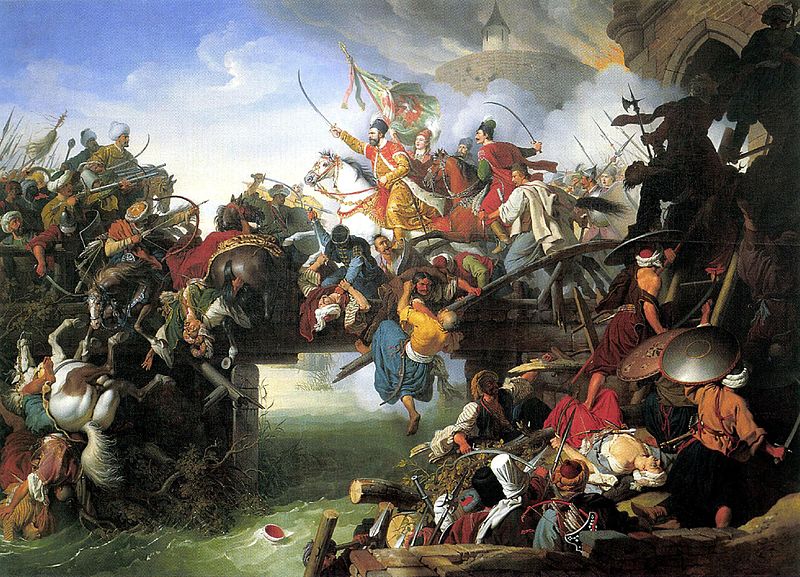
Nikola Šubić Zrinski's Charge from the Fortress of Szigetvár
Nikola Šubić Zrinski’s Charge from the Fortress of Szigetvár by Johann Peter Kraft, 1825

I’m addicted to epics! I admit it. I’ve read 13 of them so far but a few days ago I stumbled upon The Siege of Sziget, the Hungarian national epic. Where had this one been hiding? Within the Hungarian language, apparently, as it has only recently been published for the first time ever in English. (THE SIEGE OF SZIGET by Miklos Zriny, as translated by László Kõrössy. Catholic University of America Press, 2011.)

The Siege of Sziget is a latecomer in the European epics. Written in 1647 by Miklós Zríny, it tells the story of the final battle of another Miklós Zríny (the author’s great granddad) against the Ottomans in 1566. The Ottomans were the victors but at a heavy cost with 20,000 Turks lost including Sultan Suleiman, their leader. However, it stopped the Ottomans from pushing forward towards Vienna that year and so from the Christian point of view, the Battle, although a loser, was successful.

From the the little I have read so far, The Siege of Sziget has all the characteristics of the traditional epic. It begins with an invocation to a Muse; there is a bloody battle; and things get mixed up (or conveniently arranged depending on one’s point of view) by the interference of the gods, or in this case, God. I’ll be adding The Siege of Sziget to the list of upcoming epics in the Global Reading Group, a virtual literary salon, so send me a note if you’d like to read along. http://moiramcpartlin.blogspot.co.uk/2014/04/epics-on-global-scale.html

For more info on The Siege of Sziget and its translation, visit

http://www.academia.edu/3039358/Review_of_Miklos_Zrinyi_The_Siege_of_Sziget_trans._Laszlo_Korossy_in_Times_Literary_Supplement_9_March_2012

And, as an extra bonus, here is Szigeti veszedelem, or The Siege of Sziget , in Hungarian.

http://szelence.com/zrini/index.html#tart

Suleiman the Magnificent

Suleiman the Magnificent as a young man by Nakkas Osman, 1579.
Topkapi Palace Museum
Istanbul Turkey
Photo courtesy of Bilkent University

Something of interest I discovered was that Suleiman, known as Suleiman the Magnificent, was also a poet and a big time supporter of the arts during his 46 year reign. Most of his poems were written to his wife, the daughter of an Orthodox priest who had been abducted and sold as a slave in Constantinople. Reportedly, the great Suleiman was quite mad about Hurrem Sultan—so much so that she was the only one of his harem he made his legal wife. You can read one of his lovely ghazals here: http://www.ottomansouvenir.com/General/Turkish_Poetry.htm#Gazel6#lateantiquitystudiesBudapest2014

My weekly prompt (feel free to use it too): Write a ghazal. Here are some words to consider incorporating in the poem: to crush, to blow, to swell, stiff-necked, Constantinople, blanket, and blood. Use a title of rank and the imperative “Believe, believe…”