Poetry at the Post: Brew Hopping in Austin with George Arnold

Beer
BY GEORGE ARNOLD

1834–1865

Here,
With my beer
I sit,
While golden moments flit:

beer 3

Last Saturday, six souls in search of sun, music and the mellow taste of beer headed for The Thirsty Planet Brewery, an Austin brewery with a purpose. According to their website, the team at Thirsty Planet “strives to keep the planet’s well-being in mind” during their day to day operations and gratuities from the tasting room are donated to a different charity each month. This month’s charity is Well Aware—”clean water for life.’

Thirsty Planet Brewery  Austin, TX March 28, 2015
Thirsty Planet Brewery
Austin, TX
March 28, 2015

Go, whining youth,
Forsooth!
Go, weep and wail,
Sigh and grow pale,
Weave melancholy rhymes
On the old times,
Whose joys like shadowy ghosts appear,—

George Arnold was a mid 19th century poet and writer and a regular contributor to Vanity Fair. He is best known for his poem “The Jolly Old Pedagogue.” Arnold was also a frequent patron and part of the “In Crowd” at Pfaff’s Beer Cellar, a popular rathskeller in Greenwich village for New York writers and artists, including Walt Whitman. Other than that, not much is known about Arnold.

In the poem “Beer,” he laments the passing of his youth. Really?!! Arnold only lived to be 31! But, as we know, depression has no boundaries and age is relative.

What I like about this poem is how it makes me want to recommit to it (whatever it is today, this month, this year) yet reminds me that sometimes it’s okay to forget about it and to just enjoy the light, song and a glass of beer. Prost!

 Pfaff's beer cellar in 1857. Depicted seated is Walt Whitman.

Pfaff’s beer cellar in 1857. Depicted seated is Walt Whitman.

So, if I gulp my sorrows down,
Or see them drown
In foamy draughts of old nut-brown,
Then do I wear the crown,
Without the cross

beer 2

Poetry at the Post: It’s All About Red in Oaxaca with Aimee Nezhukumatathil

Red Ghazal
BY AIMEE NEZHUKUMATATHIL

I’ve noticed after a few sips of tea, the tip of her tongue, thin and red
with heat, quickens when she describes her cuts and bruises—deep violets and red.

FullSizeRender-26 FullSizeRender-29 FullSizeRender-28 FullSizeRender-23


Red! I love the color—and the poetic form of the ghazal. It’s not difficult to find the color red in Oaxaca, Mexico—it’s everywhere! These are some quick shots I took on  my iPhone Sunday morning while walking back to my apartment after breakfast. Just red!


FullSizeRender-24 red 9 FullSizeRender-31


I’m terrible at cards. Friends huddle in for Euchre, Hearts—beg me to play
with them. When it’s obvious I can clearly win with a black card, I select a red.

Poetry at the Post: “Discretions of Alcibiades” by Robert Pinsky, or Prepping for The Peloponnesian War

“Discretions of Alcibiades’
by Robert Pinsky

First frost is weeks off, but the prudent man
With house plants on his front porch marks the season,
And moves the potted ficus back indoors

Jean-Léon Gérôme (1824–1904): Socrates seeking Alcibiades in the House of Aspasia, 1861

Friend and foe of both Athens and Sparta, Alcibiades was a game changer during the long and ugly war that dominated the last half of 5th century BCE Greece.

A powerful orator and statesman with a strategic military mind, Alcibiades had his enemies. Accused by his opponents of mutilating the hermai, or the heads of the god Hermes, Alcibiades fled his native Athens for Sparta, and when the opportunity arose, flipped back to Athens. He knew when to “move his plant indoors.”

Hermes with his mother Maia. Detail of the side B of an Attic red-figure belly-amphora, c. 500 BC.
Oh what a duplicitous traitor! — or perhaps, what a clever survivor, a prudent man!

This is just one of the many, many intriguing stories woven throughout Thucydides’s contemporaneous account of the Peloponnesian War.

Move over Homer! as we’ll be tackling this engaging story of power and justice in the Global Reading Group*, a virtual literary salon. Yes, I won’t deny it. This is a long and, at times. tedious read but believe me, it is vale la pena. Come join us as we read and discuss The History of the Peloponnesian War.
We begin March 25, 2015.

640px-Uranometria_orion
The stars are similar: “The wheeling Bear

One white eye on the Pleiads, rolls another
At glowering Orion…

Lost Pleiad (1884) by William-Adolphe Bouguereau.

*The Global Reading Group is a virtual literary salon that follows Horace’s
definition of the aims of poetry, “either to please or to educate” (“aut delectare aut prodesse est”.) Free and open to interested readers worldwide. We read one classic book of literature every month. Send a note to alicecatherinej at gmail.com to join

Poetry at the Post: Seeing Green in Oaxaca with Delmore Schwartz

In the Green Morning, Now, Once More
BY DELMORE SCHWARTZ

In the green morning, before
Love was destiny,
The sun was king,
And God was famous.

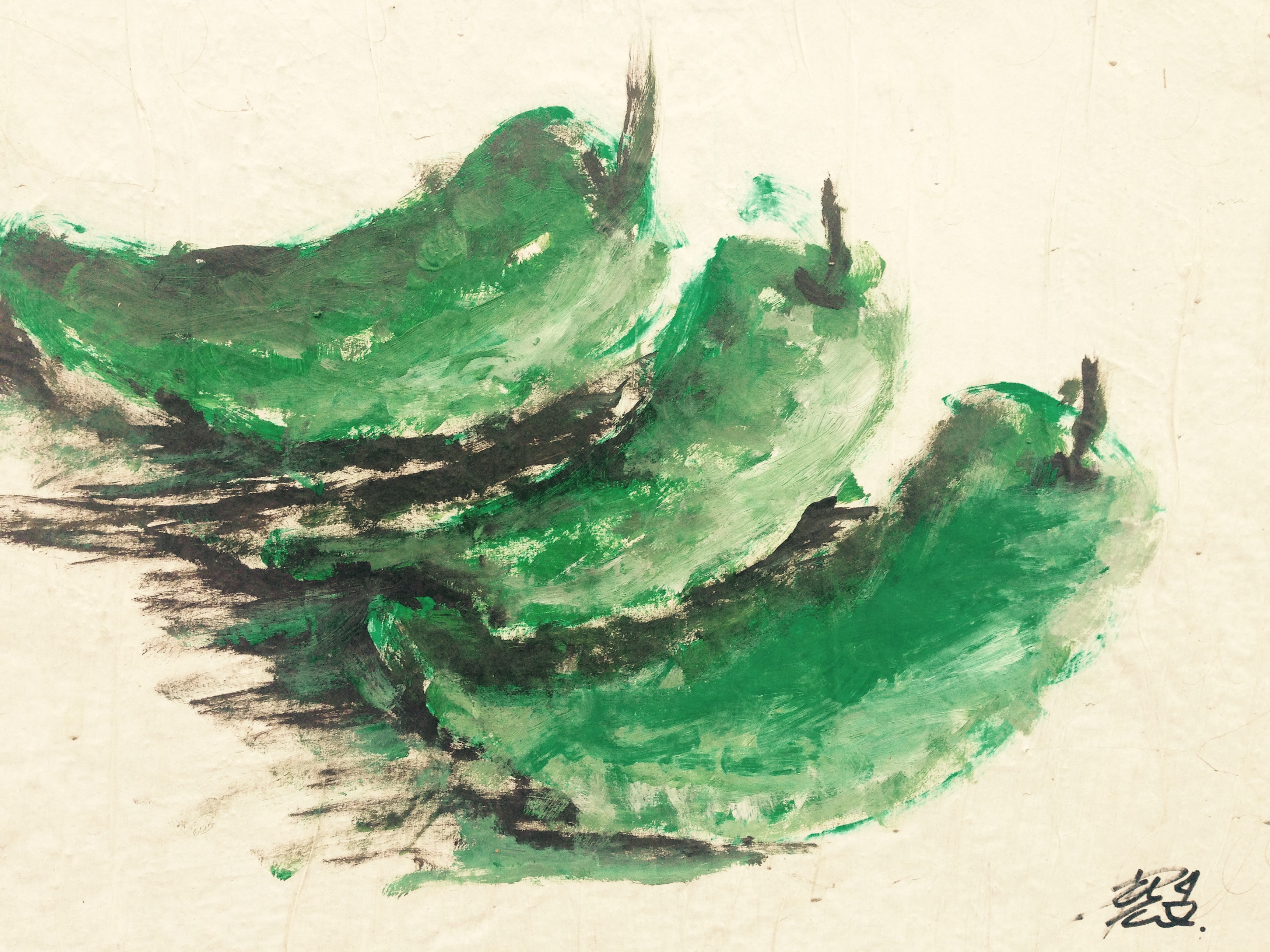
In the spirit of St. Patrick’s Day, I tried to capture the “green” of Oaxaca, Mexico—a place known more for its reds, pinks, and blues than green but here’s what I discovered tooling around el centro. 

green 1

green 3

FullSizeRender-21

FullSizeRender-20
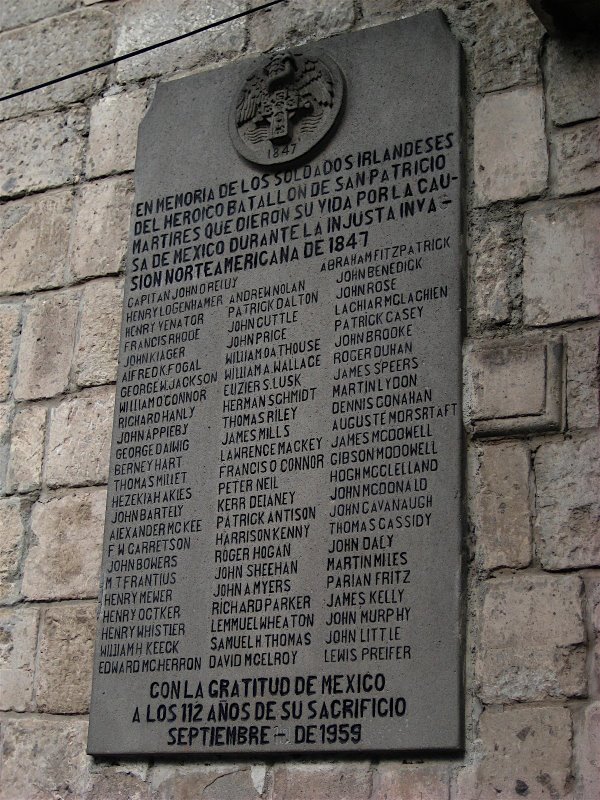
Today I also learned about the Batallón San Patricio. In a nutshell, this was a battalion of a few hundred immigrants, mostly from Catholic Ireland and Germany, who fought on the side of Mexico against the United States during the Mexican-American War. Fascinating story!

"In memory of the Irish soldiers of the heroic St. Patrick's Battalion, martyrs who gave their lives to the Mexican cause in the United States' unjust invasion of 1847." photo credit: Fennessey CC .30 by SA
“In memory of the Irish soldiers of the heroic St. Patrick’s Battalion, martyrs who gave their lives to the Mexican cause in the United States’ unjust invasion of 1847.”
photo credit: Fennessey CC 3.0 by SA

Poetry at the Post: St. Patrick’s Day with Jean Blewett

St. Patrick’s Day
BY JEAN BLEWETT

There’s an Isle, a green Isle, set in the sea,
Here’s to the Saint that blessed it!

ireland 2015

Trinity College Dublin, Ireland July 2013
Trinity College
Dublin, Ireland
July 2013
Traveling Across Ireland July 2013
Traveling Across Ireland
July 2013
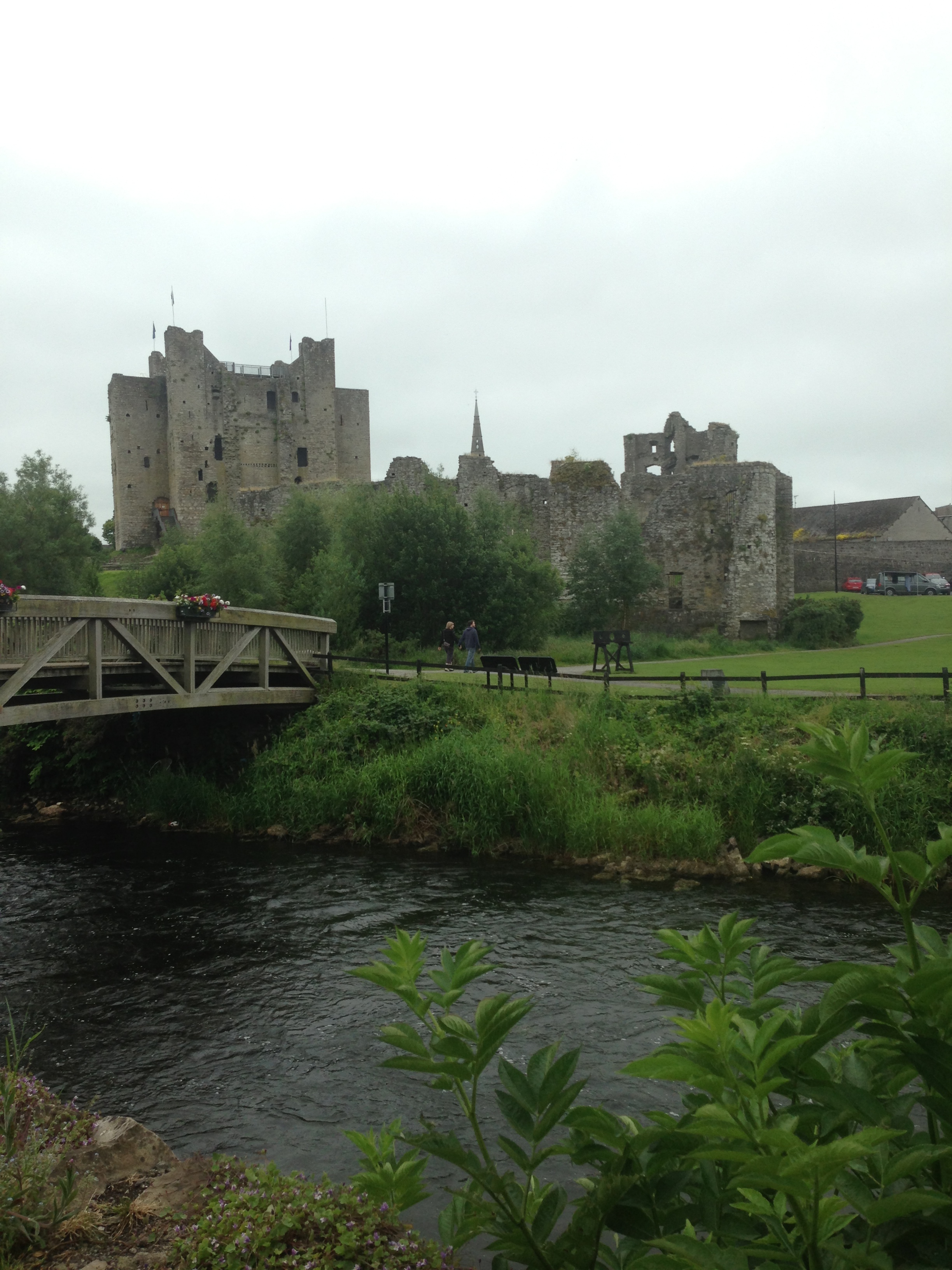
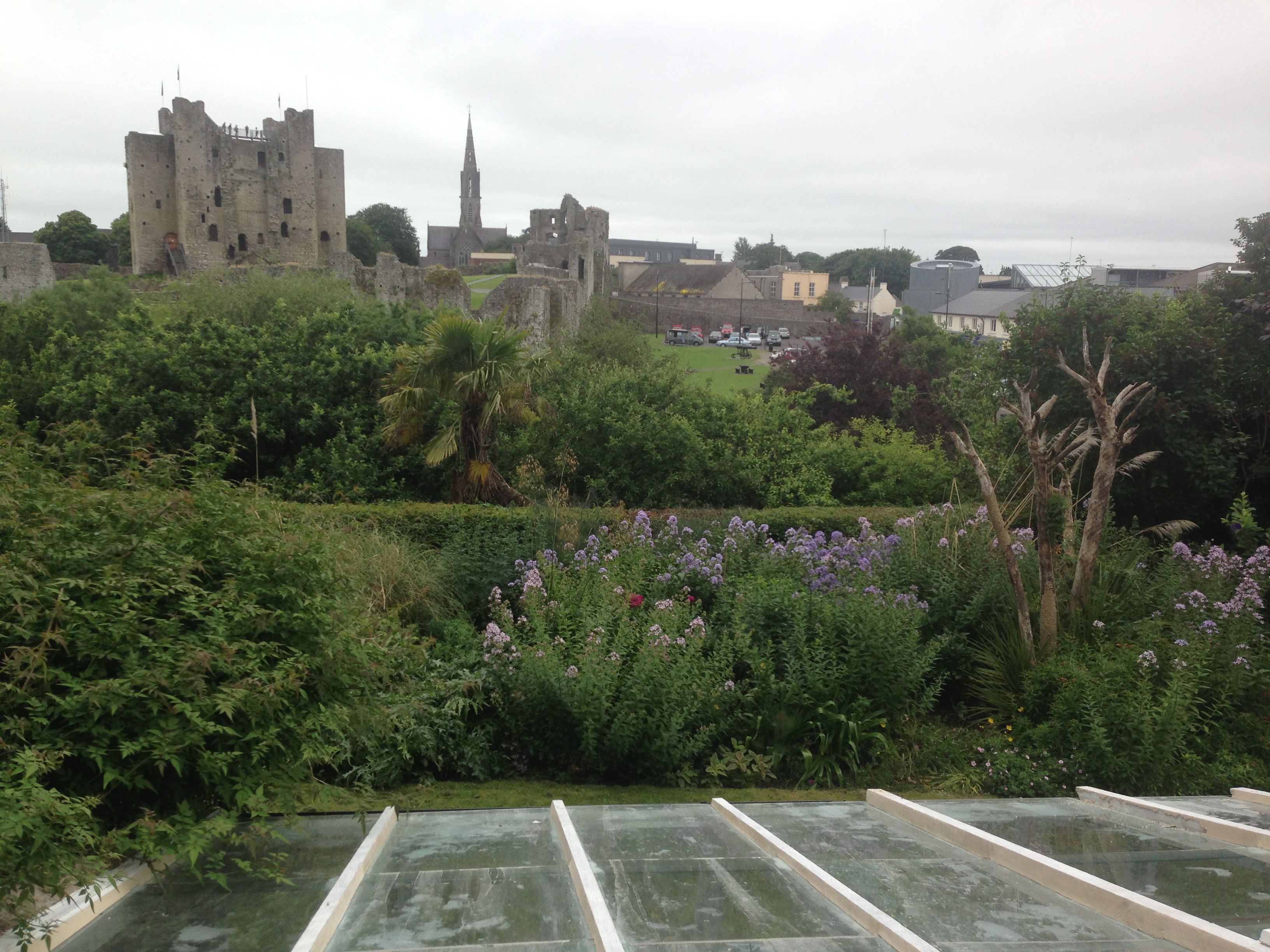
Trim, Ireland July 2013
Trim, Ireland
July 2013

ireland 6

ireland 7

Jean Blewett was a writer, poet and journalist and a regular contributor to The Globe, a Toronto newspaper. She was born in Kent County, Ontario of Scottish—not Irish—parents. Not much else is known about her other than that she was a frequent lecturer on temperance and suffragism.

Jean_Blewett_(cropped)

Here’s to old Ireland—fair, I ween,
With the blue skies stretched above her!
Here’s to her shamrock warm and green,
And here’s to the hearts that love her!

Happy St. Patrick’s Day 2015!

Poetry at the Post: Opera in Oaxaca with Phillip Gross

Opera Bouffe
BY PHILIP GROSS

The count of cappuccino,
the marquise of meringue,
all the little cantuccini…
and what was the song they sang?


Teatro Macedonia Alcala Oaxaca, Mexico March 2015
Teatro Macedonia Alcala
Oaxaca, Mexico
March 2015

The warmth and sun of Oaxaca contrasted with the medieval Scottish highlands of Rossini’s La Donna del Lago transmitted live last Saturday in Mexico—as well as in more than 70 countries worldwide—thanks to the New York Metropolitan Opera’s simulcast program.

Running a bit late, I rushed up the white marble staircase of  the lovely Teatro Macedonia Alcala — a theater built at the turn of the 19th century in the style of Louis XV. I took my seat on the right, aisle E.  Michele Mariotti lifts his baton, the aria begins….

The story is simple: three men in love with Elena, a young woman whose wishes are at cross purpose to her father’s political ambitions. He chooses one man; she wants another. And, oh yes—there’s special ring, a king and a very happy ending. I loved it!

“Tanti affetti”—the final showpiece aria sung by the marvelous Joyce DiDonato—had me humming and joyful on my walk up Calle Alcala to my minimalist apartment uptown.

As it was Saturday, it was wedding day and just as I passed by Santo Domingo, a bride and groom were exiting the church.
 

Marmota  Santo Domingo  Oaxaca, Mexico March 14, 2015
Marmota
Santo Domingo
Oaxaca, Mexico
March 14, 2015

I stopped and prayed for Jimena and Claudio…may this day not be the end but a beginning of a journey through life with love.  Meanwhile, poor Elena is doomed to the nightly repetition of her angst over three men never to be released into the real world after the final aria at Stirlng Castle..

We’ll slip away together,
perfect ghosts of appetite,
the balancing of ash on fire
and whim—the mating flight


Poetry at the Post: Wall Art in Oaxaca with Ray Gonzalez

The Walls
BY RAY GONZALEZ

Sor Juana de la Cruz hid her new poem
in a hole in the wall, but when a fellow nun
went to retrieve it after Sor Juana’s death,
it was gone
.

wall art #1

On my way to class at UABJO this morning, I decided to focus my attention on walls.

The walls of Oaxaca offer a quick peek into contemporary Oaxacan culture. Walking the streets of El Centro Historico, you’d been challenged to find a building free of graffiti, poster remnants or paintings on its walls.

It was cloudy and cold this morning in Oaxaca. Yes, cold in March! In fact, it even snowed in Puebla overnight causing the closure of the main highway to Mexico City. Snow???!!! Just the thought of it made me run into Lobo Azul for a latte para llevar but before I did, I snapped a couple of photos.

FullSizeRender-12

Ray Gonzalez, a poet from El Paso, Texas, has written a terrifying (although not totally lacking in humor) poem connecting walls to quasi-historical events. After reading “The Walls,” I don’t think I will ever think about walls in the same way again.

Two days before Salvador Allende was assassinated,
Pablo Neruda, dying of cancer, woke at Isla Negra
to find the walls of the room where he lay
were covered in hundreds of clinging starfish.

Poetry at the Post: Walking in Oaxaca with Thomas Traherne

Walking
BY THOMAS TRAHERNE (1636-1674)

To walk abroad is, not with eyes,
But thoughts, the fields to see and prize;
Else may the silent feet,
Like logs of wood,
Move up and down, and see no good
Nor joy nor glory meet.


Lake at Santo Domingo Tamoltepec March 2015
Lake at Santo Domingo Tamoltepec
March 2015


I woke up yesterday and felt the need for a poem—a poem to accompany me on a hike in the hills of Oaxaca, Mexico.  There is a poem for every occasion, mood or opportunity. It’s true. If you seek it, you will find it as I did with Traherne’s “Walking,”  with its opening line of  “To walk abroad is, not with eyes, But thoughts…”

Stained glass  at Hereford Cathedral   Thomas Traherne window by Tomm Denny and installed in 2007. photo credit: Pam Fray CC by SA 2.0
Stained glass at Hereford Cathedral
Thomas Traherne window by Tomm Denny and installed in 2007.
photo credit: Pam Fray CC by SA 2.0


Little is known of Thomas Traherne, an English poet, clergyman and theologian. Not a well-established poet of his time, he is almost “wholly a discovery of twentieth century scholarship” after one of his manuscripts was accidentally found in a London bookstall in the late 19th century.

hike#4

Although I am not a big fan of metaphysical poetics, “Walking” was the perfect text to contemplate on the trails of Santo Domingo Tamoltepec.

While in those pleasant paths we talk,
’Tis that tow’rds which at last we walk;
For we may by degrees
Wisely proceed
Pleasures of love and praise to heed,
From viewing herbs and trees.

Poetry at the Post: Sir Gawain and the Green Knight in 101 tweets by Eric Weiskott

Sir Gawain and the Green Knight, as translated by A.S. Kline

Sir Gawain and the Green Knight (from original manuscript, artist unknown)

Soon as the siege and assault had ceased at Troy,
the burg broken and burnt to brands and ashes,
the traitor who trammels of treason there wrought
was tried for his treachery, the foulest on earth.

Last year while reading Beowulf and googling everything I could find on the topic, I landed on a “tweet translation” by Stanford medievalist (and “text technologies”) researcher Elaine Treharne, who neatly compressed Beowulf into 100 tweets( #BEOW100)  as a way of engaging her students in a look at “Beowulf from Then ’til Now.”

Intrigued by Treharne’s endeavor, I attempted to replicate her task by tweeting Song of Roland in 291 tweets (#SOR291). It was tedious and half way through, I almost gave up. I was constantly frustrated by forcing meaty text into 140 characters yet the process gave me an inside look into this medieval classic and made me understand how difficult it is to create a “really good translation.”

So, I thought I was done with all of this “tweeting the classics stuff,”  but via the marvels of the small world over the net, I was connected with medieval specialist Eric Weiskott who now plans to continue the “tweetization’ of medieval texts with his “translation” of Sir Gawain and the Green Knight. Look for #SG101 in the very near future.

Lady Bertilak at Gawain's bed (from original manuscript, artist unknown)
Lady Bertilak at Gawain’s bed (from original manuscript, artist unknown)

Having never read this 14th century chivalric romance. I’ll be adding Sir Gawain and the Green Knight, to the reading list in The Global Reading Group. Send me a note if you’d like to join. And, yes, we will be looking at Weiskott’s translation along with A. S. Kline’s and others. It should be a fun read!

And when this Britain was built by this baron rich,
bold men were bred therein, of battle beloved,
in many a troubled time turmoil that wrought.

Poetry at the Post: The Reality of Tropical Depressions by Adrian Castro, or Feeling Dreary in Texas

The Reality of Tropical Depressions
BY ADRIAN CASTRO

Let’s not wrestle with water
anymore—

It’s been a dreary winter—even my flowers are droopy so I went on a hunt for a poem—something to get me out of my funk. I’ve discovered that there is a poem for every situation. Someone else has already been there, felt that and today it was the poet Adrian Castro. Yes, things could be worse. I could be lying in the knot of a tropical depression.

“The Reality of Tropical Depressions” captured my attention. I liked its tempo, its progression, its innovative use of language. It made me want to find the book, read more. (Handling Destiny, Coffee House Press, 2009)

tip yr head at the orange sky blue lightning
partially our rainbow

and tonight will be “O.K./ after all.”

Here’s to the sun and flourishing flowers! I am so ready!

A flower in Delhi, India January 2015 photo credit: John Jennings
A flower in Delhi, India
January 2015
photo credit: John Jennings