Poetry at the Post-Marfa: Coffee #2

[Over a cup of coffee]
BY STEPHEN DOBYNS

Over a cup of coffee or sitting on a park bench or
walking the dog, he would recall…

Monday morning I invited a friend for coffee at “Coffee + Toast+ Magic.”
The coffee I wanted. The magic I needed.

Marfa, Texas is a place that exists on its own time.
Like the Marfa Lights, sometimes things are there and sometimes they are not.
There was a handwritten note posted to the C+T+M’s metal door.
Be back on September 25th.

We headed to my friend’s casita instead. In a some ways, that was better.

In someone’s home, you can move around.
Coffee in the living area then at a table.
You can linger and allow the conversation to meander
to Taos and to Denver and across to Budapest and Berlin.

how he had left long ago to try his luck in
Argentina or Australia.

You dawdle in the present,
imagine the future. You are not rushed.
The time over coffee becomes a journey…

And
although he had no sense of being on a journey,
such memories made him realize how far he had
traveled

Poetry at the Post-Colorado: “Another Thing” by David Mason

Another Thing
BY DAVID MASON

So why not be the vast, antipodal cloud
you soloed under, riven by cold gales?

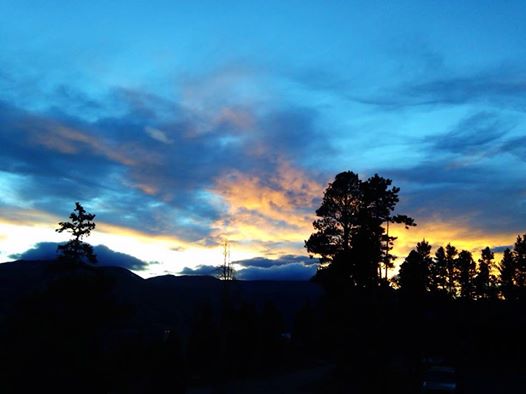
Sunset, Breckenridge, CO August 2014 photo courtesy of John Jennings
Sunset, Breckenridge, CO
August 2014
photo courtesy of John Jennings

My weekend #coloradominitrip is embedded on iPhoto but those photos are static. Nowhere can they capture the grandeur of the mountains or the sense that there is the potential in your body to push it more,to go to the limits—to be “another thing.”

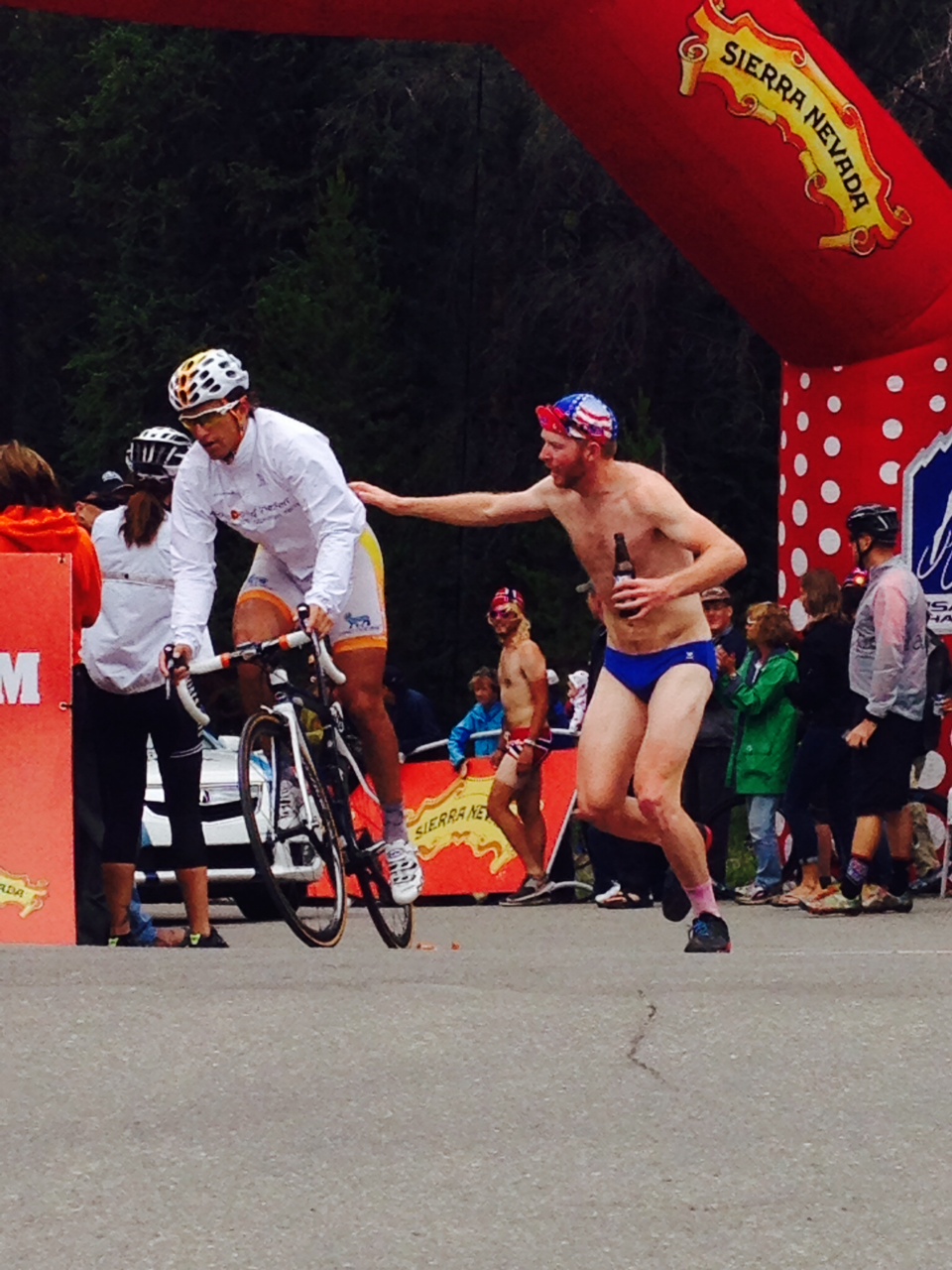
USA Pro Challenge Stage 5 Breckenridge, CO August 22, 2014 photo by  Alice Jennings
USA Pro Challenge
Stage 5
Breckenridge, CO
August 22, 2014
photo by Alice Jennings

The others are one thing. They know they are.
One compass needle. They have found their way

Colorado Poet Laureate David Mason’s poem, “Another Thing,” suggests that desire to live life in another way, “to wreck yourself once more against the day.” A poem like the mountains can call us to higher feats. I like that.

#coloradominitrip photo by Alice Jennings
#coloradominitrip
photo by Alice Jennings

Poetry at the Post: It’s a Coronation!

A Crown of Autumn Leaves
BY ANNIE FINCH

Holding past summer’s hold,
Open and strong,
One of the leaves in the crown is gold…

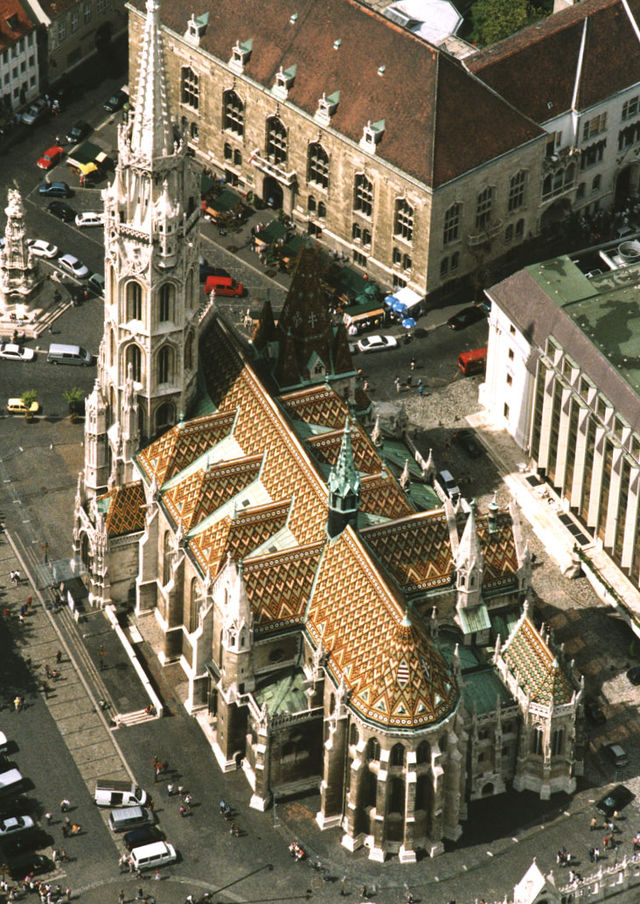
"Buda Castles-Matthias Church". Licensed under Creative Commons Attribution-Share Alike 2.5 via Wikimedia Commons
“Buda Castles-Matthias Church”. Licensed under Creative Commons Attribution-Share Alike 2.5 via Wikimedia Commons

A cool front moving through the West Texas desert makes me think of autumn.

Yet, it is summer. And, it was in the summer of 1867 when Emperor Franz Joseph and his wife, Empress Elisabeth, were crowned King and Queen of Hungary at St. Matthias Church in Budapest.

This was quite the event. The Coronation was one of the most spectacular pageants on the Continent and covered extensively in the papers of Paris and London.

The royal carriage covered
with gems and gold & drawn
by eight white horses, 182
aristocrats elegantly dressed,
a grand procession, maidens
in white with flowers..
St Stephen’s Crown
on a velvet cushion,
five days of banquets…

Even a special Coronation Mass was composed by famous Hungarian Franz Liszt. Here is a selection:

Liszt’s “Benedictus, the invocation for divine help and guidance, is rhythmic and trance-like, similar to a chant.

Annie Finch’s poem, “A Crown of Autumn Leaves” is from her book Calendars, a book of poems organized around ritual chants and the seasons.

This poem is so lovely with the repetition of the vowel sounds. The “o” summons the circling of the crown of fallen leaves.

Here is my crown
Of winding vine,
Of leaves that dropped,
That fingers twined,
another crown
to yield and shine

The crown of leaves shines…but like the King and Queen of Hungary, so soon it is nevermore.

Poetry at the Post: Life in a Roman Villa, The Seuso Treasure

“The Roman Villa” by Mervyn Lagden

Not only sheepmen, weavers, craftsmen
Lie under the Cotswald turf…

Seuso Hunting Plate in the  Hungarian Parliament Building Photo by Derzsi Elekes Andor - Own work CC by SA 3.0
Seuso Hunting Plate in the Hungarian Parliament Building
Photo by Derzsi Elekes Andor – Own work CC by SA 3.0

The story behind the Seuso Treasure, fourteen Roman-era silver worth perhaps as much as $200 million, is prime material for a blockbuster movie. Discovered more than 30 years ago, this treasure has been involved in a series of sales and acquisitions, illegal intrigue and possibly three murders.

Lake Balaton, July 2014

When Sotheby’s put this treasure up for sale in New York in 1990, three countries came forward to claim ownership: Croatia, Hungary, and Lebanon.

Archeological features, however, indicate that the silver most likely was part of a 4th century Roman Villa in the Balaton region of modern day Hungary. (“Contributions to the Archeology of the Seuso Treasure” by Zsolt Visy)

Part now of the upland the the tools they used…

Roman Ruins Lake Balaton Region, July 2014

Early this year, seven pieces of this ancient Roman silver treasure were repatriated to Budapest with the logistical help of the Hungarian Counter Terrorism Center.

Penates and coloured pavements, ivory pins
And fingers that held them—warm brown mesh
Under the roots and the rabbit gins,

Poetry at the Post: I am a Nomad

“The Dancers in the Plaza”
“Nomad’s Song”

JOHN GOULD FLETCHER

Let mine lips salute the rain—
Salute the rain—
As the sunlight blazes, wavers,
over the long stamping lines
of the dancers in the plaza:

I’ll never be the one
who grows roots out of her feet.
I’m a traveler.
I live to wander.

Alani map cc by 2.5
Alani map
cc by 2.5

There have always been nomadic folk:

the Bastarnae,
the Samartians
the Alans,
the Costoboci,
the Carpi too.

We all have our reasons:

Wanderlust?
A search for new lands?
Opposition to status?
A desire to leave behind guilt and depression?
Or just a yen to see it all?

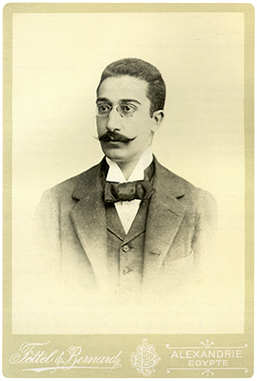
John Gould Fletcher
John Gould Fletcher

Originally from Arkansas, John Gould Fletcher spent much of his life in England. He eventually retuned to Arkansas with his second wife, the noted author of children’s books, Charlie May Simon. They built a house outside of Little Rock but traveled frequently to New York, the Southwest. Sadly, suffering from depression, Fletcher committed suicide by drowning himself in a pond nearby his home.

NOMAD’s SONG

By the blaze of the last campfire
We will eat, we will drink, we will be merry.

Whether you are the one who stays or the one who wanders, be merry.

Poetry at the Post : Here Come The Barbarians

Waiting for the Barbarians
BY C. P. CAVAFY, AS TRANSLATED BY EDMUND KEELEY AND PHILIP SHERRARD

What are we waiting for, assembled in the forum?

The barbarians are due here today.

I had one of those once-in-a-lifetime opportunities this summer to take a course at Central European University in Budapest. For one week, our group of twenty-six considered the transformation of the borders from the 2nd to 6th century CE.

I am still trying to unwrap the experience. The lone poet amidst a group of late antiquity scholars, I listened.

Day 1

“The relationship between the barbarians and the Roman Empire was never a neutral subject. Much less could it be today…” began Professor Rita Lizzi Testa. Yes, I think. Of course, here come the barbarians.

What caused the fall of the Roman Empire? Invasion and ruin?

Did Rome ever Fall? Or did the barbarians merely “seep” inside to be gradually accommodated?

Cavafy1900

In “Waiting for the Barbarians,” C.P. Cavafy, echoes the views of the late nineteenth century historians: “…the idea that the end of of the Roman Empire (or perhaps as Cavafy suggests all empires) was the result of a ‘fatal disease…'” or its own decadence.

Why have our two consuls and praetors come out today
wearing their embroidered, their scarlet togas?
Why have they put on bracelets with so many amethysts,
rings sparkling with magnificent emeralds?
Why are they carrying elegant canes
beautifully worked in silver and gold?

Because the barbarians are coming today
and things like that dazzle the barbarians
.

For me the fall or “unfall” of the Roman Empire is of passing interest but I am bothered by borders and the concept of “barbarians.”

They are the ones on the other side of the wall, the limes.
They are “the others.”
What would happen if the borders disappeared? Cavafy had a theory.

Because night has fallen and the barbarians haven’t come.
And some of our men just in from the border say
there are no barbarians any longer.

Now what’s going to happen to us without barbarians?
Those people were a kind of solution.

Poetry at the Post-Prague: Politicians Scared to Admit to Liking the Arts?

Finnish Opera
BY BARBARA GUEST

It was the opera that made the dreamer famous.

I’ve taken to reading the assortment of newspapers
displayed at the breakfast
buffet in my hotel in Prague. There’s some interesting
stuff. A few days ago, the London paper,
The Daily Telegraph (July 14, 2014.) featured a piece
entitled—”Politicians are too scared to admit
they like the arts”

Is this true in the US too? Are politicians afraid
to admit they like the arts?
Could be. Government support for the arts is dismal.

Here are some facts from a recent article in Alternet., “Culturally Impoverished: US NEA Spends 1/40th of What Germany Doles Out for Arts Per Capita”:

In 2011, art funding in the United States reached a record low.

In 2011, art spending made up just 0.28 percent of the government’s non-military budget in 2011.

In 2011, local government spending also dropped.

I can recall photo ops of politicians on opening day for baseball but not one for an opening of an art exhibition, an opera, etc. Baseball—I love it too—but as we know the arts nudge out the dreamer in us all. (Ok, I think baseball can do this too.)

This opera that begins with a dream traveled
to Rome and Zagreb, traveled across continents, once by camel.

Guest’s poem takes us on a journey. The reader travels from Finland* to Zagreb, Rome and beyond. I like the idea of the journey. We may not need to travel physically to experience transformation but it’s good to keep moving—even if it is just an inch-in our interiors—to continue to “dwell in possibility.”

*Finland! Join a group of international readers in September when we explore The Kalevala, the Finnish national epic, in The Global Reading Group, a virtual literary salon.

Poetry at the Post-Prague: Splendour Falls on Castle Walls

from The Princess: The Splendour Falls on Castle Walls
BY ALFRED, LORD TENNYSON

The splendour falls on castle walls

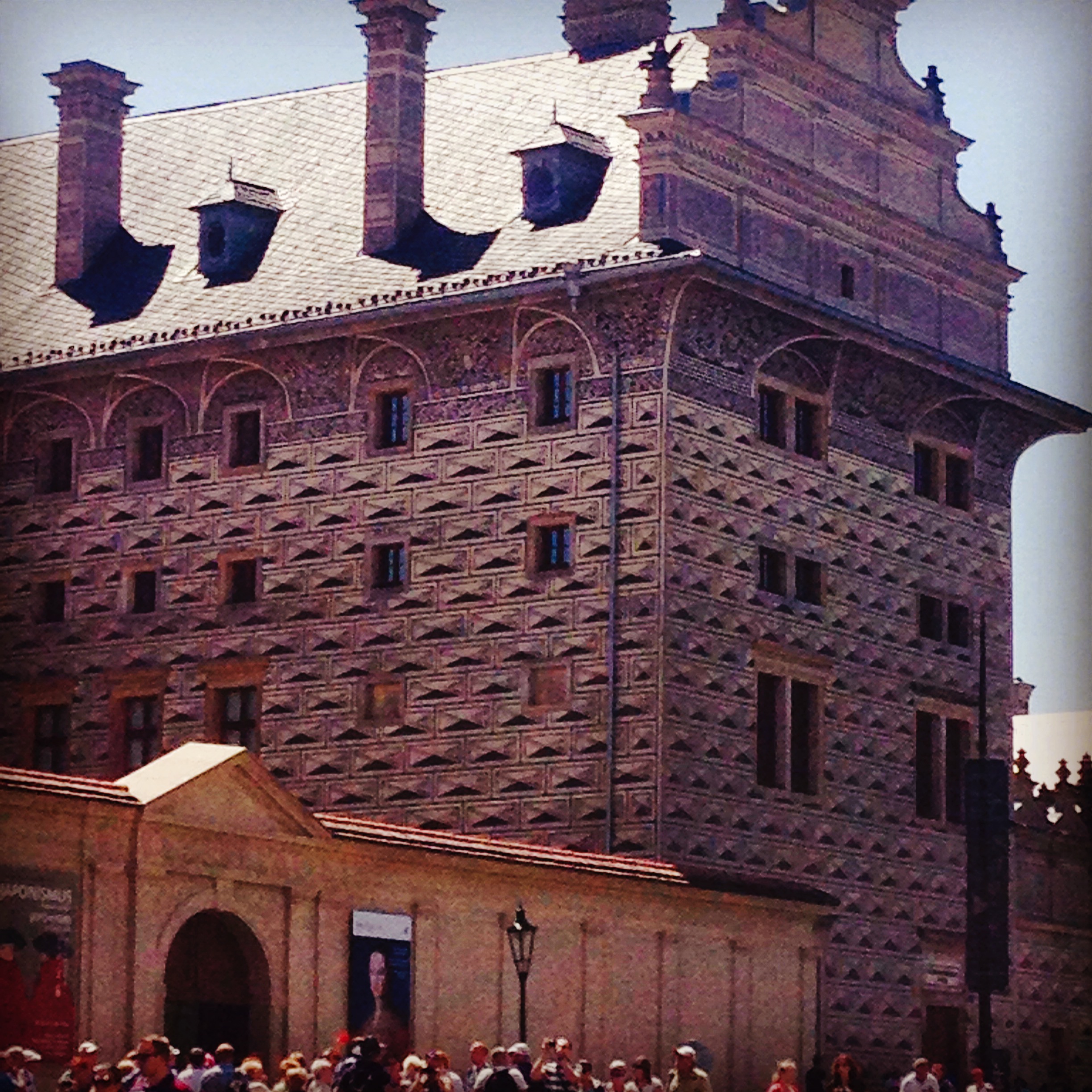
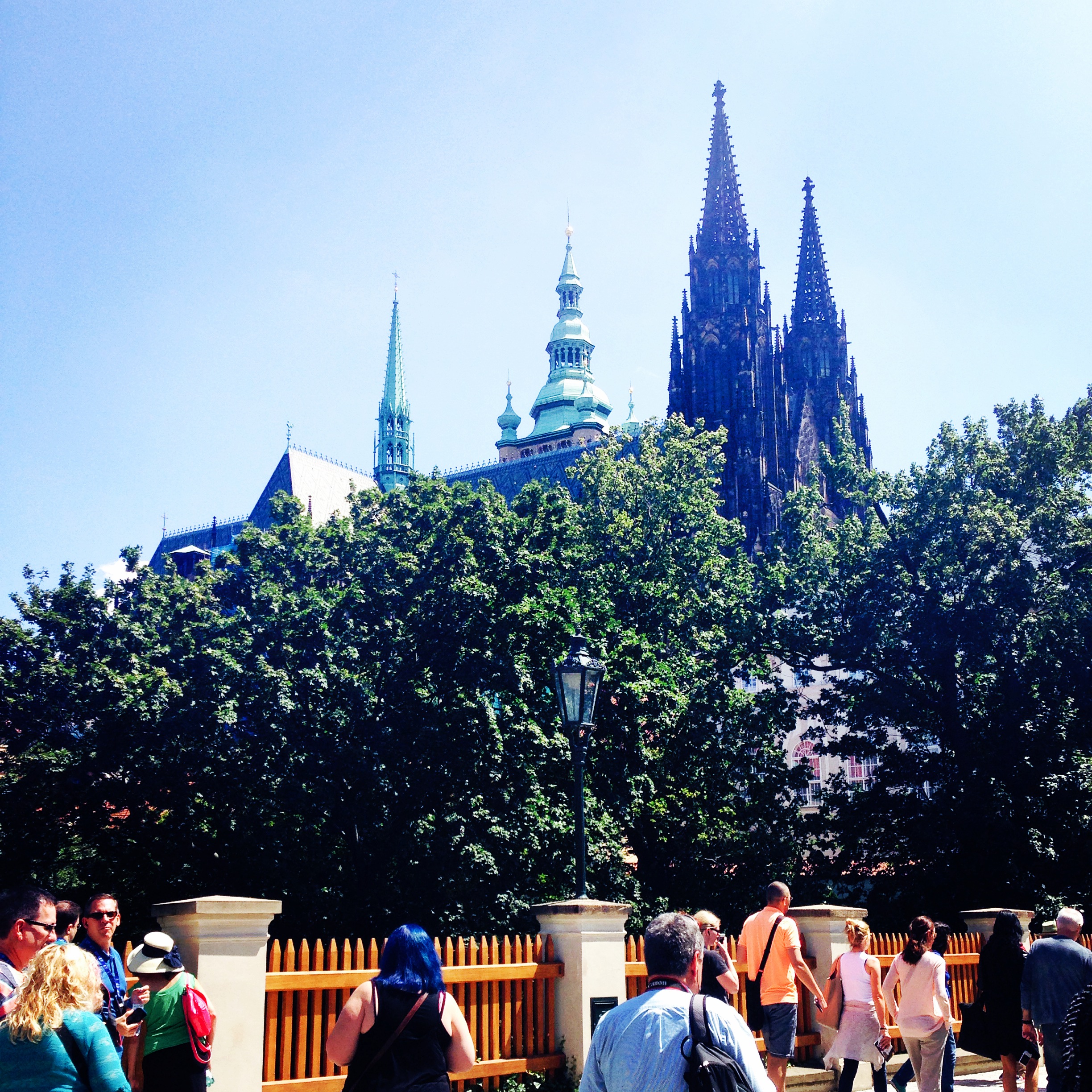
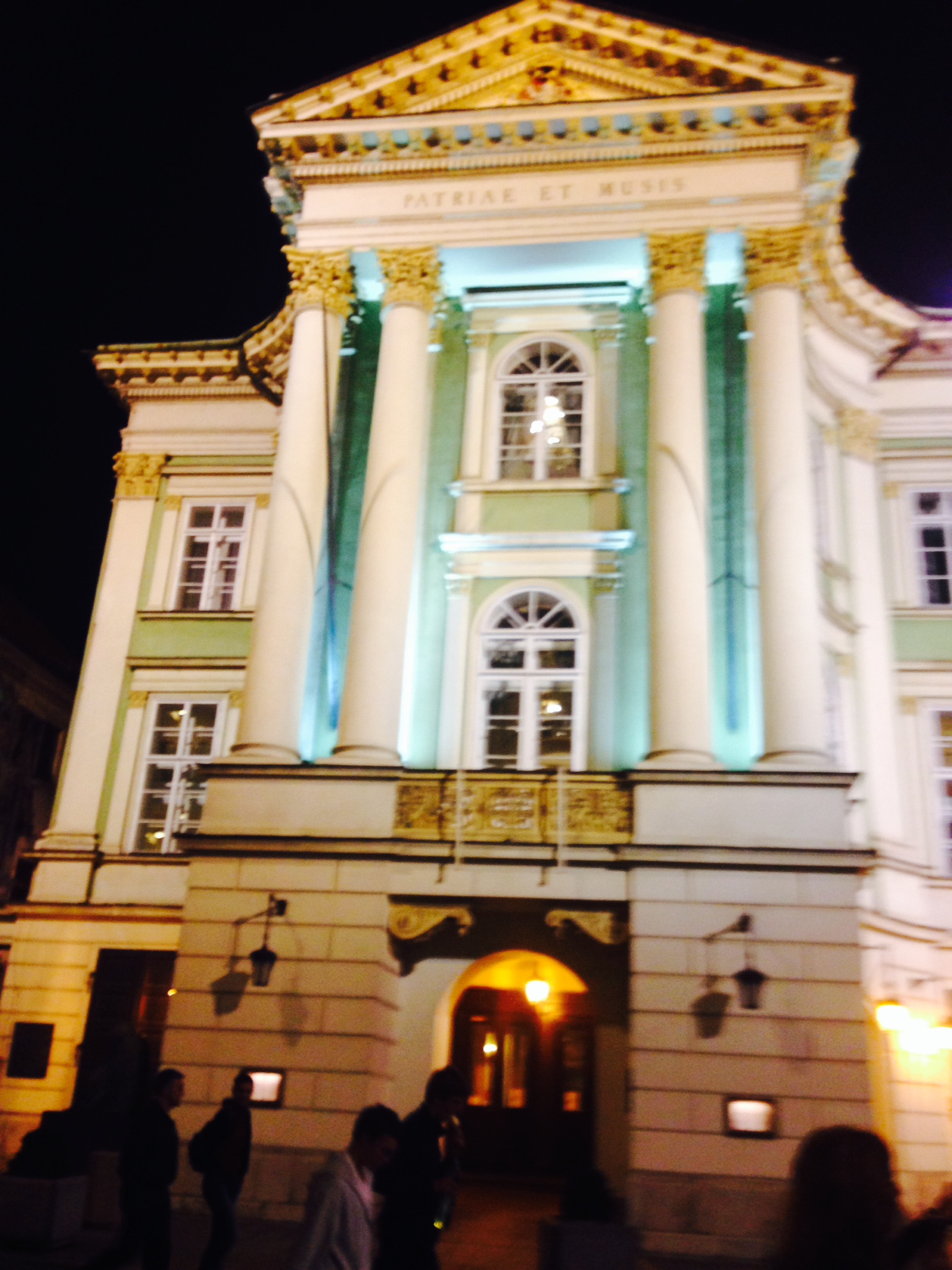
Prague is medieval opulence mixed with Hapsburg over-the-top.
More than the castle itself, The Castle District is something else.

St. Vitus Cathedral, St. George’s Basilica, The Royal Gardens, and…

I think I like Prague but I can’t figure it out, certainly not
culturally or language-wise but also at the most basic level.

I get lost wherever I go. I ask for help, then end up
somewhere
I did not want to go.

The Castle District. Yes,
it is stunning. Yes,
Hitler spared it. Yes,
it is worth a visit—
despite the crowds.

Yet…yet…
Achingly lovely…
think of the other
99% or perhaps
the other 98.9%
back then.

prague3

O love, they die in yon rich sky,
They faint on hill or field or river:
Our echoes roll from soul to soul,
And grow for ever and for ever.

Poetry at the Post-Prague: Twisted in Language

High Tension Lines across a Landscape
BY JOHN CIARDI

Beyond me. There are signs of something

On my visit to the Musuem of Modern Art in Vienna, I came across this painting by Lois Weinberger entitled “Field Work 2010.”

This paint marker work in oil is of words.
Words.

I’ve been forced to consider words,
their meaning,
as I travel through Central
Europe. Eltévedtem
A francba! But
for the brief stay in Vienna-
German, ja!-
I have been clueless.

I’ve tried deduction. At times
this works. I’ve felt dumb
& twisted. Yet, at night
I find myself laughing in high
tension…..
Kde je prosím záchod?

What I’ll remember is elusive
Perhaps it will be the beauty of the night,
the buildings…

On the open palms of the diagram.
There is
Shining, I suppose, in that city at nigh

Enjoy today’s poem by John Ciardi, or as he was known in his day, Mr. Poet.

Poetry at the Post-Vienna: It’s All in the Red

Red Ghazal
BY AIMEE NEZHUKUMATATHIL

I’ve noticed after a few sips of tea, the tip of her tongue, thin and red/
with heat, quickens when she describes her cuts and bruises—deep violets and red.

Yesterday afternoon I took a visit to the Museum of Art History in Vienna.

The building is palatial and so is the collection. The museum was commissioned in the last quarter of the 19th century by the Emperor, Franz-Joseph I, who ruled for 68 years until his death in 1916.

Tragedy was not a stranger to the imperial family.

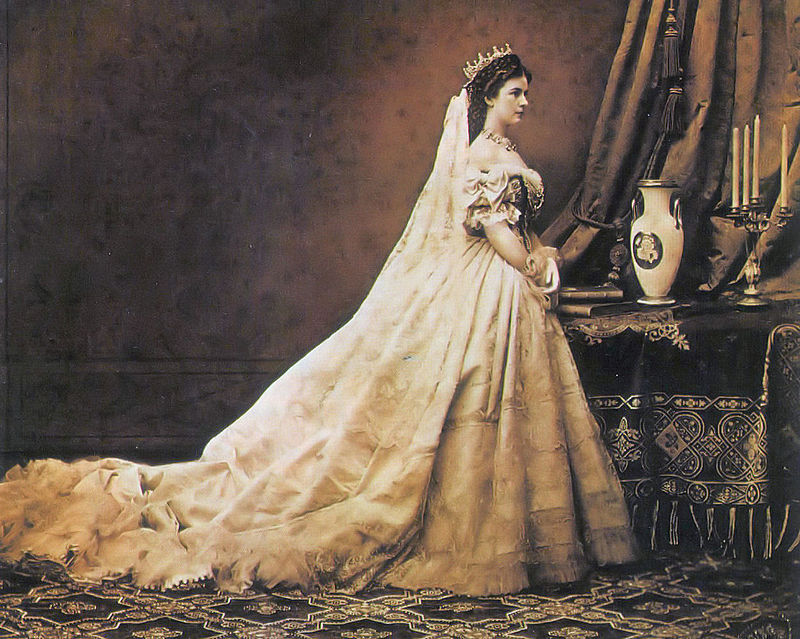
Franz-Joseph’s son died in a suicide pact with his mistress; his younger brother Maximilian was executed in Mexico; and his wife Elisabeth Amalia was stabbed to death by an assassin.

800px-Erzsebet_kiralyne_photo_Rabending

Franz-Joseph’s marriage was not the best as his love was not reciprocated by his mysterious and somewhat odd wife. Obsessed with her weight, Empress Elisabeth never allowed it to hover above 110 lbs by subscribing to a strict fasting and exercise regime.


He was so charming—pointed out planets, ghost galaxies, an ellipsis
of ants on the wall. And when he kissed me goodnight, my neck reddened.

Through this ghazal-I absolutely adore this form!—I discovered the poetry/of AIMEE NEZHUKUMATATHI. I find her work quite exciting and look forward to reading more.