Poetry at the Post Day 1: “Rain” by Edward Thomas

Rain
BY EDWARD THOMAS
Rain, midnight rain, nothing but the wild rain

poetryathepostday1.3

Yes, I thought. “Rain” would be the perfect poem for Day 1 of Poetry at the Post as I was celebrating last night’s rain, a welcome gift, upon my return to my home in Far West Texas. Rain in the desert is good but rain in May in the Chihuahuan desert is super!

I continued to read on. There was rain but there was something more. This was a poem about death and dying—and war. Here is a piece that grounds us in the oft forgotten realities of this Memorial Day Weekend.

Born in 1878 in London to Welsh parents, Edward Thomas graduated from Oxford and earned his living as literary reviewer. Although he thought highly of poetry, Thomas did not write his first poem until the age of 36—only after being urged on by his friend and neighbor, the American poet, Robert Frost. His poetry career was brief, a mere three years. In 1915, Thomas enlisted in the infantry and was killed in action in the Battle of Arras in 1917 shortly after arriving in France.

But here pray that none of whom once I loved
Is dying tonight or lying still awake
Solitary, listening to the rain…

.

photo by John M. Jennings

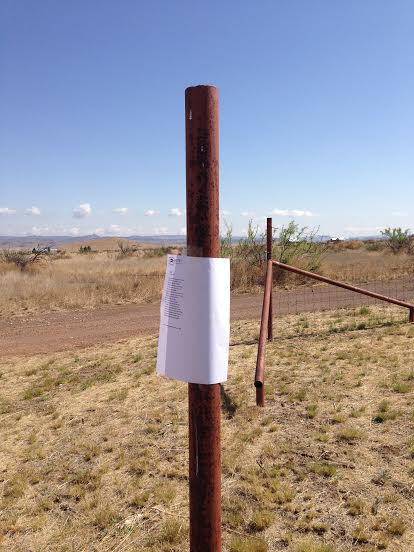
While in residence, I’ll be reading poem a day at the post in Mano Prieto. If you are in the area, stop by for the reading. Times vary each morning so check in first before you make the drive. You’ll be able to see each day’s post under the tab, “Poetry at the Post.”

The Poetics of Laundry—A Garden Looking To Be Tamed

laundry1

Doing the laundry is akin to reading The Iliad. There is the ritual of loading the washer. If not done regularly, the task of clean clothes becomes a burden. Such is the work of The Iliad. If a commitment to read daily is not made, your charge to push through to the end of it seems overwhelming.

A charge it is as the description of war takes up at least half of The Iliad. And no two battles are the same. “…every battle rises above the last in greatness, horror, and confusion.” (Alexander Pope)

Achilles Lamenting the Death of Patroclus by Nikolai Ge

In Oaxaca, my life is easy. I stuff my clothes in a bag and carry them up a cobbled pathway and drop them off at Lavanderia Burbumatic. Some days, it is loco at the laundry. The mound of clothes is a Mount Olympus.

I imagine the lavandera lifting her head from those mounds and crying “Oh dear brother, help us! Give us your horses—so I can reach Olympus….” (The Iliad, 5: 359-60, as translated by Robert Fagles.)

I don’t know how they keep it all straight yet week after week whatever I put in in that bag, I get back—unlike at home. There a sock-eating Cyclops that lives inside my washing machine. He must. How else could so many sock “singlets” go missing?

My comrades left me here in the Cyclops’ vast cave…It’s a house of blood and gory feasts, vast and dark inside. (The Aeneid, as translated by A. S. Kline) Oops! Mixing classics.

The Cyclops by Odilon Redon

Burbumatic must be monster free as my socks, like vowels in Ionic diphthongs, are reunited and layered between the pants and leggings. Each piece of clothing is folded art, a cotton origami.

Budapest is in my future. I’m very excited. I will miss Oaxaca, my neighborhood laundry, yet soon I’ll be walking the streets of Buda looking for my local patyolat. Patyolat??

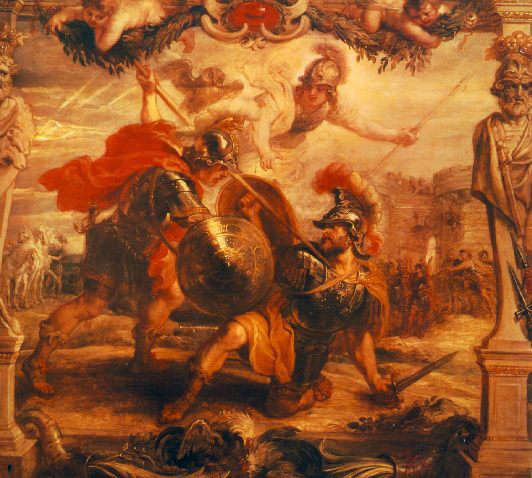
Spoiler alert! At last, when young Dawn with her rose-red fingers shown once more, …the Trojans buried Hector breaker of horses. (The Iliad, 24:926, 944, as translated by Robert Fagles.)

Achilles Slays Hector

We’re reading The Iliad this May in the Global Reading Group, a virtual literary salon. Contact me to join @ alicecatherinej@gmail.com. And, it’s not all battles! We’re looking at food too!

http://www.kalofagas.ca/2009/05/24/parsley-salad-μαϊντανοσαλάτα-σύρου/

The Hungarian National Epic

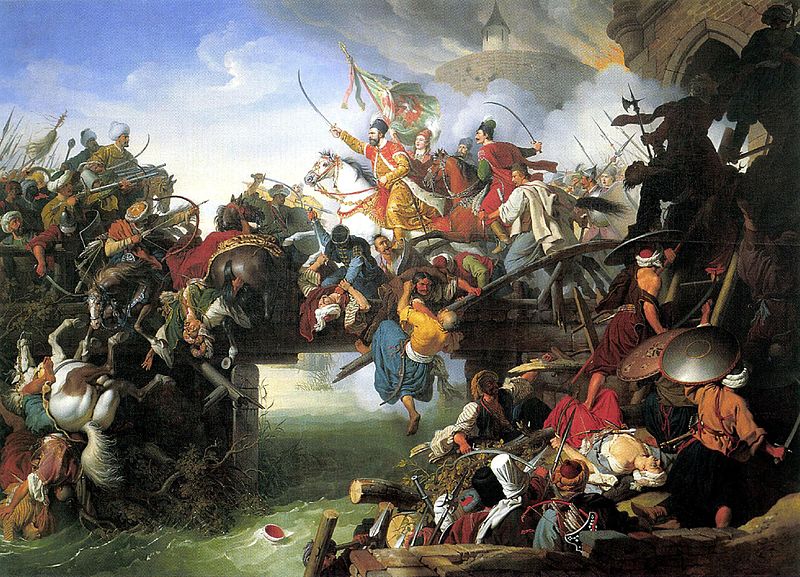
Nikola Šubić Zrinski's Charge from the Fortress of Szigetvár
Nikola Šubić Zrinski’s Charge from the Fortress of Szigetvár by Johann Peter Kraft, 1825

I’m addicted to epics! I admit it. I’ve read 13 of them so far but a few days ago I stumbled upon The Siege of Sziget, the Hungarian national epic. Where had this one been hiding? Within the Hungarian language, apparently, as it has only recently been published for the first time ever in English. (THE SIEGE OF SZIGET by Miklos Zriny, as translated by László Kõrössy. Catholic University of America Press, 2011.)

The Siege of Sziget is a latecomer in the European epics. Written in 1647 by Miklós Zríny, it tells the story of the final battle of another Miklós Zríny (the author’s great granddad) against the Ottomans in 1566. The Ottomans were the victors but at a heavy cost with 20,000 Turks lost including Sultan Suleiman, their leader. However, it stopped the Ottomans from pushing forward towards Vienna that year and so from the Christian point of view, the Battle, although a loser, was successful.

From the the little I have read so far, The Siege of Sziget has all the characteristics of the traditional epic. It begins with an invocation to a Muse; there is a bloody battle; and things get mixed up (or conveniently arranged depending on one’s point of view) by the interference of the gods, or in this case, God. I’ll be adding The Siege of Sziget to the list of upcoming epics in the Global Reading Group, a virtual literary salon, so send me a note if you’d like to read along. http://moiramcpartlin.blogspot.co.uk/2014/04/epics-on-global-scale.html

For more info on The Siege of Sziget and its translation, visit

http://www.academia.edu/3039358/Review_of_Miklos_Zrinyi_The_Siege_of_Sziget_trans._Laszlo_Korossy_in_Times_Literary_Supplement_9_March_2012

And, as an extra bonus, here is Szigeti veszedelem, or The Siege of Sziget , in Hungarian.

http://szelence.com/zrini/index.html#tart

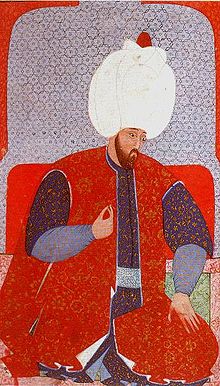
Suleiman the Magnificent

Suleiman the Magnificent as a young man by Nakkas Osman, 1579.
Topkapi Palace Museum
Istanbul Turkey
Photo courtesy of Bilkent University

Something of interest I discovered was that Suleiman, known as Suleiman the Magnificent, was also a poet and a big time supporter of the arts during his 46 year reign. Most of his poems were written to his wife, the daughter of an Orthodox priest who had been abducted and sold as a slave in Constantinople. Reportedly, the great Suleiman was quite mad about Hurrem Sultan—so much so that she was the only one of his harem he made his legal wife. You can read one of his lovely ghazals here: http://www.ottomansouvenir.com/General/Turkish_Poetry.htm#Gazel6#lateantiquitystudiesBudapest2014

My weekly prompt (feel free to use it too): Write a ghazal. Here are some words to consider incorporating in the poem: to crush, to blow, to swell, stiff-necked, Constantinople, blanket, and blood. Use a title of rank and the imperative “Believe, believe…”
El león


April 18, 2014

My life is a bestiary~
What does that mean?
Still wondering~

I bought this lion from a street vendor on Calle Alcalá in Oaxaca last night.  Wooden comb, bookmark and blusa vendors appear daily but this was the first time I had seen this particular man from the Mixteca and his precious handmade animals. There was even a billy goat with a fringe beard.

I was partial to the lion and now it is mine.  I’ve named him Priam. I let Priam, the lion, roam free; he is not caged.

Priam reminds me of “Felinos” by Juan José Arreola. You can read a fragment of it here:

http://sublimesfelinerias.blogspot.mx/2007/06/un-fragmento-de-felinos-de-juan-jos.html

If you want more beasts, grab a copy of the entire book Bestiario. You won’t regret it, especially if your life is a bestiary like mine.