Poetry at the Post: 14 Lessons From a Visit to the House of Terror Museum in Budapest with John Donne

April 3, 2015

Good Friday, 1613. Riding Westward
BY JOHN DONNE

This day, when my Soules forme bends toward the East.
There I should see a Sunne, by rising set,
And by that setting endlesse day beget;
But that Christ on this Crosse, did rise and fall,
Sinne had eternally benighted all.

"Budapest Haus des Terrors" by Tbachner - Own work. Licensed under CC BY 3.0 via Wikimedia Commons -
“Budapest Haus des Terrors” by Tbachner – Own work. Licensed under CC BY 3.0 via Wikimedia Commons –

The House of Terror is a museum in Budapest dedicated to the memory of the 50 years of totalitarian rule in Hungary.

Last July, I was in a university program on late antiquity studies and the waning years of the Roman Empire. Hungary had been the empire’s outer eastern limits, or limes. My mind was centuries away from the 20th but as the House of Terror Museum was almost on my doorsteps, I decided to make a visit. One floor is about the Nazis, another the Communists and in the basement are the actual “interrogation rooms” of the Hungarian Secret Police. It’s tough museum to visit.

Today is Good Friday, which in that funny way the mind works, I began to consider “suffering” and those two hours immersed in tales of persecution at this chilling museum.

Today’s NAPOWRIMO prompt is about the number 14 so I wrote a poem entitled “14 Lessons From a Visit to the House of Terror Museum.” Here are the first few lines:


14 Lessons From a Visit to the House of Terror Museum
Budapest, Hungary
July 2014

 
2. Peasants

 
anyone could be named a “kulak” —a public enemy,
 
the hunters’ prey
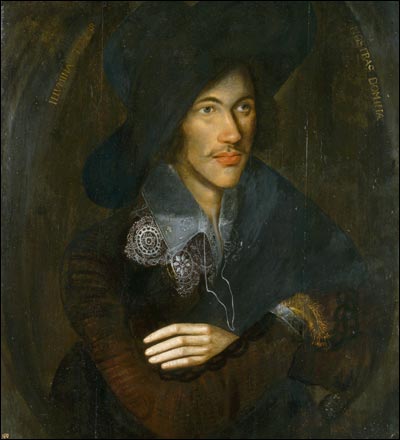


A portrait of Donne as a young man, c. 1595, artist unknown, in the collection of the National Portrait Gallery, London

But that Christ on this Crosse, did rise and fall,
Sinne had eternally benighted all.
Yet dare I’almost be glad, I do not see
That spectacle of too much weight for mee.

Poetry at the Post: Starry Night or 18 Stars Who Swear by Juicing

The Stars Are
BY SAMUEL MENASHE

The stars are
Although I do not sing
About them—

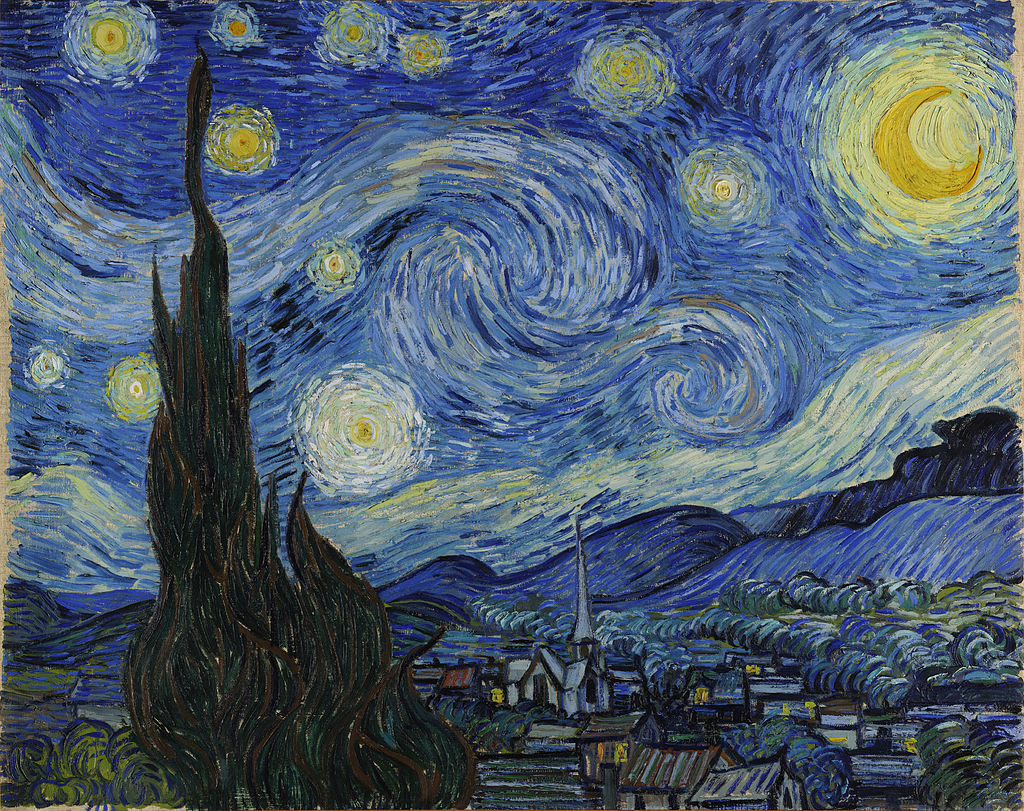
Starry Night by Vincent Van Gogh

Today’s NAPOWRIMO prompt is to write about the stars.

18 Stars Who Swear by Juicing by Alice-Catherine “Star” Jennings

It’s funny, you know, how when you search
for something online, you think you’ll get one
thing but then you get another. I googled “stars”—

thinking constellations: Andromeda, Perseus
or Canes Venatici—the hunting dogs—or even
“Starry Night” by the famous painter but not “18 Stars

Who Swear by Juicing,” or “22 Celebs Crazy for Cross Fit,”
or “25 Stars Who’ve Run a Marathon.” (Guess that’s how
they fit into the “10 Cutest Outfits Worn by TV Stars.”)

Next is the “30 Stars Who Left the Mormon Church.”
Ryan Gosling is one but wait a minute! He’s also in
one of the “51 Movies With Stars Before They Were Famous”

but he’s not one of the “55 Who Love Pot.” Bill Clinton’s
on this list. Didn’t he claim he only tried it once
(without inhaling)? Ah! I’m getting closer to the real

stars or at least the blue sphere of the fixed ones.

Photo: By Claus Ableiter (Own work) CC-BY-SA-3.0

Poetry at the Post: I guess it’s too late to get a PhD in Chemistry

April 1, 2015

Essay by Bernadette Mayer

I guess it’s too late to live on the farm
I guess it’s too late to move to a farm
I guess it’s too late to start farming


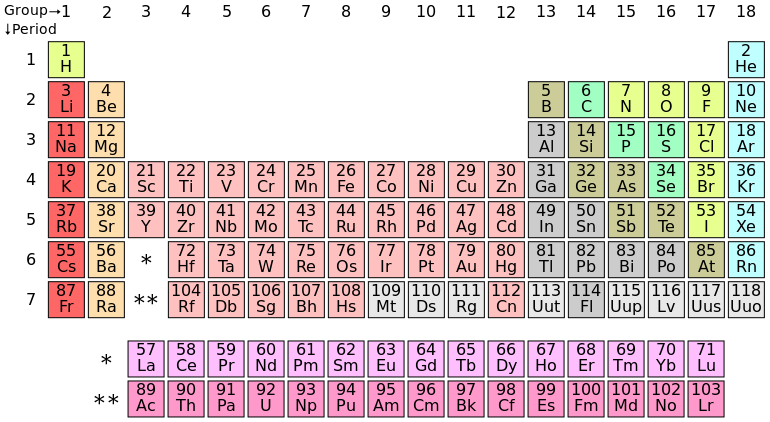
"Periodic table (polyatomic)" by DePiep - Own work. Licensed under CC BY-SA 3.0 via Wikimedia Commons -
“Periodic table (polyatomic)” by DePiep – Own work. Licensed under CC BY-SA 3.0 via Wikimedia Commons –

It’s Poetry Month and  time for NAPOWRIMO—30 poems in 30 days. The warm-up prompt was to model the opening lines of Bernadette Mayer’s “Essay”  so here is my version:

Essay by Alice-Catherine Jennings, PhD Wannabe,                                                                                                                 —After “Essay” by Bernadette Mayer

I guess it’s to late to study Chemistry.
I guess it’s late to get a PhD at Harvard, Stanford,
U of This or U of That and definitely not at CIT.
I guess it’s too late to study Hess’s law or Henry’s law
or energy equivalence.
I guess I won’t wear a lab coat either.
I guess I’ll never be a chemist now although
I used to work with one in Dallas.
I wish I could be like Rosalind Franklin
and discover something big like the helical structure
of DNA (well, maybe not as she died at 37).
There are doctor-poets and insurance agent-poets.
Mikhail Vasilyevich Lomonoso got to be both a poet
and a chemist, but he is one of the few poet-chemists.
If I could get that PhD in Chemistry, I might….

You know what? I don’t want to be a chemist.
I want to be a ballerina.

I guess it’s too late to be a…

Photographic postcard of the ballerinas Pierina Legnani as Medora (right) and Olga Preobrajenskaya as Gulnare (left) in the scene Le jardin animé from the ballet Le Corsaire.

Poetry at the Post: Brew Hopping in Austin with George Arnold

Beer
BY GEORGE ARNOLD

1834–1865

Here,
With my beer
I sit,
While golden moments flit:

beer 3

Last Saturday, six souls in search of sun, music and the mellow taste of beer headed for The Thirsty Planet Brewery, an Austin brewery with a purpose. According to their website, the team at Thirsty Planet “strives to keep the planet’s well-being in mind” during their day to day operations and gratuities from the tasting room are donated to a different charity each month. This month’s charity is Well Aware—”clean water for life.’

Thirsty Planet Brewery  Austin, TX March 28, 2015
Thirsty Planet Brewery
Austin, TX
March 28, 2015

Go, whining youth,
Forsooth!
Go, weep and wail,
Sigh and grow pale,
Weave melancholy rhymes
On the old times,
Whose joys like shadowy ghosts appear,—

George Arnold was a mid 19th century poet and writer and a regular contributor to Vanity Fair. He is best known for his poem “The Jolly Old Pedagogue.” Arnold was also a frequent patron and part of the “In Crowd” at Pfaff’s Beer Cellar, a popular rathskeller in Greenwich village for New York writers and artists, including Walt Whitman. Other than that, not much is known about Arnold.

In the poem “Beer,” he laments the passing of his youth. Really?!! Arnold only lived to be 31! But, as we know, depression has no boundaries and age is relative.

What I like about this poem is how it makes me want to recommit to it (whatever it is today, this month, this year) yet reminds me that sometimes it’s okay to forget about it and to just enjoy the light, song and a glass of beer. Prost!

 Pfaff's beer cellar in 1857. Depicted seated is Walt Whitman.

Pfaff’s beer cellar in 1857. Depicted seated is Walt Whitman.

So, if I gulp my sorrows down,
Or see them drown
In foamy draughts of old nut-brown,
Then do I wear the crown,
Without the cross

beer 2

Poetry at the Post: It’s All About Red in Oaxaca with Aimee Nezhukumatathil

Red Ghazal
BY AIMEE NEZHUKUMATATHIL

I’ve noticed after a few sips of tea, the tip of her tongue, thin and red
with heat, quickens when she describes her cuts and bruises—deep violets and red.

FullSizeRender-26 FullSizeRender-29 FullSizeRender-28 FullSizeRender-23


Red! I love the color—and the poetic form of the ghazal. It’s not difficult to find the color red in Oaxaca, Mexico—it’s everywhere! These are some quick shots I took on  my iPhone Sunday morning while walking back to my apartment after breakfast. Just red!


FullSizeRender-24 red 9 FullSizeRender-31


I’m terrible at cards. Friends huddle in for Euchre, Hearts—beg me to play
with them. When it’s obvious I can clearly win with a black card, I select a red.

Poetry at the Post: Seeing Green in Oaxaca with Delmore Schwartz

In the Green Morning, Now, Once More
BY DELMORE SCHWARTZ

In the green morning, before
Love was destiny,
The sun was king,
And God was famous.

In the spirit of St. Patrick’s Day, I tried to capture the “green” of Oaxaca, Mexico—a place known more for its reds, pinks, and blues than green but here’s what I discovered tooling around el centro. 

green 1

green 3

FullSizeRender-21

FullSizeRender-20
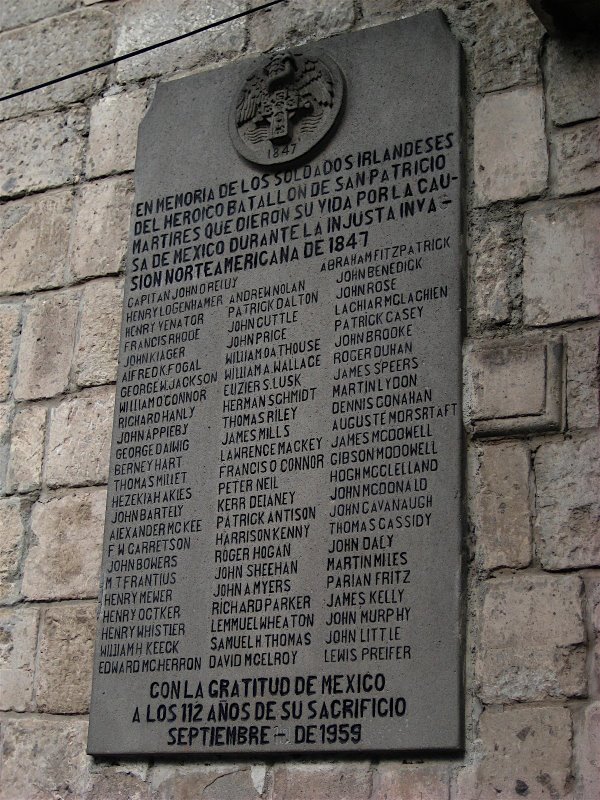
Today I also learned about the Batallón San Patricio. In a nutshell, this was a battalion of a few hundred immigrants, mostly from Catholic Ireland and Germany, who fought on the side of Mexico against the United States during the Mexican-American War. Fascinating story!

"In memory of the Irish soldiers of the heroic St. Patrick's Battalion, martyrs who gave their lives to the Mexican cause in the United States' unjust invasion of 1847." photo credit: Fennessey CC .30 by SA
“In memory of the Irish soldiers of the heroic St. Patrick’s Battalion, martyrs who gave their lives to the Mexican cause in the United States’ unjust invasion of 1847.”
photo credit: Fennessey CC 3.0 by SA

Poetry at the Post: St. Patrick’s Day with Jean Blewett

St. Patrick’s Day
BY JEAN BLEWETT

There’s an Isle, a green Isle, set in the sea,
Here’s to the Saint that blessed it!

ireland 2015

Trinity College Dublin, Ireland July 2013
Trinity College
Dublin, Ireland
July 2013
Traveling Across Ireland July 2013
Traveling Across Ireland
July 2013
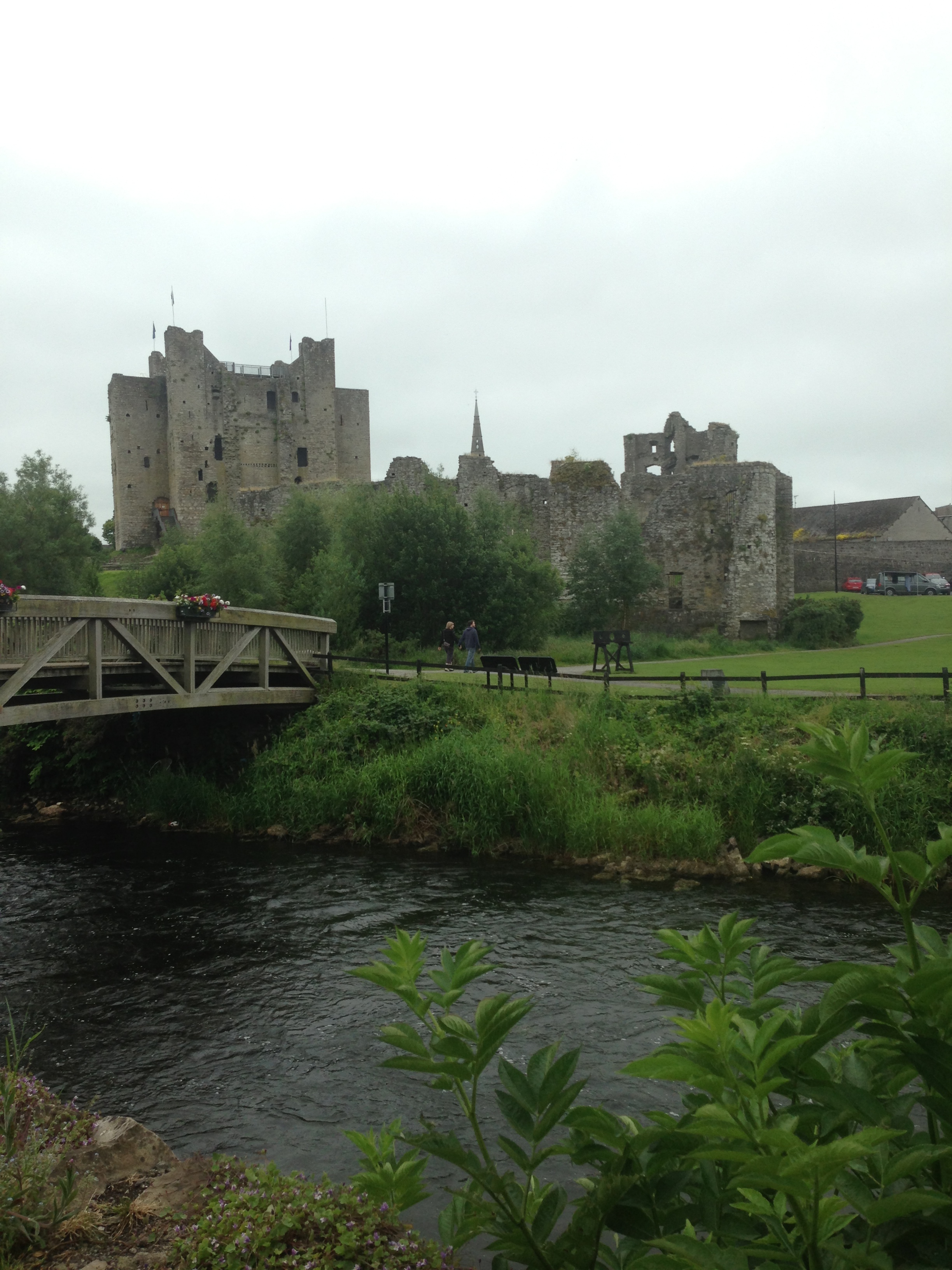
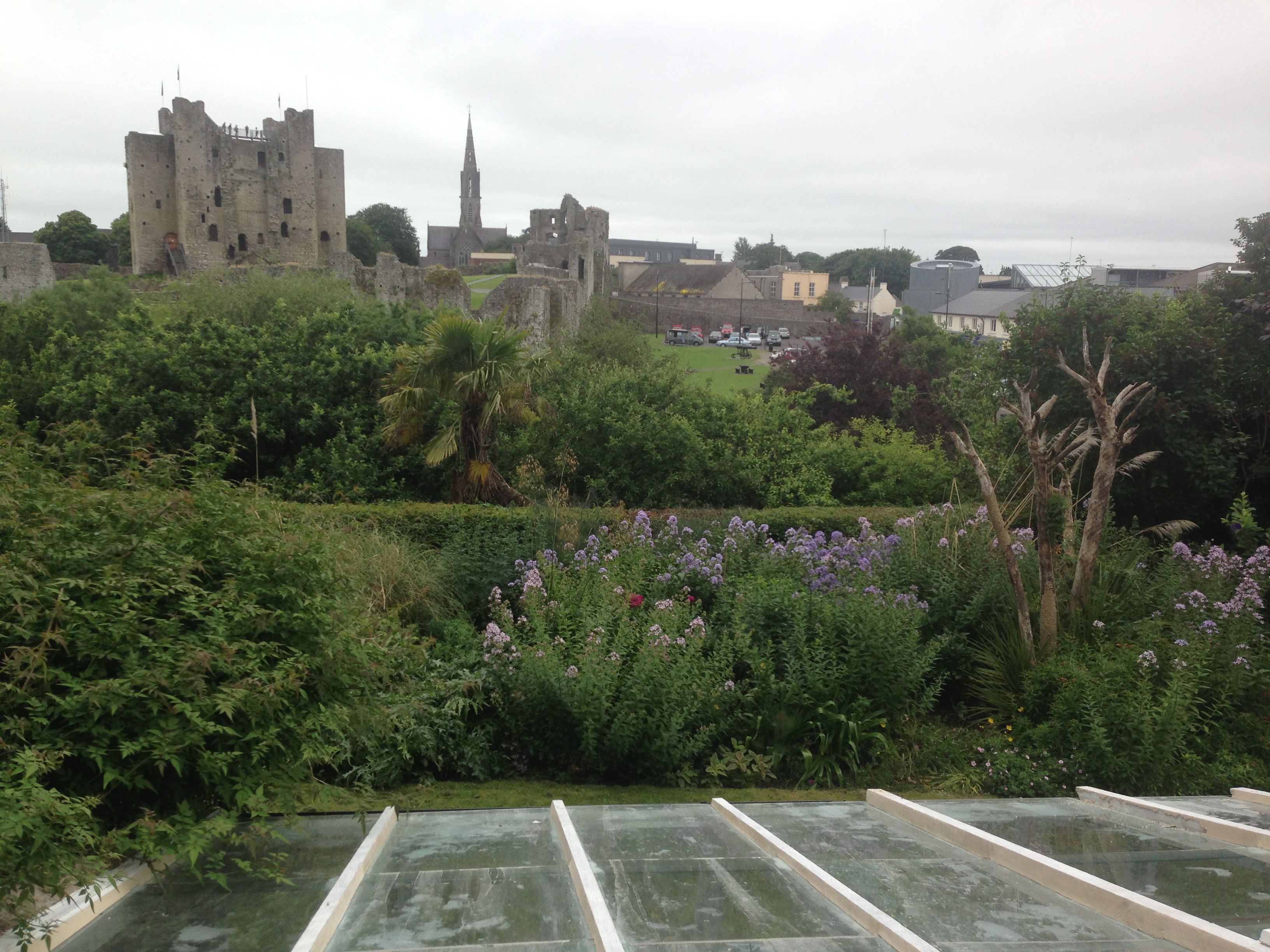
Trim, Ireland July 2013
Trim, Ireland
July 2013

ireland 6

ireland 7

Jean Blewett was a writer, poet and journalist and a regular contributor to The Globe, a Toronto newspaper. She was born in Kent County, Ontario of Scottish—not Irish—parents. Not much else is known about her other than that she was a frequent lecturer on temperance and suffragism.

Jean_Blewett_(cropped)

Here’s to old Ireland—fair, I ween,
With the blue skies stretched above her!
Here’s to her shamrock warm and green,
And here’s to the hearts that love her!

Happy St. Patrick’s Day 2015!

Poetry at the Post: Opera in Oaxaca with Phillip Gross

Opera Bouffe
BY PHILIP GROSS

The count of cappuccino,
the marquise of meringue,
all the little cantuccini…
and what was the song they sang?


Teatro Macedonia Alcala Oaxaca, Mexico March 2015
Teatro Macedonia Alcala
Oaxaca, Mexico
March 2015

The warmth and sun of Oaxaca contrasted with the medieval Scottish highlands of Rossini’s La Donna del Lago transmitted live last Saturday in Mexico—as well as in more than 70 countries worldwide—thanks to the New York Metropolitan Opera’s simulcast program.

Running a bit late, I rushed up the white marble staircase of  the lovely Teatro Macedonia Alcala — a theater built at the turn of the 19th century in the style of Louis XV. I took my seat on the right, aisle E.  Michele Mariotti lifts his baton, the aria begins….

The story is simple: three men in love with Elena, a young woman whose wishes are at cross purpose to her father’s political ambitions. He chooses one man; she wants another. And, oh yes—there’s special ring, a king and a very happy ending. I loved it!

“Tanti affetti”—the final showpiece aria sung by the marvelous Joyce DiDonato—had me humming and joyful on my walk up Calle Alcala to my minimalist apartment uptown.

As it was Saturday, it was wedding day and just as I passed by Santo Domingo, a bride and groom were exiting the church.
 

Marmota  Santo Domingo  Oaxaca, Mexico March 14, 2015
Marmota
Santo Domingo
Oaxaca, Mexico
March 14, 2015

I stopped and prayed for Jimena and Claudio…may this day not be the end but a beginning of a journey through life with love.  Meanwhile, poor Elena is doomed to the nightly repetition of her angst over three men never to be released into the real world after the final aria at Stirlng Castle..

We’ll slip away together,
perfect ghosts of appetite,
the balancing of ash on fire
and whim—the mating flight


Poetry at the Post: Wall Art in Oaxaca with Ray Gonzalez

The Walls
BY RAY GONZALEZ

Sor Juana de la Cruz hid her new poem
in a hole in the wall, but when a fellow nun
went to retrieve it after Sor Juana’s death,
it was gone
.

wall art #1

On my way to class at UABJO this morning, I decided to focus my attention on walls.

The walls of Oaxaca offer a quick peek into contemporary Oaxacan culture. Walking the streets of El Centro Historico, you’d been challenged to find a building free of graffiti, poster remnants or paintings on its walls.

It was cloudy and cold this morning in Oaxaca. Yes, cold in March! In fact, it even snowed in Puebla overnight causing the closure of the main highway to Mexico City. Snow???!!! Just the thought of it made me run into Lobo Azul for a latte para llevar but before I did, I snapped a couple of photos.

FullSizeRender-12

Ray Gonzalez, a poet from El Paso, Texas, has written a terrifying (although not totally lacking in humor) poem connecting walls to quasi-historical events. After reading “The Walls,” I don’t think I will ever think about walls in the same way again.

Two days before Salvador Allende was assassinated,
Pablo Neruda, dying of cancer, woke at Isla Negra
to find the walls of the room where he lay
were covered in hundreds of clinging starfish.

Poetry at the Post: Walking in Oaxaca with Thomas Traherne

Walking
BY THOMAS TRAHERNE (1636-1674)

To walk abroad is, not with eyes,
But thoughts, the fields to see and prize;
Else may the silent feet,
Like logs of wood,
Move up and down, and see no good
Nor joy nor glory meet.


Lake at Santo Domingo Tamoltepec March 2015
Lake at Santo Domingo Tamoltepec
March 2015


I woke up yesterday and felt the need for a poem—a poem to accompany me on a hike in the hills of Oaxaca, Mexico.  There is a poem for every occasion, mood or opportunity. It’s true. If you seek it, you will find it as I did with Traherne’s “Walking,”  with its opening line of  “To walk abroad is, not with eyes, But thoughts…”

Stained glass  at Hereford Cathedral   Thomas Traherne window by Tomm Denny and installed in 2007. photo credit: Pam Fray CC by SA 2.0
Stained glass at Hereford Cathedral
Thomas Traherne window by Tomm Denny and installed in 2007.
photo credit: Pam Fray CC by SA 2.0


Little is known of Thomas Traherne, an English poet, clergyman and theologian. Not a well-established poet of his time, he is almost “wholly a discovery of twentieth century scholarship” after one of his manuscripts was accidentally found in a London bookstall in the late 19th century.

hike#4

Although I am not a big fan of metaphysical poetics, “Walking” was the perfect text to contemplate on the trails of Santo Domingo Tamoltepec.

While in those pleasant paths we talk,
’Tis that tow’rds which at last we walk;
For we may by degrees
Wisely proceed
Pleasures of love and praise to heed,
From viewing herbs and trees.