Othello and Desdemona by Alexandre-Marie Colin, 1829
The 5th annual multidisciplinary conference on medieval, renaissance and early modern studies and their later legacies
Venue: Centre for Visual Arts and Research (CVAR)
Nicosia, Cyprus, 6 to 8 April 2017
with optional historic-site visits on 9 April
Acollaborative event organised by academics from CVAR, Northern Arizona University, Sheffield Hallam University, SOAS University of London the University of Kent and the University of LeedsCFR
The deadline for submissions of proposals is 1 January 2017. Early submission is strongly advised.
Hunting for the Animal Subject in Anglo-Saxon England: a Roundtable (Kalamazoo 2017): 52nd International Congress on Medieval Studies – Kalamazoo, MI – May 11-14, 2017
A recent trend in medieval studies and the humanities at large has been a “turn” to the animal. While medievalists have long been interested in bestiaries, beast epics, and other texts populated with nonhumans, the research that is produced is inevitably concerned with what those works say about human culture rather than what they can reveal about perceptions of animals as animals. The field of animal studies (alternatively known as critical animal theory), in contrast, focuses on how humans have sought to differentiate themselves from nonhuman animals and how this perceived seperation has determined the human treatment of and responses to nonhumans. Animal studies seeks to critique the past and present mistreatment of nonhumans but also to envision an affirmative and ethical form of response to the animal, to move beyond the hierarchical, Cartesian (and Augustinian) dualism that to date has largely defined the human-animal relationship.
While Jeffrey Jerome Cohen, Susan Crane, and Karl Steel have recently brought such concerns to bear on medieval literature in invaluable studies, the focus of their work is usually on the later Middle Ages. This roundtable discussion will thus take as its focus human-animal interactions in the literary and material culture of Anglo-Saxon England. Presenters will be invited to discuss, in a 10-minute talk, an animal-related question in their own research and to reflect on their methods for understanding how animals were perceived by the Anglo-Saxons. Given the limited corpus of written texts that survive from Anglo-Saxon England, the question of the animal in this period is by necessity a multidisciplinary one, and specialists in fields as varied as philology, literary criticism, philosophy, art history, and archaeology are welcome.
Please submit an abstract (preferably 300 words or less) as well as a completed Participant Information Form (found here: https://wmich.edu/medievalcongress/submissions) to Matt Spears (mes94@cornell.edu) no later than September 15, 2016.
So honored to have been a part of this multicultural/national ANTHOLOGY OF THE BUTTERFLY, a collection of “butterfly” poems by Slavic and Latin American writers with my English translations of “For the Dead Women of Juarez ” by Gregory Quinoñes (Mexico); “Sky Blue Butterfly” by Violeta Boncheva (co-translated with Dimana Ivanová/Bulgaria); “The Dream” by Andrej Hablák (Slovakia); and “November” by Ondrej Zajac (Czech Republic). Thanks to co-editor Dimana Ivanová (Bulgaria) for inviting me into the world of the “butterfly” and to Robert Max Steenkist (Colombia) for shepherding this awesome anthology through to publication.
Check out Transom—Issue 10: The Aromatic Forest. Lots of great stuff including my translation of the poem “I remember my first encounter” by Oaxacan poet Óscar Sandoval.
A Mexican red-kneed tarantula Brachypelma smithi photo courtesy of Trisha M Shears –
My poem “Boreas” was selected to be a part of the Poetry Leaves Exhibition in Waterford, Michigan. It will hang from a tree on the Waterford Civic Center campus through the month of May 2016. Check it out if you happen to be nearby. and send me a photo!
Boreas —After Sylvia Plath
I’ve done it again–rushed against the grasses,
grabbing tumble-weeds as weapons, the burst
of anger. Orithyia! She drives me crazy. Like
the beat of the baker’s hands forcing the yeast
to break open, I slammed No. 9, the highway
sign, hooked it in my grip and flung it against
the café’s metal siding. I’ve done it again
—miscreant of the family, bully punk.
If you want the swish of an egg, the suspense
of the soufflé, go find my brother, Zephyrus.
Grateful acknowledgment is given to GTK Creative Journal (October 2015) for first publishing this poem.
THE FIFTH ASIA-PACIFIC FORUM ON TRANSLATION AND INTERCULTURAL STUDIES Date: October 28- 30, 2016 Venue: University of Hawai‘i, USA Language: English
ORGANIZERS: University of Hawai‘i, Guangdong University of Foreign Studies, Tsinghua University, China KEYNOTE SPEAKERS: Lawrence Venuti, Temple University, USA; Weihe Zhong, Guangdong University of Foreign Studies, China; Jeremy Munday, University of Leeds, UK; Michael James Puett, Harvard University, USA
AIMS & SCOPE: After a series of turns in the past three decades, the scope of Translations Studies has been extraordinarily expanded. The edges of this discipline have also kept crossing. An increasing number of scholars in Translation Studies have come to realize that translation is a social activity which concerns the transfer of various types of signs (written, graphic, vocal, etc.), involved with different social factors (ideological, economic, cultural, etc.), and influenced by diverse human agents (translation initiators, translators, translation critics, patrons, readership, etc.). In an era of globalization, people have become more explicitly aware that a translational activity is not only a substantial part of human life but also a catalyst to the evolution of other social functional systems and a driving factor in inter-system communications. It should not come as a surprise then that studying translational activity in real social contexts and researching the interrelations among translation and other social systems is attracting more and more academic interests.
This conference aims to gather scholars in the fields of Translation Studies and Intercultural Studies to present their research results and exchange their views on the aforementioned trends. The goal is to create a third space other than “pure” translation studies and sociological studies by inviting scholars from various academic and cultural backgrounds to discuss translational activities with different approaches and academic narratives, in the hope that these discussions will inspire further interdisciplinary studies in the Asia-Pacific region as well as other parts of the world and help foreground the social functions of translation and translation studies. Themes of particular interest include, but are not limited to:
–Translation and social change
–Translation, cultural identity, and translated image
–Translation and circulation of knowledge
–Translation, language policy, and national security
–Translation and cultural memory
–Translation and education
–Human agents in translation
–Translation as a profession
— Translated literature and national literature
SCHEDULE: MAY 25, 2016: Deadline for submitting abstracts (approximately 300 words); JUNE 5, 2016: Notification of acceptance
REGISTRATION FEE: 200 US Dollars
PAPER SUBMISSIONS: Authors are invited to submit abstracts to https://form.jotform.com/60590520824149 by 25 May 2016. Abstracts will be selected for presentation at the conference by the Committee and will be notified by 5 June 2016. After the conference, a number of selected papers passing peer reviews will be included in Asia Pacific Translation and Intercultural Studies by Routledge/ Taylor & Francis Group and 《亚太跨学科翻译研究》(Asia-Pacific Interdisciplinary Translation Studies) published by Tsinghua University Press.
PAPER OF EXCELLENCE AWARD: The academic committee will choose three papers of excellence submitted by young scholars (under the age of 40) and grant each of them with an award of 400 US dollars together with a certificate.
For questions, please contact either Dr. Xuanmin Luo luoxuanmin@126.com or Dr. Lucia Aranda laranda@hawaii.edu
Come buy our architect-designed home in Mano Prieto in Far West Texas, just about midway between Marfa and Fort Davis.
280 + days of deep blue skies and glorious sunshine. Enjoy the cultural activities of Marfa plus the majestic scenery of the Davis Mountains year round.
Manuscript illuminations frequently place special emphasis on precious-metal objects both sacred and secular, such as chalices, reliquaries, crosses, tableware, and figural sculptures. Artists typically rendered these objects using gold, silver, and metal alloys, “medium-specific” materials that contrasted dynamically with the surrounding color pigments. The visual characteristics of these depicted metal objects — lustrous yet flat, almost anti-representational — could dazzle, but perhaps also disorient, the viewer: they catch the eye while creating a fertile tension between the representation of an image and the presentation of a precious stuff, between the pictorial and the material. A gold-leaf chalice signals its real-world referent both iconically, via its shape, and indexically, via its metal material, a doubled representation unavailable to the remainder of the painted miniature. Such images can take on added complexity if intended to represent known real-world objects.
This panel seeks to take inventory of how these precious-metal objects were depicted and how they generated meaning. Possible themes include: chronological/geographical specificities in the representation of metalwork in manuscript illuminations; depictions of precious-metal figural sculpture, including idols; technique (e.g. pigment vs. leaf); the semiotics of metal on parchment; and whether we can speak of “portraits” of particular objects and/or visual “inventories” of particular collections. We welcome proposals that consider Western, Byzantine, and/or Islamic manuscript illumination from the early through the late Middle Ages.
Please send (1) an abstract of no more than one page and (2) a c.v. with current contact information by Sunday, May 1, 2016 to both panel organizers: Joseph Salvatore Ackley (ja2998@columbia.edu) and Shannon L. Wearing (slwearing@gmail.com). Selected papers are to be twenty minutes in length.
Coldnoon: Travel Poetics (International Journal of Travel Writing) invites writings (prose/nonfiction/research/opinions/poetry/travelogues) on travel. For April we are receiving submissions till the end of the month.
Selected writings, published in Diaries and Dialogues will qualify for publication in the journal, both online and print (EISSN 2278-9650; ISSN 2278-9642)
Submissions are invited in two categories:
Diaries: 500-1400 words (diaries.coldnoon@gmail.com)
Dialogues: 1500 words and above (dialogues.coldnoon@gmail.com)
Poems (which may be published singly in Diaries or as strings of poems in Dialogues) can be sent as single submissions or strings of poems (no limit).
Also send us a short bio note, and a recent photograph of yourself.
Submissions can be on—but need not be confined to—the following themes:
1. Culture/Ethnography/Food
2. Architecture and Travel
3. City Mapping/Derive/Flanerie
4. Cyberflanerie
5. Travel in Popular Culture/Cinema/Arts
6. Iconic Cities/Urban Geographies
7. Pastoral Travelling
8. Tourism/Ecotourism/Health Tourism, etc
9. Pitfalls of Tourism/The Tourist as the Dilettante
10. Heritage Travelling
11. Impressionism and Cities (Paris, London, New York, Calcutta, Delhi, etc.)
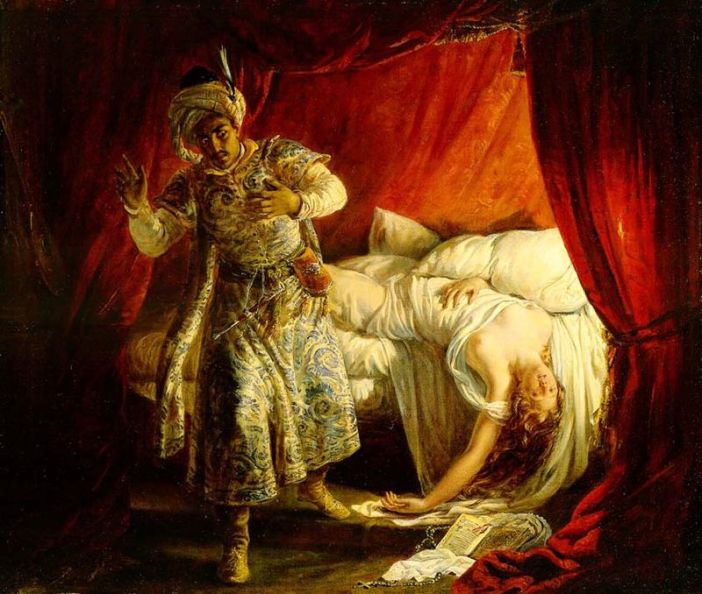

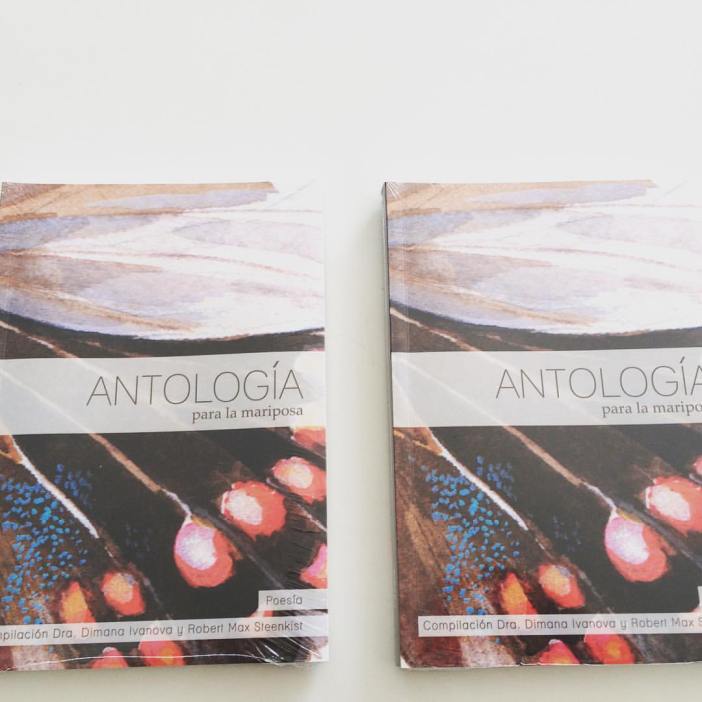
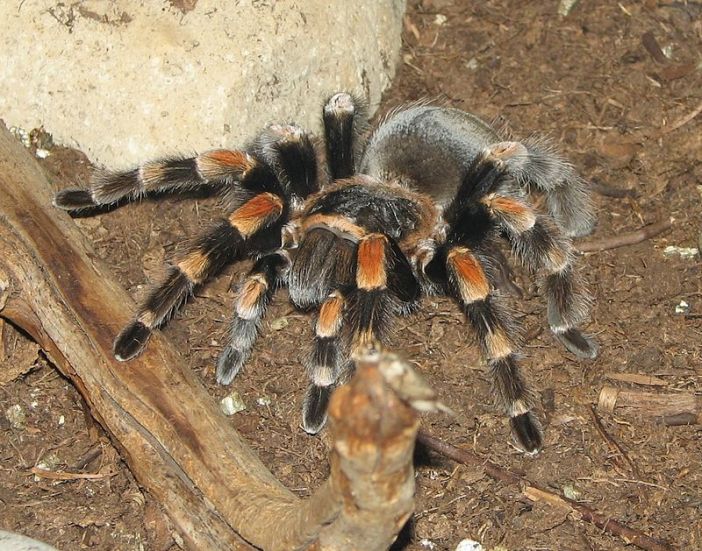





 photo ©John M. Jennings
 Alice-Catherine