Poetry at the Post: The Indian Quarterly—Sudeep Sen

Paper T[r]ails by Sudeep Sen

zee1

Paper dreams within the cover of a book,
book binds itself with the glue of a spine,

spine weaves together—dovetailed
by the grace of words—words of passion,


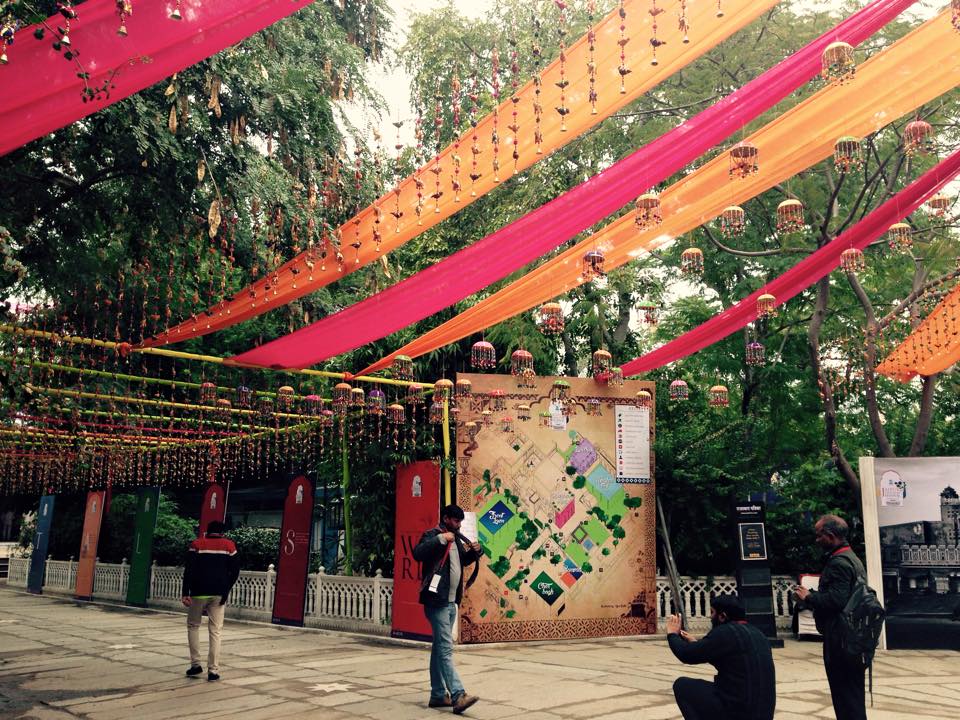
India is well—for a first time visitor—indescribable. Somehow, I still cannot put my brief two-week visit to Northern India into perspective. The focus of the trip was the ZEE Jaipur Literature Festival. Billed as the largest free literary festival on earth, the JaipurLitFest 2015 may have lived up to its hype with 300 authors, 140 musicians and 245,000 recorded footfalls over five days.

The crowds were intense—especially as the week wore on. It was nearly impossible to push through the cross paths on the grounds of the Hotel Diggi Palace at midday—or to find a seat at one of the sessions. Yet, if you went early in the morning, the queue for chai-in-small red-earthen-cups was short and you could grab a spot somewhere at one of the 10 venues. And, who you might find seated next to you could be surprising-from an economic advisor to Prime Minister Modi to a graduate student from LA studying Renaissance trade routes in India as international visitors were represented from over 50 countries!
 

photo credit: John Jennings

Sometimes the best part of a trip is what you discover when you get back home. That’s what happened to me. After decompressing from the 31-hour journey from Jaipur to Austin, I discovered my complimentary copy of  The Indian Quarterly.
This is a beautifully produced literary and cultural magazine full of essays, art, fiction, poetry, photo essays. My favorite part is discovering new poems and poets, such as Paper T[r]ails by Sudeep Sen


Paper dreams in stacks, between covers,

among notes left surreptitiously
between pages for someone else to read.

6 Things I Learned from Retelling The Song of Roland in 291 Tweets #SOR291

SOR


I was fascinated by the story of Stanford medievalist (and “text technologies”) researcher Elaine Treharne who compressed Beowulf into 100 tweets. #Beowulf100

Could I do the same with another medieval epic, The Song of Roland? Well, I decided to try. I based my tweeted version on the 1963 prose translation by poet W. S. Merwin. Instead of 100 tweets, I opted for 291, which corresponds to the 291 laisses, or stanzas typically found in medieval French literature, specifically French epic poetry.

I had a time frame—one month from start to end—and although I took a two week break from tweeting while in India, I actually did complete the project.

So what did I discover in all that tweeting?

1. The Song of Roland is repetitive. For example, there’s the question of whether or not to blow the horn.

LXXXIV Roland, for God’s sake, blast your horn! cries Oliver. ‪#SOR291

LXXXV Blast your horn! No! I will not be shamed! says Roland. #SOR291

LXXXVI The horn! The horn!  Oliver begs once again. Roland replies I am eager for battle! #SOR291

LXXXVII No more talk of horns! cries Roland. We will meet the enemy head on. #SOR291

Or take the fainting. Roland faints; he is revived; he faints again. Next Charles the King faints a few times. So does the Archbishop. You get the point.

But, of course, this all makes sense because The Song of Roland is a chanson de geste, or “song of deeds” and songs tend to include repetitive lyrics or refrains.

2. The Song of Roland is brutal. Hand to hand combat with halberds and swords is bloody. It is not pretty. War is tough and this is a book about war.

CVII Oliver draws his sword and slices Justin of Val Ferree. #SOR291

CVIII More Saracens are split open by the French. #SOR291

3. The Song of Roland is a propaganda piece. Written a few hundred years after the time of Charles the Great, or Charlemagne, it plays fast and loose with the historical facts and, instead, gears its message towards recruitment for the Second Crusade standing firmly on the side of the Christians. Mountjoy!

4. The Song of Roland is a book about men. The only women (Alde and the Queen of Spain)  who appear on the stage briefly are but paper dolls in this story of men.

CCLXVIII Alde, the one promised, learns of Roland’s death. She dies rather than take up with another. #SOR291

5. The Song of Roland is not The Iliad. Both books are books of war and are full of nasty killings—thousands upon thousands of young men being slaughtered in hand-to-hand combat but The Song of Roland lacks the comedic interludes from the soap-opera drama of the Greek gods. There is, however,  one similarity in that both Zeus and God interfere in the affairs of the mortals and ultimately influence the outcomes of the wars.

5. The Song of Roland should be called The Song of Charles the King. It is Charles who takes the journey and returns home a changed man. In the end, Charlemagne realizes he is merely a puppet for God’s war on the pagans. Therefore, Charles not Roland fits the mold of the epic hero.

CCXCI The night darkens. Gabriel appears with a call to arms. Oh God, laments Charles the king, my life is a burden. The End. #SOR291

291 tweets is a lot of tweets. Would I do it again? Probably not, but maybe.
 

Poetry at the Post: Reading the Tea Leaves

Tea-Strainer
BY JOYELLE MCSWEENEY


     Sibyl by Francesco Ubertini, c. 1525

Sibyl by Francesco Ubertini, c. 1525

-keep, un-sibyl; if the soul
Has the weight of a swallow

This poem is so lovely the way it begins—not with the oracular women of ancient Greece but with the hiss of the sibilant “s’s.”

We think of the tea leaves and contemplate the future yet “Wait,”  we say, as we remind ourselves that the title of the poem is “Tea-Strainer” which evokes what remains—or that that was “formerly, our future.”

What is our future? I just know for me it is personally BIG. It must be because I think of  the future a lot—although usually in the sense of worry and woe and not with the buoyancy of hope and excitement.

McSweeney’s poem reminds me of the importance of the moment of living—that the writing of this post will soon be part of my past—as soon will be my trip to India.

I N D I A! but somehow as I get ready to begin the journey today, the future does feel BIG.

Tea time in Istanbul, 2014

#ZEEJaipurLitfFest   #India2015

Read more about Joyelle McSweeney here. 

Poetry at the Post: The Travels of an Accordion

Урок по акордеон * by Alice-Catherine Jennings, as translated from the English by Dimana Ivanova

Те се вмъкнаха в ретро колата и седнаха на предните й места.

Това беше времето, което прекарваха заедно всяка

Oaxaca skyline photo credit: John Jennings
Oaxaca skyline
photo credit: John Jennings

To see your work in print in your own language is pretty great but to see it transformed into another language is totally awesome.

“Accordion Lesson” began as a response to a  prompt: ‘Write something from your childhood.” Uh oh! I really did not want to walk down the stairs to that dark basement of memories yet I felt committed to the exercise.

In Oaxaca, Mexico to study Spanish, I was feeling removed from my life in the States, and even more so from my life as a child growing up in Ohio. I was stumped. One morning on my way to the university, I found a connection—the acordeonistas of Oaxaca.

Yes, I admit it. I played an accordion as a child—for about 5 years. My accordion was big, emerald green with a tiny diamond in the center to  mark the middle C. I was a tall, skinny kid and the accordion overwhelmed my body.

My green accordion has traveled far via this poem—from Oaxaca to publication in Ireland and south to Bratislava, where my translator, Dimana Ivanova, currently lives.  Dimana, is not only a scholar and translator but also a poet. Here are the opening lines of her lovely poem “Come.” You can find the full poem is on her website. 

Come by Dimana Ivanova

Translated from Bulgarian by Katerina Stoykova-Klemer

Come and enter my soft sorrow,

with a velvet tail of silver!

Enter me like a gray fox,

enter and run tenderly on my flesh,


*”Accordion Lesson” was first published in Boyne Berries,  March 2014

Accordion Lesson by Alice-Catherine Jennings

They slip into the front seat of the station

wagon. This is their time together

Poetry at the Post: Should I Get an MFA?

Workshop
BY BILLY COLLINS
I might as well begin by saying how much I like the title.
It gets me right away because I’m in a workshop now

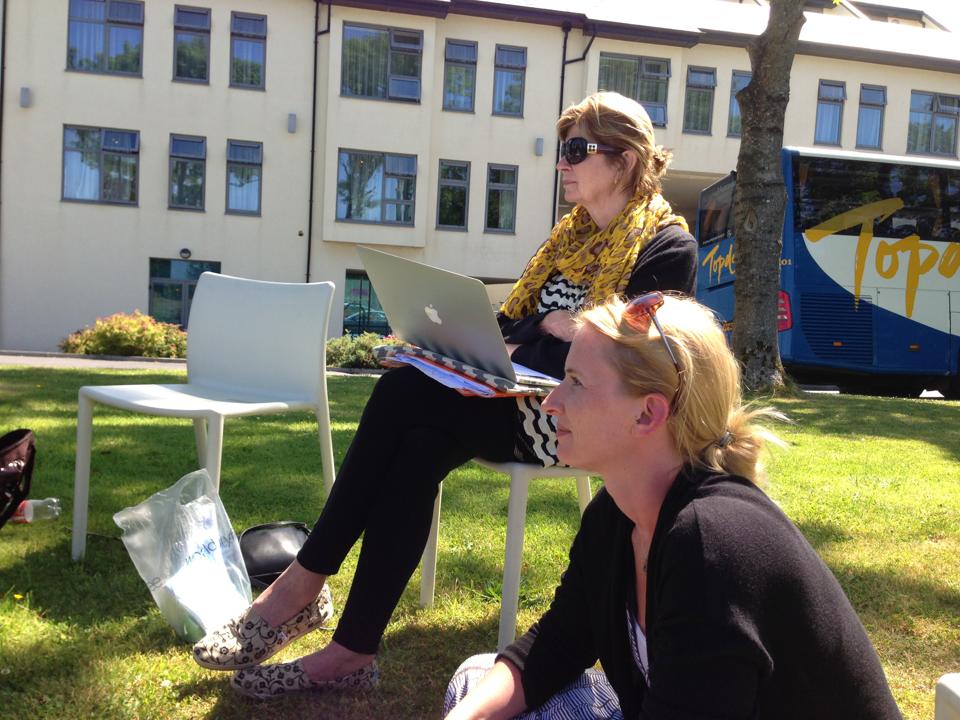
Poetry Workshop outside Galway, Ireland Photo: Maria Hofman

Now that I have an MFA in Creative Writing, writer friends have asked, “Should I get one too?”

Well, I can’t answer that question as getting an MFA is a personal decision based on one’s objectives, needs—and financial resources. But—if you have already decided to take the plunge and commit yourself to 2-4 years of demanding work then Spalding University’s MFA program may be the one for you.

But what I’m not sure about is the voice,
which sounds in places very casual, very blue jeans,…

One of the reasons you may not have applied to an MFA program yet is that you are nervous about the “workshop experience.” I know I was but  “Serious critique doesn’t have to hurt. At Spalding University, you’ll find a top-tier low residency MFA program that celebrates creativity and community, not competition. The program offers real intellectual stimulation in a supportive environment while giving writers the tools to make writing fresher, richer, more uniquely their own. There’s no such thing as a “Spalding voice.” It’s your voice, and at Spalding, it will be heard and read.”

Four years ago I became a member of the Spalding MFA family— a very large family indeed! Not only am I now connected to all of the incredibly talented and caring staff, faculty and fellow students but also to an alumni group over 500 writers strong. In addition, because I elected to do my residencies abroad, I have poet/writer friends around the world—and one of them is currently translating a selection of my poems into Bulgarian!

Poets in Paris Photo courtesy of Stephen Woodward

Residencies abroad? Yes! For me, a global nomad, this was a compelling reason to consider a Spalding MFA.  At Spalding, you have the choice to attend your residencies in Louisville, Ky or abroad—or do a combo of the two. During my years at Spalding, I traveled to Rome, Tuscany, Paris, Dublin, Galway, Prague and Berlin. I actually graduated in Berlin! How cool is that?

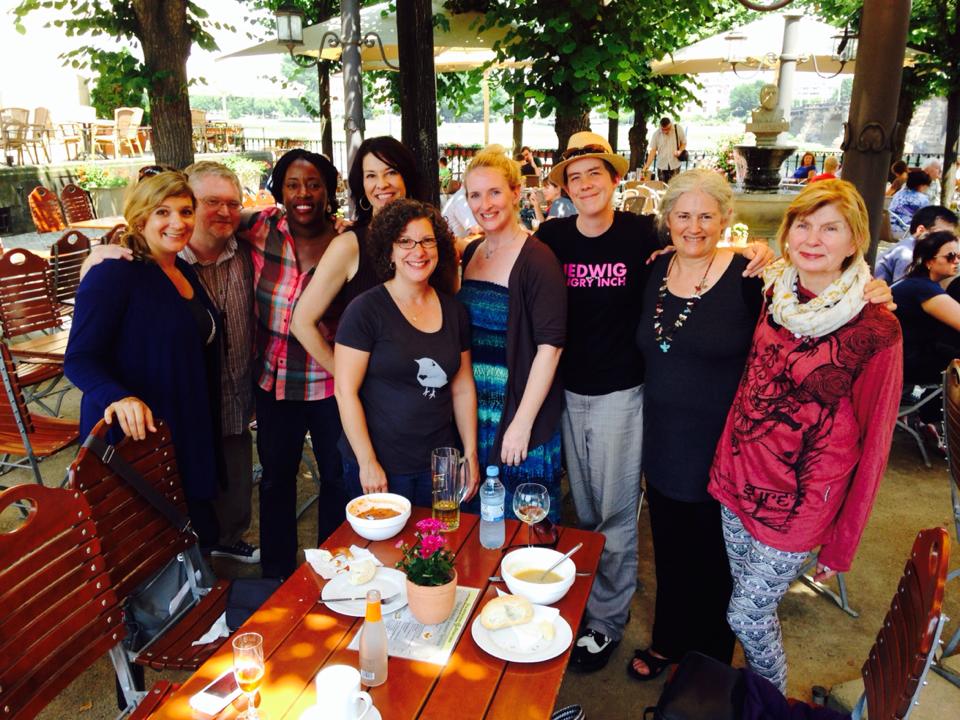
Graduating class Summer 2014 Spalding MFA in Writing. A biergarten in Dresden, Germany Photo courtesy of  Karen Chronister
Graduating class Summer 2014 Spalding MFA in Writing. A biergarten in Dresden, Germany Photo courtesy of Karen Chronister

But the best part is that in actuality you never really graduate as you can continue to connect with the Spalding family with opportunities for post graduate study, homecoming in Louisville,  and even travels with the program as an alumn.

In 2015, Spalding’s summer residency will be in Athens and Crete, Greece.

So-what are you waiting for?

The application deadline for spring and summer is February 1. Holy Ouzo! Get that application started today!

You can email: mfa@spalding.edu for more information. Or contact me at alicecatherinej@gmail.com.

You never know—we may meet up this summer in Greece. I hope so! First ouzo is on me!

But then there’s that last stanza, my favorite.
This is where the poem wins me back,

Poetry at the Post: “At the Rodin Museum” by Tishani Doshi

AT THE RODIN MUSEUM by Tishani Doshi

Rilke is following me everywhere

with his tailor-made suits

and vegetarian smile.

Portrait of Rilke by Paula Modersohn-Becker. 1906.

At this exact moment next week, I will be in the sky on my way to India. YES! I N D I A!

Just the thought of India  causes a wave of emotions that simulates the flow of the country’s name as it moves from the back of the throat to the tongue and palette and ends with the AH as it floats out the mouth. AH INDIA!

I’ll be traveling with a group of 15 other writers and the meat of our 10 day trip is The Jaipur Literary Festival. Billed as the “largest FREE literary festival on earth,” there will be close to 300 speakers, thousands of attendees, events in tents and gardens—and time for tea! (Tea time is at 4:30 pm)

In sorting through the list of speakers, I discovered Tishani Doshi—a Chennai-born poet, author, journalist and dancer.

Her poetry is inspired, important and full of the unexpected. There is always the element of  surprise—as in her poem “At the Rodin Museum.” It took me a couple of reads to realize that it was the poet Rilke following the poet speaker and not the artist Rodin.

Why Rilke at the Rodin? I’m not sure but I do know the two had a connection—in fact, the reason for Rilke’s first trip to Paris in 1902 was to write a monograph on Rodin.

He sees how I’m a giant piece

of glass again, trying

to catch the sun

in remote corners of rooms,

mountain tops,….

The Kedar Range of the Greater Himalayas rises behind Kedarnath Temple (Indian state of Uttarakhand), which is one of the twelve jyotirlinga shrines. Photo by Kaustabh CC by  S.A. 3.0
The Kedar Range of the Greater Himalayas rises behind Kedarnath Temple (Indian state of Uttarakhand), which is one of the twelve jyotirlinga shrines.
Photo by Kaustabh CC by S.A. 3.0

Poetry at the Post: Born on a Tuesday in Albania

“Negative Space” by Luljeta Lleshanaku as translated by Ani Gjika

I was born on a Tuesday in April.
I didn’t cry. Not because I was stunned. I wasn’t even mad

The Palace of Culture of Tirana whose first stone was symbolically laid by Nikita Khrushchev in 1959. Photo by Jeroen CC by SA 3.0
The Palace of Culture of Tirana whose first stone was symbolically laid by Nikita Khrushchev in 1959.
Photo by Jeroen CC by SA 3.0

Tuesday’s child is full of grace but a Tuesday child is also a worrier. At least I am—have always been. Since childhood, I have had my worry dolls all lined up in a row. When I knock one down, another one pops up. I feel that it must be a condition cosmologically acquired as in reality I had little reason to be unsettled as a child. So why did I wake up mornings feeling bile in my throat, panic in my breath?

1968. At the dock, ships arriving from the East
dumped punctured rice bags, mice
and the delirium of the Cultural Revolution.


Luljeta Lleshanaku
, who was born in Albania in 1968, had a reason to be anxious. A young girl coming of age during the Stalinist dictatorship of Enver Hoxha lived a different reality than mine.

In LLeshanaku’s poem, “Negative Space,” we have the opportunity to enter ever so slightly a window into the Albania of the 70’s and 80’s. We can visualize the “men in uniform” clearing out the church; the “portrait of the dictator, puffing smoke from its temples;” Halil’s “eight children” who entertained “themselves carrying famine on their shoulders;” and the man in prison who writes “I am well . . .” and “if you can, please, send me a pair of woolen socks”.

Yet, within these confines, there is the push by the poet against her fate and a search for the spirit of the goddess Athena “wearing a pair of flip flops and an owl on top of a shoulder.”

This is a richly-layered poem. You can listen to a few more Lleshanaku’s poems here:

Poetry at the Post: Out of the Darkness—Albania

“Perhaps the Last Encounter With the Moon” by Visar Zhiti, as translated by Robert Elsie

I fooled the guards tonight
When they were doling out supper, that sordid soup,
Because I saw the moon….

Statue of Asclepius Museum of Epidaurus Theatre. Photo by Michael F. Mehnert.
Statue of Asclepius
Museum of Epidaurus Theatre.
Photo by Michael F. Mehnert.

If Asclepius—the god of medicine— is willing, my wrist will soon be released from its splint prison. Yes, prison.

Low and grounded—hellish for a nomad—I’ve been thinking a lot these past couple months about constraints of freedom—external as well as internal yet, of course, my seven weeks of being inconvenienced by a broken wrist is microscopic compared to the seven years of harsh imprisonment experienced by the Albanian poet, Visar Zhiti—a poet I discovered yesterday at Malvern Books in Austin.

visar zhiti

Born in 1952, Zhiti was arrested on November 9, 1979, for his poetry which was seen as anticommunist and “interpreted as having blackened socialist reality.” After five months in solitary confinement, he was tried and sentenced to up to thirteen years imprisonment and sent to concentration camps in the northern mountain region of Albania.

During his time in solitary, Zhiti managed to write in his mind and commit to memory 100 poems and then he wrote more—even in the harshest conditions, such as in the “living hell of the copper mines at Spaç.”

Zhiti chose to come out the darkness through things small
—a glimpse of a moon,
a leaf, a bird,
a rainbow..

If we look, there is light.

Today there will be one more minute of daylight than yesterday.

The deep darkness of the winter solstice has ended.

Legendary darkness and light, magic luminosity
Like a little cosmos,
ephemeral.
of hope.

Photo by John Jennings

Zhiti Visar. The Condemned Apple: Selected Poetry. Trans. Robert Elsie. Green Integer, 2005.

Poetry at the Post: Farewell to Bath, Hello Susa!

Farewell to Bath
BY LADY MARY WORTLEY MONTAGU

(15 May 1689 – 21 August 1762)

To all you ladies now at Bath,
And eke, ye beaux, to you,
With aching heart, and wat’ry eyes,
I bid my last adieu.

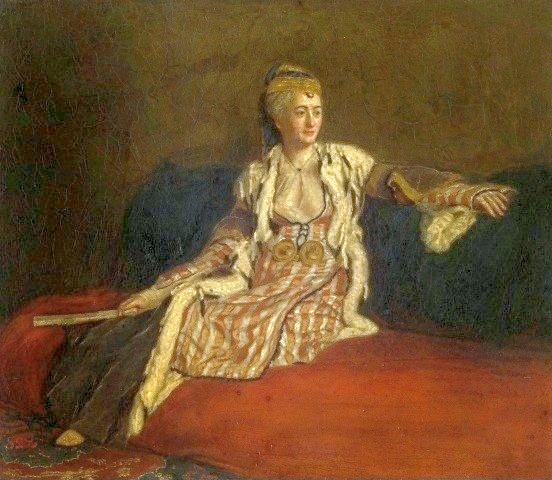
Lady Montagu in Turkish dress by Jean-Étienne Liotard, ca. 1756, Palace on the Water in Warsaw

Having just read Northanger Abbey, England, I was pleased to discover “Farewell to Bath” by Lady Montagu, a poem that captures my own feelings as I say farewell to Jane Austen’s Bath.

This poem was fun to read but I wanted to know more about the poet behind the poem. Who was Lady Montagu?

 Pope makes love to Lady Mary Montagu, 1852. Print from oil on canvas original at Auckland City Art Gallery
Pope makes love to Lady Mary Montagu, 1852. Print from oil on canvas original at Auckland City Art Gallery

Born in an aristocratic family in London, Lady Montagu educated herself via her father’s extensive library. Although she considered herself a poet, Lady Montagu is best remembered for her Letters from Turkey, written while living in Istanbul with her husband, the British Ambassador Edward Wortley Montagu. Given access to the private quarters of Islamic women, Lady Montagu was able to offer her readers a fuller—and quite interesting—picture of 18th century Turkey.

Lady Montagu was witty, intelligent, and quite outspoken. She rejected Alexander Pope’s romantic advances; openly took Jonathan Swift to task for his poetry; and introduced smallpox inoculation to England from Turkey.

A propos of distempers, I am going to tell you a thing, that will make you wish yourself here. The small-pox, so fatal, and so general amongst us, is here entirely harmless, by the invention of engrafting, which is the term they give it. There is a set of old women, who make it their business to perform the operation, every autumn, in the month of September, when the great heat is abated. People send to one another to know if any of their family has a mind to have the small-pox; they make parties for this purpose, and when they are met (commonly fifteen or sixteen together) the old woman comes with a nut-shell full of the matter of the best sort of small-pox, and asks what vein you please to have opened. She immediately rips open that you offer to her, with a large needle (which gives you no more pain than a common scratch) and puts into the vein as much matter as can lie upon the head of her needle , and after that, binds up the little wound with a hollow bit of shell, and in this manner opens four or five veins. (From Letters from Turkey)

Eventually she abandoned England—and her husband—to live abroad..and…well… I am digressing from Bath.

Now is the time to say goodbye to society balls, carriage rides and waters “Hot reeking from the pumps” as we travel back to ancient Persia and Greece.

Our next read in the virtual literary salon is The Persians by Aeschylus. Pride, grief and the folly of vengeance—all rolled up in a script of a mere 23 pages. We begin DECEMBER 1, 2014. Send a message to alicecatherinej@gmail.com to join. Free and open to all.

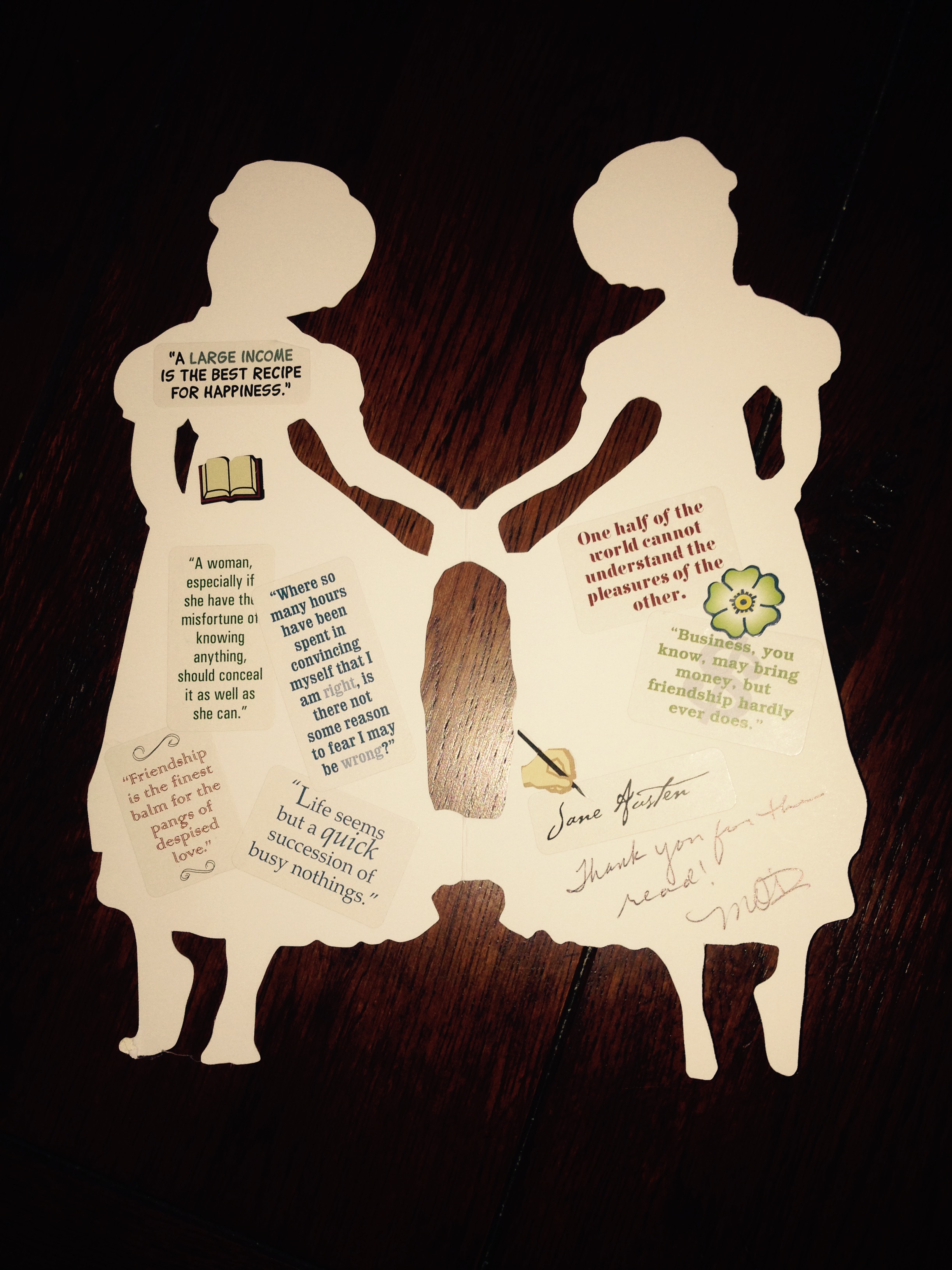
We have a great group of worldwide readers and although we meet online, at times there are surprising personal encounters. Two readers recently met for the first time at a book fair in Scotland while just last Sunday my neighbor—and also a Northanger Abbey reader—stopped by with this nice note a la Jane Austen.

jane austin 1jane austen 2

My heart is full I can no more—
John, bid the coachman drive.

Good-bye Bath, Hello Susa!