Poetry at the Post: Salvage

Salvage
BY KAY RYAN
The wreck
is a fact.
The worst
has happened.
The salvage trucks
back in…

Gustave Doré's first (of about 370) illustrations for Don Quixote.
Gustave Doré’s first (of about 370) illustrations for Don Quixote.

BCLA2016: Salvage

The University of Wolverhampton’s Faculty of Arts, and the Centre for Transnational & Transcultural Research, are proud to host the 14th International Triennial Conference of the British Comparative Literature Association.

Organisers: Dr Glyn Hambrook and Gabriela Steinke, University of Wolverhampton

BCLA2016: Salvage considers the international and transnational circulation of textuality in the broadest comparative and historical terms, not merely as a process that involves the perceived colossi of literature, but one that also charts the byways and alleyways of literary production, the sometimes hidden or obscured debts to individuals, coteries, and literary movements that might have formed (or will one day inform) other or new literary histories.

2016 is also the 400th anniversary of the deaths of Cervantes and Shakespeare, two writers whose lives and works have been salvaged from historical documents, bad quartos, and hearsay so successfully that we hardly question their authenticity. Like any salvage operation, however, literary history has not only attempted to reconstitute the corpa of its hallowed authors, but it has also sanctioned generations of succeeding writers who have reused, recycled, and redeployed words, meanings, and forms through translation, parody, homage, pastiche, adaptation, allusion, intertextuality, and imitation. Salvage, too, knows no borders, as the mighty wrecks of Shakespeare and Cervantes demonstrate: while reclaimed for nationalist narratives, their works have been incorporated into the fabrics of many languages, literatures, and cultural settings.
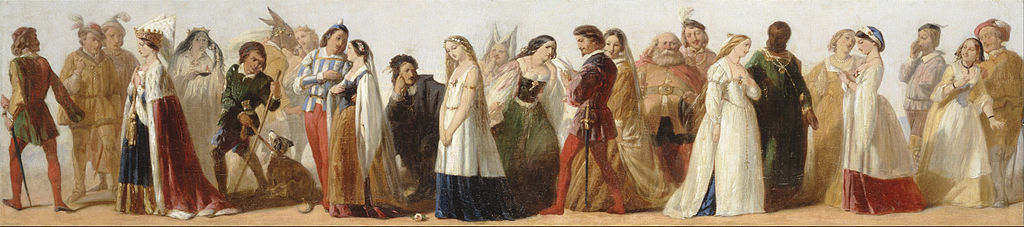
Procession of Characters from Shakespeare's Plays by an unknown artist
Procession of Characters from Shakespeare’s Plays by an unknown artist

CALL FOR PAPERS AND PANELS

Proposals are invited for the Fourteenth Triennial Conference of the British Comparative Literature Association be held at the University of Wolverhampton (UK) from 12-15 July 2016. The theme of the conference is ‘Salvage’, a concept at the very heart of literary and cultural activity. Translation, reception, re-reading – the vital substance of comparative literary research – all refer to processes by which literature’s significance is activated or released in acts of salvage, acts of saving and, indeed, salvation.

Plenary speakers at the conference will include Professor (Emeritus) David Constantine and Dr Susan Jones (St Hilda’s College, Oxford).

The year 2016 will see a number of anniversaries from the domain of literary and cultural studies within the European sphere alone. Prominent among these is a shared 400th anniversary, that of the death of Miguel de Cervantes and William Shakespeare. This anniversary, we envisage, will form a thematic strand running in parallel to the main conference theme.

Paper and panel proposers are invited to consider incorporating this and other anniversaries into their abstracts where a convergence between the anniversary in question and the theme of Salvage can be credibly established.

Proposals for Papers:

Proposals are invited for papers, in English, of no more than 20 minutes’ duration, on or in relation to the conference’s theme of Salvage. Proposals, in the form of an abstract of 250 words accompanied by a brief ‘bio-note’ of 50 words at most, should be submitted by email to bcla2016@wlv.ac.uk by no later than 30 September 2015.

The abstract should describe the proposed topic, make clear its connection to the conference’s theme, and indicate briefly how the treatment of the proposed topic constitutes a comparative approach to and analysis of the material concerned. (In this regard, proposers may refer to the BCLA’s aims.)

Proposals for Panels:

Proposals are invited for panels, in English, comprising 3-4 papers, each of no more than 20 minutes’ duration, on or in relation to the conference’s theme of Salvage. Proposals (see below) should be submitted by email to bcla2016@wlv.ac.uk by no later than 31 August 2015.

Panel proposals should take the form of an abstract of 300-350 words describing the proposed topic, establishing its connection to the conference’s theme, indicating briefly how the treatment of the proposed topic constitutes a comparative approach to and analysis of the material concerned (proposers may refer to the BCLA’s mission statement) and explaining the complementarity of the proposed papers. This abstract should be accompanied by synopses of 150-200 words for each of the papers, together with a brief ‘bio-note’ of no more than 50 words for each contributor.

With regard to the theme of salvage, proposals for panels considering antiquity/monuments, forgotten books and readers and the literature of al Andalus would be particularly welcome.
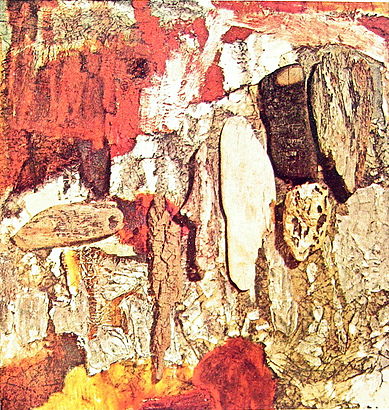
“Jane Frank Plum Pt thumb”. Licensed under Fair use via Wikipedia –

Deadline for Submission of All Proposals:

31 August 2015 (Panels); 30 September 2015 (Papers): by email to bcla2016@wlv.ac.uk

Keywords:

Retrieval: recuperation, recovery, rediscovery, exhumation, remembering, recollecting, resurrection, repossession;
Saving: rescue, survival, reprieve, restoration, resuscitation, repair, preservation, conservation, consecration, canonization, quotation, re-edition, translation, legitimisation, de-criminalization;
Saving the spirit: redemption, salvation, renaissance, rebirth, liberation, emancipation;
Re-using: recycling, re-processing, triage, bricolage, ecology, scavenging, transformation, imitation, plagiarising, transmutation, adaptation, metamorphosis, anniversary, commemoration;
Reconfiguring: blending, merging, distilling, filtering, abstracting, editing, expurgating, bowdlerising, disguising, distortion;
Remains: rubbish, gold under dirt, detritus, ruins, monuments, residue, ecology, collage;
The antithesis of salvage: suppression, censorship, stigmatization, defamation, repression, eradication, erosion, disarticulation, oblivion, forgetting.

Poetry at the Post: Translating the Untranslatable

Translation
BY JON PINEDA
We thought nothing of it, he says,
though some came so close to where we slept.

I try to see him as a boy,
back in the Philippines, waking

A Tagalog couple of the Maginoo caste depicted on a page of the 16th-century Boxer Codex.

Call for participants: “Untranslatability and Cultural Complexity”

Translation Studies Research Symposium
Friday, September 25, 2015, 10:00 am – 3:00 pm
Woolworth Building, New York University (NYU)
15 Barclay Street (and Broadway), New York, NY

On behalf of the Dean of the Nida Institute, Dr. Philip H. Towner, the Executive Vice-President of the San Pellegrino University Foundation, Prof. Stefano Arduini, and the Director of the Department of Foreign Languages, Translation, and Interpreting at the NYU School of Professional Studies, Dr. Milena Savova, you are kindly invited to attend the 5th annual Translation Studies Research Symposium, to be held Friday, September 25, 2015 at New York University’s Woolworth building at Barkely St. and Broadway.

This year’s Research Symposium takes up the theme of “Untranslatability and Cultural Complexity.” We are delighted and honored that the following presenters have been confirmed:

Lydia H. Liu (Columbia University)
Mary Louise Pratt (New York University)
Michael Wood (Princeton University)
Philip E. Lewis (Cornell University)

The Silver Center c. 1900

Registration for the Research Symposium is $25 and is due no later than September 11, 2015. You can register for the symposium by contacting us at abs.us/researchsymposium2015. For more details about the presenters, please see http://nsts.fusp.it/events/Symposium-2015, which includes a printable 2015 NSTS Research Symposium Flyer. Please feel free to share with any who might be interested

Poetry at the Post: Moments of Becoming

Becoming a Redwood
BY DANA GIOIA
Stand in a field long enough, and the sounds
start up again. The crickets, the invisible
toad who claims that change is possible,…

320px-Coastal_redwood

‘Moments of Becoming’ Conference

CALL FOR PAPERS

Moments of Becoming: Transitions and Transformations in Early Modern Europe

University of Limerick, Ireland, 20-21 November 2015.

The aim of this interdisciplinary conference is to explore the theme of ‘becoming’ in early modern European and Irish culture. The early modern period itself is often understood as a time of transition, but how did the people of the sixteenth to eighteenth centuries experience periods of transformation/transition in their own lives and work, and how were these processes accomplished and accommodated? Conference papers will explore changes to personal, professional, religious or political identity and identifications, as well as understandings of transformations of state, status and nature more broadly.

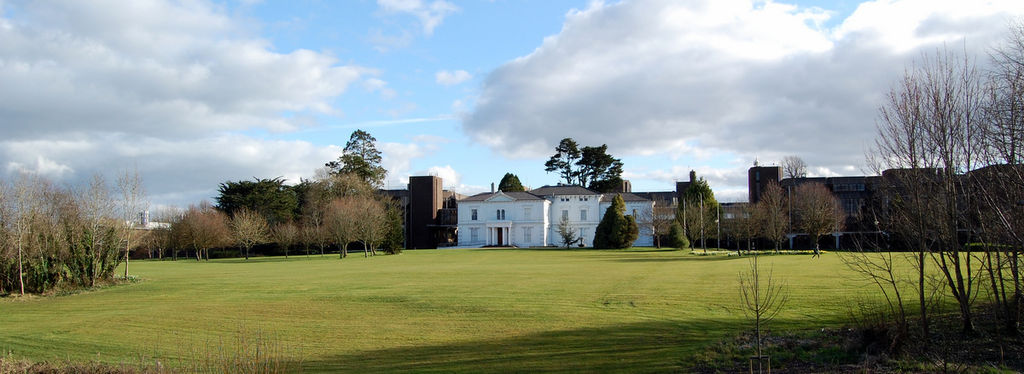
"UniversityOfLimerick PlasseyHouse" by Lukemcurley - Own work. Licensed under CC BY-SA 3.0 via Wikipedia -
“UniversityOfLimerick PlasseyHouse” by Lukemcurley – Own work. Licensed under CC BY-SA 3.0 via Wikipedia –

Plenary Speakers: Professor Daniel Carey, Professor Raymond Gillespie, Professor Alison Rowlands.

We invite proposals for 20-minute papers on themes that might include:

Transition in religion and politics

Religious conversion
Alterations to political sympathies
Migration and naturalisation
Becoming a soldier, priest, rebel, martyr, hero or villain
Personal transformations

Acquiring competencies, skills or professional training
Social mobility, upwards or downwards
Becoming a parent
Rites of passage
Transition and the supernatural

Death and movement to the next world
Magical and miraculous transformations
Textual and performative transformations

Responses to societal transitions in poetry and prose
Transforming texts via translation, printing or performance
The use of space and material culture in ceremonial/ritual contexts

Please submit an abstract of about 250 words to Richard Kirwan (Richard.Kirwan@ul.ie) or Clodagh Tait (Clodagh.Tait@mic.ul.ie) before 10th July 2015.

This conference will occur under the auspices of the Limerick Early Modern Forum of the University of Limerick and Mary Immaculate College. The conference is funded by the Irish Research Council New Foundations Scheme. The organisers plan to publish a volume of essays drawn from the conference papers.

Organisers: Dr Liam Chambers (MIC), Dr Michael J. Griffin (UL), Dr Richard Kirwan (UL), Dr Clodagh Tait (MIC).

Poetry at the Post: The Blonde Sonata, Anita Loos & Edith Wharton in Washington DC

Update: Check out the Edith Wharton Writer-in-Residence Program here. Deadline August 31, 2015. 

The Blonde Sonata
by John Frederick Nimms

The waitress in the tavern brought me down.
Tiara lace on tassel of gold hair.
Trim breasted, crescent thighed, tulip ankled
Eye robin’s egg, impertinent moist lip…

GentlemenPreferBlondes

“Edith Wharton called Anita Loos’ Gentlemen Prefer Blondes ‘the great American novel’ and declared its author a genius. Winston Churchill, William Faulkner, George Santayana and Benito Mussolini read it – so did James Joyce, whose failing eyesight led him to select his reading carefully. The 1925 bestseller sold out the day it hit the stores and earned Loos more than a million dollars in royalties.(Cynthia Haven, “Stanford News)

Anita Loos and John Emerson by Edward Steichen for Vanity Fair, July 1928

Anita Loos was a contemporary of some awesome writers, including Edith Wharton. We’ll be reading Wharton’s The Custom of the Country in The Global Reading Group, a virtual literary salon, this upcoming Fall. Free and open to all.  Click here to join.

Call for Papers

Wharton in Washington: A Conference Sponsored by the Edith Wharton Society

June 2-4, 2016

Please join the Edith Wharton Society for its upcoming Conference in Washington, DC. The conference directors seek papers focusing on all aspects of Wharton’s work. Papers might offer readings of any of Wharton’s texts, including the short fiction, poetry, plays, essays, travel writing, and other nonfiction, in addition to the novels. While all topics are welcome, the location of the conference in the U. S. capitol invites readings related to nationalism, cosmopolitanism, transatlanticism, seats of power, Americana, museum cultures in the 19th C, material cultures, and the work of preservation. Further, given the centennial years of World War I, papers offering new examinations of Wharton’s relationship to the war are particularly invited. Proposals might also explore Wharton’s work in the context of such figures as Teddy Roosevelt and Henry Adams or Wharton’s work in relation to that of her contemporaries, such as Gertrude Stein, Willa Cather, F. Scott Fitzgerald, Ernest Hemingway, Nella Larsen, Anita Loos, Henry James, and more. All theoretical approaches are welcome, including feminist, psychoanalytic, historicist, Marxist, queer studies, affective studies, disability studies, and ecocritical perspectives.

The L'Enfant Plan for Washington, D.C., as revised by Andrew Ellicott in 1792
The L’Enfant Plan for Washington, D.C., as revised by Andrew Ellicott in 1792

We plan to organize paper sessions, roundtables, and panel presentations. In addition, there will be a keynote speaker and opportunities for tours of local exhibits. Further details forthcoming at the conference website https://whartoninwashington2016.wordpress.com/.

Please submit 350-500-word abstracts and brief CV as one Word document toWhartoninWashington2016@gmail.com by July 15, 2015.

All conference participants must be members of the Edith Wharton Society at the time of registration.

Poetry at the Post: It’s Going To Be All About Ireland in South Dakota!

Behind the Plow
BY LEO DANGEL
I look in the turned sod
for an iron bolt that fell
from the plow frame
and find instead an arrowhead…

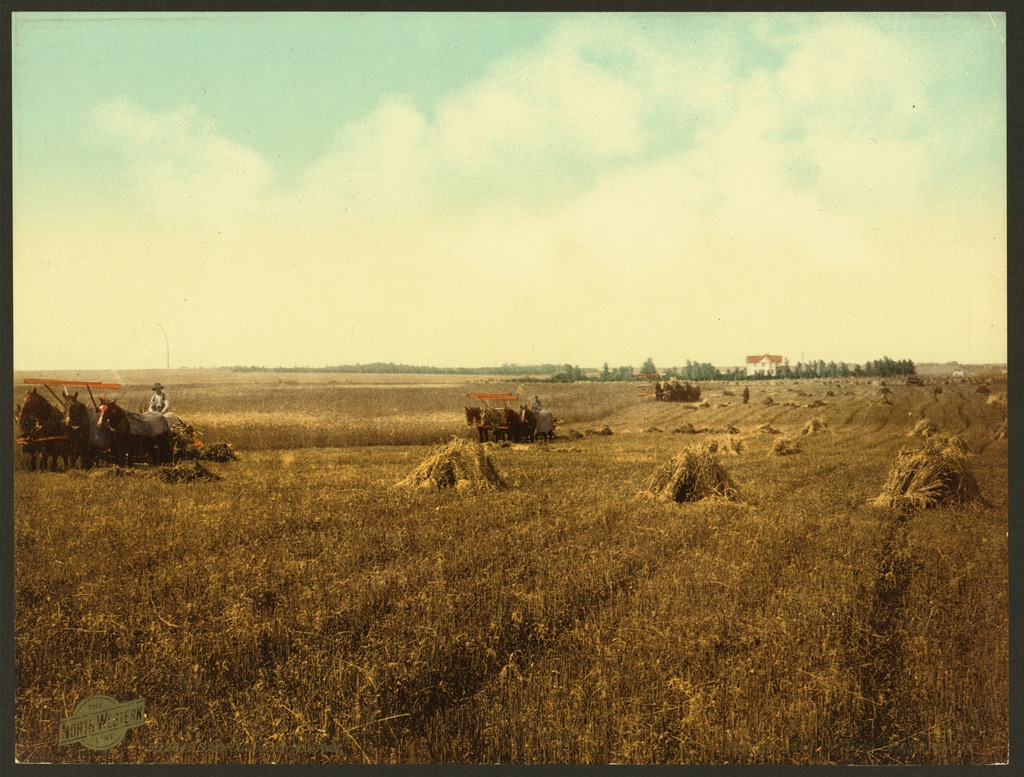
A harvest in South Dakota in 1898

Call for Papers

The 31st Annual Meeting
 of the
 American Conference for Irish Studies Western Regional “Ireland: Memory and Monument” Rapid City, South Dakota October 16-18, 2015

Submissions due July 1, 2015 to aciswest2015@gmail.com

We invite you to join us in Rapid City, South Dakota for the 31st annual ACIS-West conference. This interdisciplinary conference features a range of scholarly panels, lectures, readings, exhibits, and performances. We welcome papers on any aspect of Irish studies, including literature, theatre, film, dance, history, economics, sociology, music, religion, politics, language, culture, diaspora, conflict and border studies, the material and visual arts, and comparative studies. We particularly encourage papers and panels that explore the theme of “Ireland: Memory and Monument.”

Topics may include, but are not limited to, Official forms of commemoration, like statues, plaques, monuments, parades, ceremonies, holidays, as well as their reappropriation Contested memorials and counter-memorials Buried or erased memories; modes of forgetting Private versus collective/public memory Memorialization and the sacred Geography and regional or local memory Literary and artistic commemorations Transnational memory (e.g. the Irish diaspora, immigrants to Ireland) The business of commemoration: tourism, financing, the media We welcome not only papers that consider the question of the memorialization within Ireland, but also comparative work that addresses Irish intersections with the global circulation and preservation of memory.

A South Dakota farm during the Dust Bowl, 1936

The conference features keynote speaker David C. Lloyd, Distinguished Professor of English at the University of California, Riverside, and keynote performer Donal O’Kelly, award-winning playwright and actor who will stage his play Fionnuala for conference participants. Western South Dakota, home to some of the nation’s most famous and contested monuments and counter-monuments, provides a rich site in which to explore the preservation and politics of memory. Downtown Rapid City, founded during a gold rush in the 1870s, is steeped in history—statues of U.S. presidents grace every corner, and stories of the Lakota are told through commemorative plaques and statues—while also boasting a lively arts and music scene, restaurants, shopping, and nightlife.

The conference will take place at the historic Hotel Alex Johnson, which appears on the National Register of Historic Places, has hosted six U.S. Presidents, and is also said to be haunted. The conference organizers invite you to explore Rapid City, “The Gateway to the Black Hills,” as well as its many nearby attractions, including Mount Rushmore, the Crazy Horse Memorial, Custer State Park, the historic Black Hills 1880 Train, the city of Deadwood, the Badlands National Park, and the Devil’s Tower. Please submit your proposal by July 1, 2015 to aciswest2015@gmail.com.

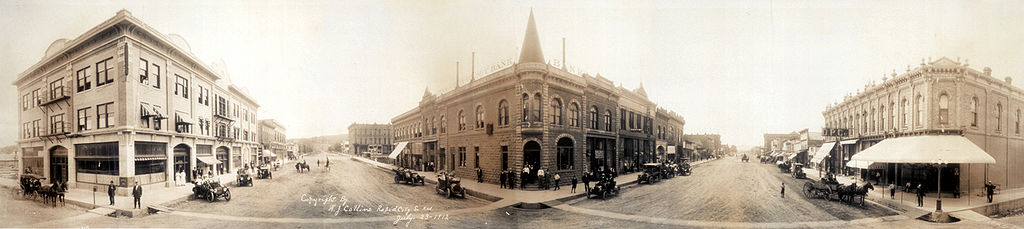
Panoramic view of Sixth and Main Streets in Rapid City, ca. 1912

Individual paper and panel submissions (3-4 participants) are welcome, as are proposals for live performances, dramatic readings, poster presentations, or exhibits. Individual proposals should be 250-500 words in length and include a brief biographical statement for the submitter (50 words). In the case of panel proposals, live performances, dramatic readings, posters, or exhibits, please submit a rationale (250-500 words), as well as biographical statements for each of the presenters.

To recognize undergraduate research in Irish Studies, we will also organize a special undergraduate panel at the conference, and we encourage exceptional undergraduate students to submit individual paper proposals. For more information, visit https://aciswest.wordpress.com/

Poetry at the Post: To Kashmir & More via Agha Shahid Ali

TONIGHT

BY AGHA SHAHID ALI
Pale hands I loved beside the Shalimar
—Laurence Hope

Where are you now? Who lies beneath your spell tonight?
Whom else from rapture’s road will you expel tonight?

Those “Fabrics of Cashmere—” “to make Me beautiful—”
“Trinket”—to gem—“Me to adorn—How tell”—tonight?

A Muslim shawl making family shown in Cashmere shawl manufactory, 1867, chromolith., William Simpson.

Call for Papers!

22-23 September 2016 – “Partition and Empire: Ireland, India, Palestine and Beyond (University of Illinois at Urbana-Champaign).

The imperial partitions of the twentieth century reverberate to the present, and inform contemporary insecurities of different regimes across the world. Present-day challenges to the post­colonial nation­state and its boundaries are often rooted in imperial partitions. Whether in Kashmir, Syria or Palestine, the legacies of partition form the everyday experiences of conflict and violence for millions of people. With these considerations in mind, this conference will explore the theme of partition and empire in global, comparative, and connective frames. Though we focus on the partitions of Ireland, India, and Palestine, we welcome papers addressing imperial partitions in other regions of the world. Topics include but are not limited to violence; sovereignty; sexuality and the body; displacement and dispossession; memory and cultural production; territoriality and borders; identity and state formation; pedagogies and/or epistemologies of partition. We invite a title and abstract of 250 words due emailed to partitionsconferenceUIUC@gmail.com. Conference attendees will pre-circulate papers (of about 8,000 words including footnotes), due August 19, 2016. Travel and accommodation will be provided for all conference attendees.

General view of Temple and Enclosure of Marttand (the Sun), at Bhawan, ca. 490–555; the colonnade ca. 693–729. Surya Mandir at Martand, Jammu & Kashmir, India, photographed by John Burke, 1868.

Poetry at the Post: Fire Safety with Joshua Mehigan & The NFPA

Fire Safety
BY JOSHUA MEHIGAN
Aluminum tank
indifferent in its place

behind a glass door
in the passageway,

fire 1

Deep Spring cleaning—ugh!

Tuesday we tackled the kitchen pantry—pulled everything out, painted the shelving,  sifted through the expired spices and dusted off the fire extinguisher.

The National Fire Protection Agency’s code says portable fire extinguishers should be inspected monthly and should undergo thorough maintenance once a year. And while the yearly maintenance should be performed by a professional, you can perform the monthly checks

Oops!  Ok—good news!  The pressure gage indicator was still in the green … but barely. Professionally inspected? Never. Seriously. This is bad.

fire 2

OK! I’ve replaced my fire extinguisher and am keeping the monthly inspection tag handy. I’m going to do better in the future.

So—when was the last time YOU checked your fire extinguisher? Do it now and tell your friends.

320px-RobertFrost

I can’t resist. Here’s one more fire poem. (10 cent stamp! When was that?)*

Fire and Ice
BY ROBERT FROST

Some say the world will end in fire,
Some say in ice.
From what I’ve tasted of desire
I hold with those who favor fire.

*1974-75

Poetry at the Post: Paraguay? Say What?

Ayvu Membyre;
Hijo de aquel verbo;
Offspring of the Distant Word
Guaraní and Spanish poems
by Susy Delgado
English translations by Susan Smith Nash

En un despertar
se pegó
a mi lengua
estalló
en mi boca,
cosa insospechada,
el habla.

Petei ko’éme
oja vaekue
che kure,
opu vaekue
che jurúpe,
mba’e guasuete,
ñe’e.

In an awakening
it glued itself
to my tongue
it lingered
in my mouth,
an unexpected thing,
the spoken word.

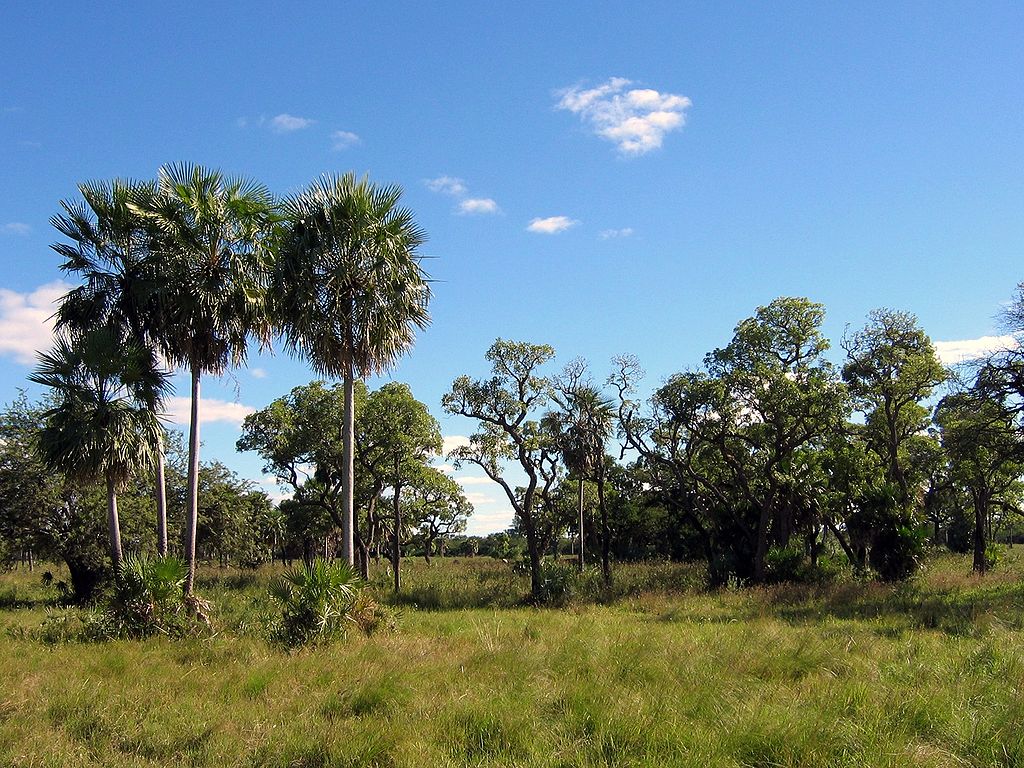
Landscape in the Gran Chaco, Paraguay, May 2004. Photo by Ilosuna. CC by 1.0
Landscape in the Gran Chaco, Paraguay, May 2004.
Photo by Ilosuna. CC by 1.0

How much do you know about Paraguay?

I admit it. I know little so I’m currently on the hunt for Paraguayan poets. (I’ve discovered you can learn a lot about a place though its poetry.)

Voila! Susy Delgado is my first encounter.

I’m continuing my search for more poets so if you have any suggestions, please send them along. If the poems are in español, no problema. 

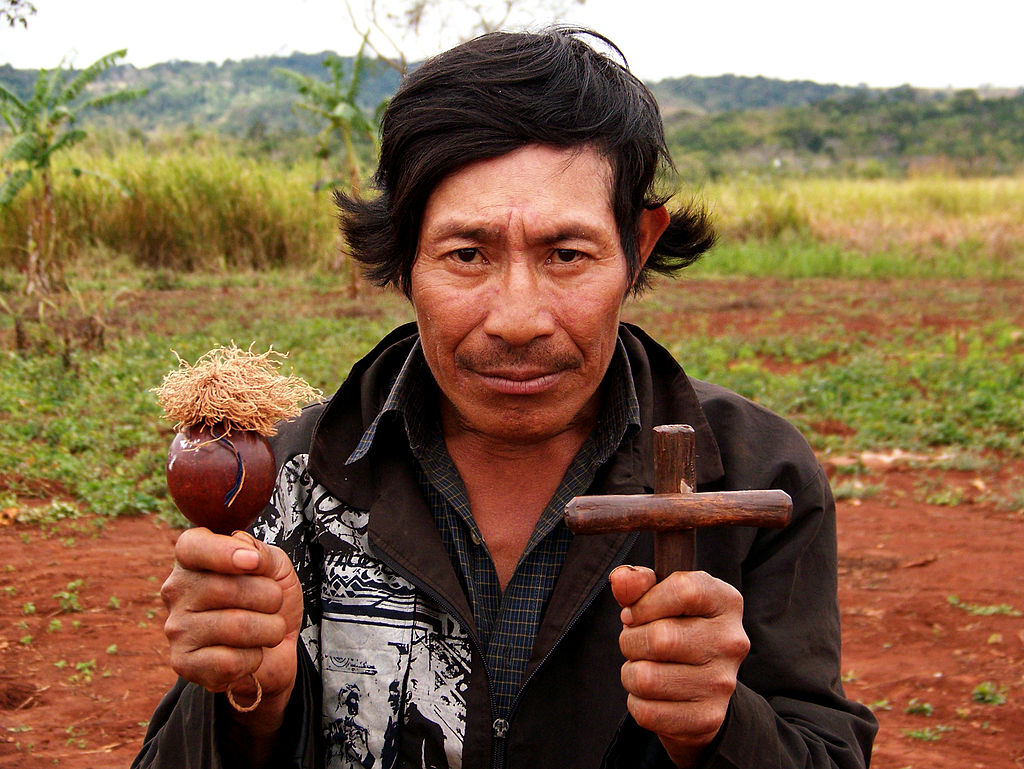
Guarani spiritual leader holding cross and gourd rattle, Paraguay, 2006 photo courtesy of Frank O'Weaver CC by SA 3.0
Guarani spiritual leader holding cross and gourd rattle, Paraguay, 2006
photo courtesy of Frank O’Weaver CC by SA 3.0

“Much of the nation’s literature is written in Guaraní, a native American language which was old when the Spanish conquistadors arrived nearly 500 years ago. Although other AmerIndian languages still continue to be spoken throughout Latin America, this may be the last one to still be part of a mainstream literary culture.” ( First Light: : An Anthology of Paraguayan Women Writers, edited by Susan Smith Nash)

Asunción's Downtown in 1872
Asunción’s Downtown in 1872

Thinking of a visit to Asunción—the capital of Paraguay? Here’s what the New York Times had to say a couple of years ago,

By Embajada de EEUU en Paraguay [CC BY 2.0]

Poetry at the Post: 1215—A Very Good Year!

The Stag at Eve
BY LESLEY JENIKE
In my cries I don’t cease (some dumb bird)
when from the swinging trees a stag at eve

comes prancing, body dappled by the shadows
of dripping leaves…

King John on a stag hunt.

Midwest Medieval History Conference

October 9–10, 2015
Indiana State University, Terre Haute

CALL FOR PAPERS!

It Was A Very Good Year: The Impact of 1215 on the Medieval World

Keynote Speaker: Professor Richard Helmholz, University of Chicago

The year 1215 will be known forever among medieval historians for two groundbreaking events, the Fourth Lateran Council of Pope Innocent III and the creation of Magna Carta by the barons rebelling against King John of England.

Pope Innocent III wearing a Y-shaped pallium.

MMHC welcomes papers on any topic of medieval history, especially proposals for papers on topics relevant to the theme of the impact of 1215. In addition, we welcome paper proposals focusing on the debate surrounding the notion of the development of a “persecuting society” in medieval Europe especially after 1215.

Please send abstract (300 words maximum) via email attachment to Linda Mitchell, Program Chair, mitchellli@umkc.edu. Deadline for paper proposals: June 30, 2015.

For information about the conference or local arrangements, please email local host, Steve Stofferahn (Steven.Stofferahn@indstate.edu) and/or program chair, Linda Mitchell (mitchellli@umkc.edu).

The Magna Carta (originally known as the Charter of Liberties) of 1215, written in iron gall ink on parchment in medieval Latin, using standard abbreviations of the period, authenticated with the Great Seal of King John. The original wax seal was lost over the centuries.[1] This document is held at the British Library and is identified as
The Magna Carta (originally known as the Charter of Liberties) of 1215, written in iron gall ink on parchment in medieval Latin, using standard abbreviations of the period, authenticated with the Great Seal of King John. The original wax seal was lost over the centuries.[1] This document is held at the British Library and is identified as “British Library Cotton MS Augustus II.106
Continue reading “Poetry at the Post: 1215—A Very Good Year!”

Poetry at the Post: The Summer of 1816—The Year Without a Summer

UPDATE: Look who just acquired Mary Shelley first editions. 

Mary Shelley Acquisitions
We’re delighted to announce that the Rosenbach has recently acquired a rare first edition (1818) of Mary Shelley’s Frankenstein: or, The Modern Prometheus, as well as first editions of Shelley’s novels Valperga (1823), The Last Man (1826), The Fortunes of Perkin Warbeck (1830), and Falkner (1837). (Rosenbach, Philadelphia)

Alastor; or, The Spirit of Solitude
BY PERCY BYSSHE SHELLEY
Nondum amabam, et amare amabam, quaerebam quid amarem, amans amare.—
Confess. St. August.

Earth, ocean, air, belovèd brotherhood!
If our great Mother has imbued my soul
With aught of natural piety to feel
Your love, and recompense the boon with mine;

Percy Bysshe Shelley, by Alfred Clint (1819)

1816, THE YEAR WITHOUT A SUMMER

To be alive in the years 1816-18, almost anywhere in the world, meant to be hungry. Across the globe during the so-called “Year Without a Summer”—which was, in fact, a three-year climate crisis—harvests perished in frost and drought or were washed away by flooding rains. (From 1816, The Year Without a Summer)

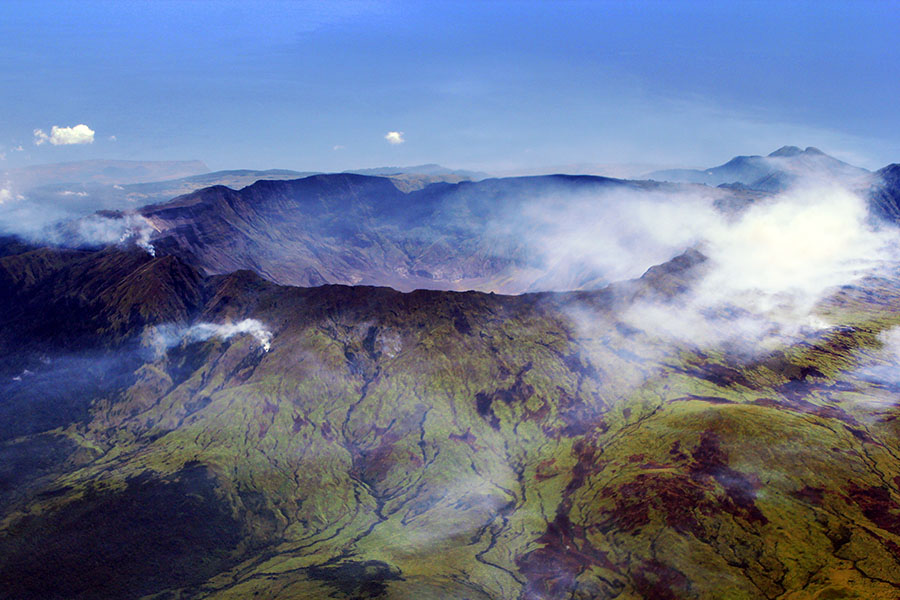
Mt. Tambora Sumbawa, Indonesia Its eruption in 1815 caused global anomalies, including the year without a summer in 1816.
Mt. Tambora
Sumbawa, Indonesia
Its eruption in 1815 caused global anomalies, including the year without a summer in 1816.

Continue reading “Poetry at the Post: The Summer of 1816—The Year Without a Summer”