and look at the eland the mountain and the sky so nothing do I remember of the de-nothinged from which I come
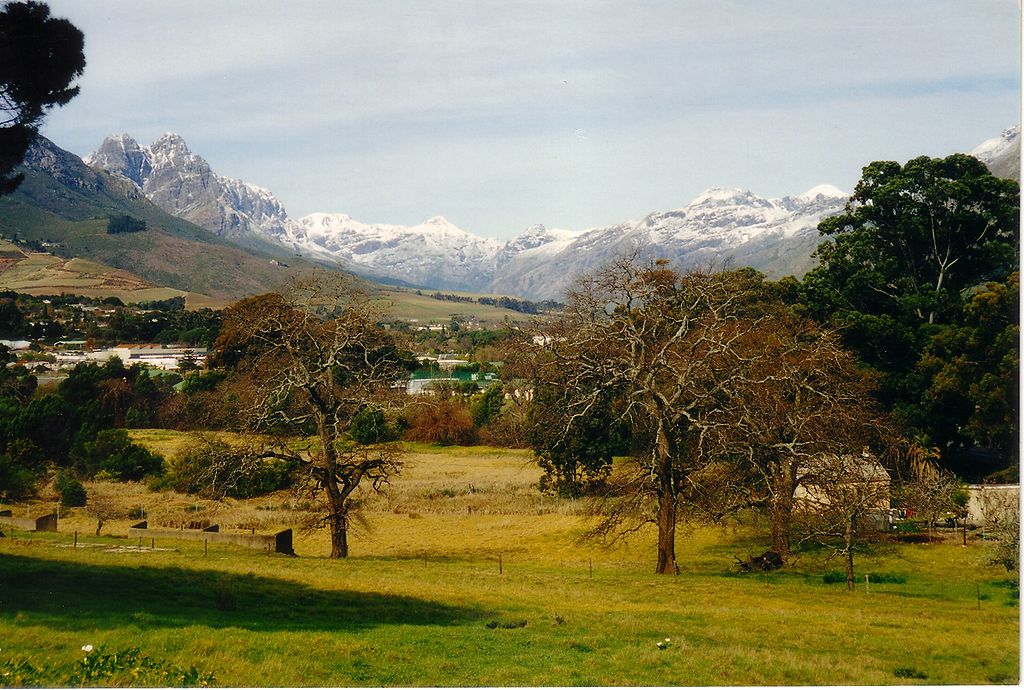
“Stellenbosch WC ZA” by No machine readable author provided. Anicetolopez~commonswiki assumed (based on copyright claims). – No machine readable source provided. Own work assumed (based on copyright claims).. Licensed under CC BY-SA 3.0 via Commons –
Call for Papers Southern Africa Society of Medieval and Renaissance Studies Conference 26 – 28th August, 2016
We are pleased to announce that the 23rd biennial conference of SASMARS will be held at Mont Fleur in Stellenbosch, South Africa on 26 – 28th August 2016. “Texts and Transformations: Medieval and Early Modern Cultures”
Medieval and Early Modern societies weathered various socio-cultural transformations, ranging from economic developments to religious conflicts, across a range of different geographies and in urban and rural spaces. How did poetry, theatre, prose, visual art, architecture, and other forms of art respond to such changes? How do we historically understand and assess various kinds of social transitions? Topics for this conference can include but are not limited to:
• Adaptions of classical texts and artworks
• Translation of texts and ideas
• Contemporary readings of old texts
• Cross-cultural interactions and influences
• Historical transitions and periodisation
• Religious reform
• Urban renewal and development
• Medieval and Early Modern studies in contemporary education
• Appropriations of Medieval and Early Modern culture
• Cultural responses to economic change
• Representations of political dissent and rebellion
• Utopias and dystopias
• Gender, sexuality, and social change
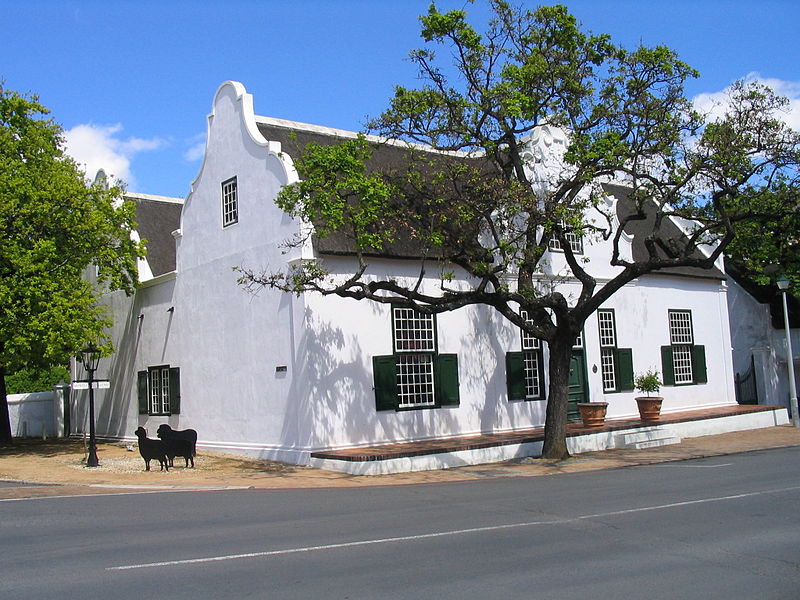
“Bletterman House (corner view)” by HelenOnline – Own work. Licensed under CC BY-SA 3.0 via Commons –
Deadline: A conference proposal and a short biography to derrick.higginbotham@uct.ac.za by 30 November 2015. Any inquires can be directed to the same email address.
In a 2003 Irish Times article, written at the height of the Irish economic boom and concerning the new trend for international publishers to set up shop in Ireland, editor Alison Walsh remarked upon a wider sense of expectation in the publishing world: “There is no great literary movement happening. […] There’s a feeling in the industry that we are waiting to see what happens next.” Few would have anticipated then that such a movement would come from the wreckage of that economic boom.
Following a period of prosperity, in 2008 Ireland entered recession, the first country in the Eurozone to do so. Popular unrest and anger followed. In the years since, Irish culture has been coming to terms with that economic downturn. Within literary and artistic domains, the crash has given rise to a range of new voices, and has served to re-shape old ones. Continuities with older periods of Irish cultural resurgence and emergence are central to this new flourishing. Perhaps the idea of “emergence” can itself capture this incipient wave in all its complexity. Emergence describes a process whereby qualitatively new configurations arise from more basic constituent parts. Irish cultural production of the last decade offers one intriguing case study for such a phenomenon, drawing its significance from a shared experience of boom and bust which has prompted multiple forms of aesthetic departure in unforeseen directions. We believe that such developments call for examination. How has new Irish writing been spurred on or bruised by recent historical events? If certain cultural products have not registered these changes, what allows them to remain cloistered? While Ireland is something of a poster girl for economic recovery, how have new forms of expression (both in English and Irish) dealt with the social and cultural anger and angst that accompanies this “recovery”?
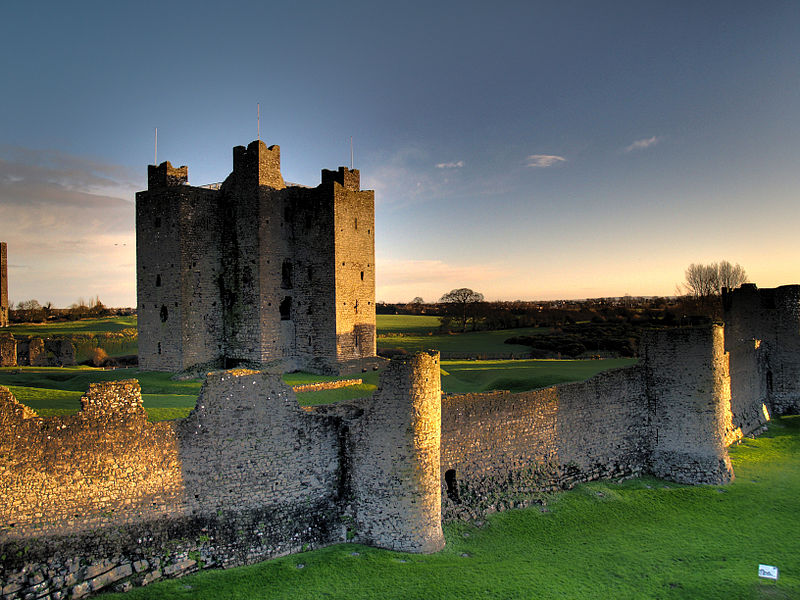
“Trim Castle 6” by Andrew Parnell – Trim Castle. Licensed under CC BY 2.0 via Commons –
How have these new works figured a new Ireland, or presented an alternative to the public narrative? And if the idea of a “new Ireland” implies a misplaced unity, where can the cracks be found in this picture? After all, this literary and cultural movement, if we can use such a term, is transnational in nature; these writers and artists are part of an expanding diasporic community and their work resonates with communities experiencing similar transformations.
Gate of Wisdom, a 1987 bronze sculpture by Ju Ming,[30] standing outside of the University Library.”CUHK 仲門” by Skjackey tse – Own work. Licensed under CC BY 3.0 via Commons –This conference seeks to explore the parameters of post-crash Irish literature and culture—temporally, geographically and stylistically—from its origins to its influences. We are particularly interested in papers which address the question of emergence, and which take a transnational or comparative approach to the Irish situation.
Possible topics for papers could include, but are not limited to:
• anger, responsibility, disillusion, culpability, blame, and activism in recent cultural products from, and about, Ireland
• the current publishing landscape in Ireland, from big to small, e.g. new magazines such as Gorse and The Penny Dreadful
• questions of periodization, demarcation, and tradition
• representations of recovery, reform, re-building
• the diaspora and the literature of the diaspora
• class, race, and immigration
• psychosis, mental health
• language, hegemony
• digital platforms/social media/multicultural online writing practices
• The relationship of the individual to the community
• Humorous and/or satirical responses to crash, recession and recovery
• Futurity and the future
Please send abstracts of 200 words for papers of twenty minutes to post.crash.emergence@gmail.com by December 15. We are also open to suggestions for panels and roundtable discussions.
Conference Organisers:
The Chinese University of Hong Kong
The Hong Kong Institute of Education
Hong Kong Shue Yan University
Until they come, the nightly scum, with drunken eyes aflame; Your sweethearts, sons, ye scornful ones — ’tis I who know their shame. The gods, ye see, are brutes to meiand so I play my game.
A medieval depiction of a harpy as a bird-woman
Word Hoard Issue #5: Scum and Villainy
wordhoard.editors@gmail.com
Word Hoard is soliciting articles, essays, interviews, creative pieces, and other publishable works on the theme of “Scum and Villainy” for our fifth issue. (Please find our previous issues at http://ir.lib.uwo.ca/wordhoard). We believe both “scum” and “villainy” have social, ethical, and epistemological implications reaching far beyond literary and popular tropes, and thus far beyond the lush taxonomy of opportunistic or conniving archetypes (e.g., muggers, grifters, the debased; psychopaths, traitors, the corrupt). Characterizations of “scum” or “villainy” interest us far more than literary characters as “scum” or “villains.”
“Villainy” has come a long way from its lowly agricultural roots—the Latin villa (country house) and villanus (farmhand) give us the earliest sense of the vilain (peasant, yokel). Early association of “villainy” with rural boorishness suggests urban chauvinism; later association with criminal action suggests classism and anxiety directed toward the out-of-work (and thus out-of-place) urban poor. How is villainy still characterized by a tension between productive urbanity and its other(s)? How is the urban site realized against/through the villainy that disturbs its ‘progress’?
Or, how does villainous incursion differ from the encroachment of the natural, monstrous, or subhuman? If “villainy” now implies corrupted, agential intellect, “scum” has followed a shorter, straighter etymological path. From ‘froth’ (schuum) on stagnant water to plain ‘dirt’ or ‘filth’ and then to the lowest of the human, “scum” has consistently connoted the abject, the undesirable and undifferentiated by-products of organic processes. How does the notion of the “wretched hive of scum and villainy” suggest affiliation and distinction between these terms? What are the relations between immorality’s perceived material and demographic substrates and its essentialization (e.g., evil) or systemization (e.g., conspiracy)?
Or, is “villainy” is a reneging on a Hobbesian social contract? Is the presence of “scum,” then, a trace of such a contract’s failure or its inconvenient by-production? Both “scum” and “villainy” seem opportunistic in their occupation of anti-social spaces and participation in anti-social activities. How do characterizations of “scum” as organic or inevitable accumulation speak to utopian, dystopian, or realist discourses? How do characterizations of “villainy” as ‘striking first’ speak to policies of deterrence, punishment, or preemption? What is the relation between such cause-and effect temporalizations and the construction of morality or ethics? What can an understanding of “scum” or “villainy” clarify regarding political rhetoric and media representations of individuals and groups as violent, illegitimate, or immoral?
In addition to these topics (urban-rural tensions, classism/poverty, the organic/abjection, morality/ethics, citizenship/social imaginaries, notions of progress, and ad hominem attacks/vilification), submissions might also address issues including, but certainly not limited to, the following:
– terrorism (e.g., radicalism, activism, protest)
– political & historical narrativization (e.g., stories of tyrants, informants, war criminals)
– corporate evil & capitalist excess (e.g., Wall Street, Big Oil, celebrity)
– censorship & vilification of ‘low’ cultural forms (e.g., rap, video games, pornography)
– discourses of victimhood (e.g., religious self-identification as ‘scum of the earth’)
– the rhetoric of political-correctness-run-amok (e.g., backlashes against analyses of rape culture or cultural appropriation)
Word Hoard invites submissions of abstracts (500 words), due by 16 October 2015, or of full submissions (3,000 – 5,000 words of prose), due any time between 16 October 2015 and 15 January 2016. All abstracts and submissions will undergo a blind peer review from which all authors receive detailed and constructive feedback. All accepted submissions can expect online and print publication in the summer of 2016, and all accepted submissions will be responded to within our dialogic, multigeneric format. Submissions should be formatted according to MLA guidelines, and should also include a brief biographical sketch of the author. Submissions should not contain the author’s name or obvious
identification marks to ensure an objective blind peer review process.
To submit, or for more information, please contact us at wordhoard.editors@gmail.com.
We appreciate your attention, and we look forward to reading your work.
Where the Castle Is
BY HOWARD MOSS The upkeep of the castle is The downfall of the cottages Where fishermen and peasants live Or used to live
Krumlov Castle “Cesky Krumlov-Asahiko2” by Asahiko – Own work. Licensed under CC BY 4.0 via Commons –
A chance to meet other writers and discover a medieval Czech town! Sounds interesting. Has anyone participated before in the Literary Bohemian WriteAway Residency? If so, your thoughts?
Set in UNESCO World Heritage town of Český Krumlov, Czech Republic
November 15-20, 2015
*Appication deadline: October 15 ;
space limited to a maximum of 10 residents
This residency provides you the opportunity to meet other writers working across all genres whilst experiencing the most beautiful town in Europe. Daily guided writing exercises provided by Carolyn Zukowski, Editor of the Literary Bohemian.
Accommodation in private rooms with or without private bath.
* Price: 300-350 EUR – This includes accommodation for 5 nights and a delicious, home-cooked breakfast every morning. Healthy snacks, cakes, and coffee available throughout the day. * eligibility requirements – Must be over 18, with valid passport. Must have had work published in print or online within the last three years.
“Cesky Krumlov 01”. Licensed under CC BY-SA 3.0 via Commons –
This retreat is for writers who not only want a room of their own, but also the structured inspiration of a writing tutor who will lead morning group exercises and offer a half-hour, one-on-one session during the week to explore your writing in depth. Each writer gets a private room with or without private facilities as well as a hearty, buffet-style breakfast. A simple lunch is served daily, and dinners can be made communally or taken at one of the many local restaurants.
A typical tutored Write Away On Monday, writers arrive between 4.30pm and 6pm. Dinner will be provided. After dinner, the tutors will introduce their plans for the week. Tuesday through Friday, the mornings will be dedicated to specific writing exercises. On Thursday evening the tutor reads from their own work. On Friday evening the group gets together to share and celebrate each other’s writing. The week comes to a close on Saturday morning, after breakfast.
The 19th Annual Great Writing International Creative Writing Conference Imperial College London Sat. June 18th – Sun. June 19th 2016
Critical or creative presentations are invited for the 19th Annual Great Writing International Creative Writing Conference.
In 2016, the 19th year of the conference, we will look to the current conditions of your individual creative writing practice, to research and teaching in creative writing, and to the experiences of creative writing teaching, learning and research from a faculty or student perspective. All topics will be welcome.
Proposals will be peer-reviewed.
The conference will also feature the 6th Annual New Writing International Creative Writing Event.
1. Single presentations: 20 minutes, 10 minutes questions.
2. 3 person presentations/panels: 90 minutes in total.
Send proposals to: conference@greatwriting.org.uk
(Proposals: 150 word draft description of your presentation – final abstracts are published in the annual conference booklet)
* Closing Date for Submissions: 9 November 2015 *
(*Great Writing calls for papers can appear throughout the year, but when all presenter places are filled we close the call. Early submission is therefore highly encouraged)
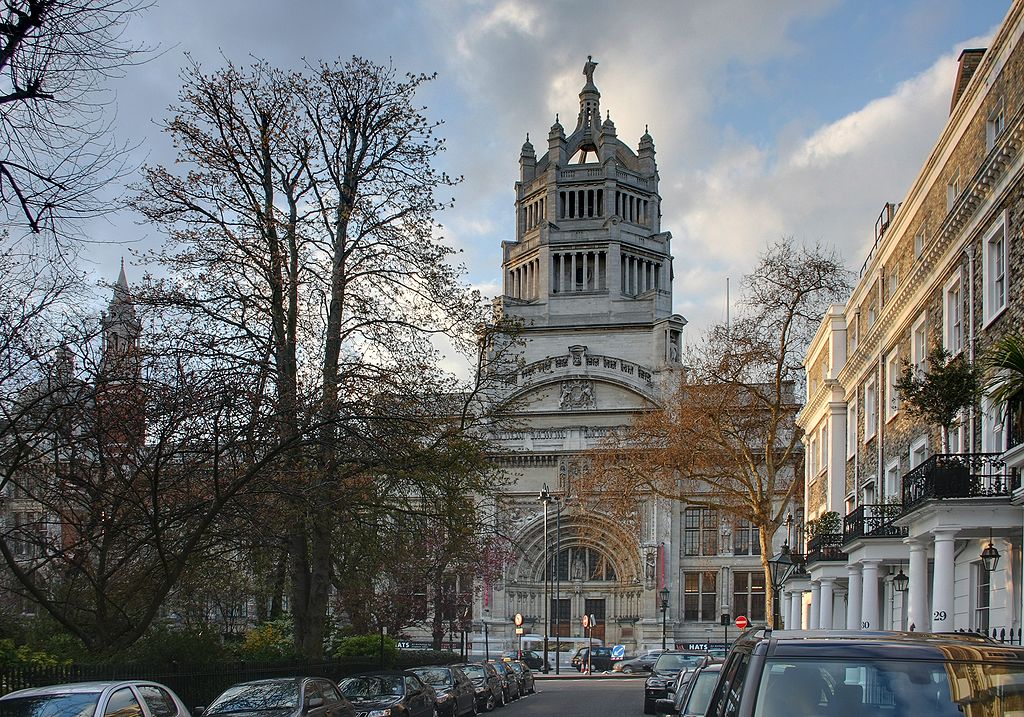
Victoria and Albert Museum
To be held at one of the UK’s great universities and great locations: Imperial College London, South Kensington, a cultural centre for the arts, sciences, music and museums, close to Royal Albert Hall and right next to the wonderful Natural History Museum.
For queries contact Professor Graeme Harper, Conference Director:
graeme@greatwriting.org.uk
or for general enquiries contact:
conference@greatwriting.org.uk
And, here is the latest on the Trans-Pecos Pipeline by Rachel Monroe in Texas Monthly: A Pipeline in the Sand—A group of West Texans gird for battle against the oil and gas industry.
Treating of the nature of places, which derive from the habituation of the place to the heavens, first we will make mention of what was determined in the Physics. For there it was proved that place is an active principle of generation, just like a father (De natura loci, 1, 9-13). (Albertus Magnus)
Call for Papers
The Forty-Second Annual Sewanee Medieval Colloquium: Medieval Natures April 1-2, 2016 The University of the South, Sewanee, TN
This colloquium will explore the varied concepts of nature in the medieval period. Papers might, for instance, approach nature as a philosophical category, an object of mimesis, an archive for scientific investigation, or consider nature through eco-criticism, race and ethnicity, animal studies, or the history of science. Papers are encouraged from all fields, and possible topics could include allegories of nature in literature or sculpture, theological arguments over the nature of divinity, alchemy, the history of agriculture, medieval perceptions of the natural world, depictions of animals, or astronomy. We welcome papers considering medieval European, Asian, and African, and cross-cultural perspectives.
We invite 20-minute papers from all disciplines on any aspect of medieval nature. We also welcome proposals for 3-paper sessions on particular topics related to the theme. Proposals for panel topics and threads are due August 31, 2015; they should be submitted directly to medievalcolloquium@sewanee.edu. Please submit an abstract (approx. 250 words) and brief c.v., using our abstract submission form if possible, no later than October 30, 2015. Commentary is traditionally provided for each paper presented; completed papers, including notes, will be due no later than March 1, 2016. Unfortunately, we cannot accept proposals from undergraduates; generally, all of our participants either hold a terminal degree, or are in the process of obtaining one.
We are also pleased to announce the Susan J. Ridyard Prize ($500), to be awarded to a paper that is especially exceptional in its response to the year’s theme. Prize papers are nominated by respondents. The R.W. Southern Prize ($250) will be awarded for the best paper by a graduate student or recent PhD recipient (degree awarded since July 2013). If you would like to be considered for the R.W. Southern Prize, please indicate so in your abstract.
For more information, contact:
Dr. Matthew W. Irvin
Director, Sewanee Medieval Colloquium
medievalcolloquium@sewanee.edu
Sonnet 97: How like a winter hath my absence been
BY WILLIAM SHAKESPEARE How like a winter hath my absence been From thee, the pleasure of the fleeting year! What freezings have I felt, what dark days seen! What old December’s bareness everywhere! And yet this time remov’d was summer’s time, The teeming autumn, big with rich increase, Bearing the wanton burthen of the prime, Like widow’d wombs after their lords’ decease: Yet this abundant issue seem’d to me But hope of orphans and unfather’d fruit; For summer and his pleasures wait on thee, And thou away, the very birds are mute; Or if they sing, ’tis with so dull a cheer That leaves look pale, dreading the winter’s near.
February 15-16, 2016, The Betsy Hotel
South Beach, Florida
Seeking papers or panels on any aspect of early modern studies and literature for Shakespeare across the Divide, the first annual symposium at the landmark Betsy Hotel in South Beach, Florida.
Shakespeare across the Divide will explore Shakespeare across borders and demarcations, alongside his contemporaries as well as into new and current contexts. We also welcome work that explores beyond Shakespeare to develop the early modern period and studies. Especially welcome, given our location, will be work on the Spanish Golden Age, England and Spain in contact in the Caribbean, and interrogations of the early modern and the African Atlantic.
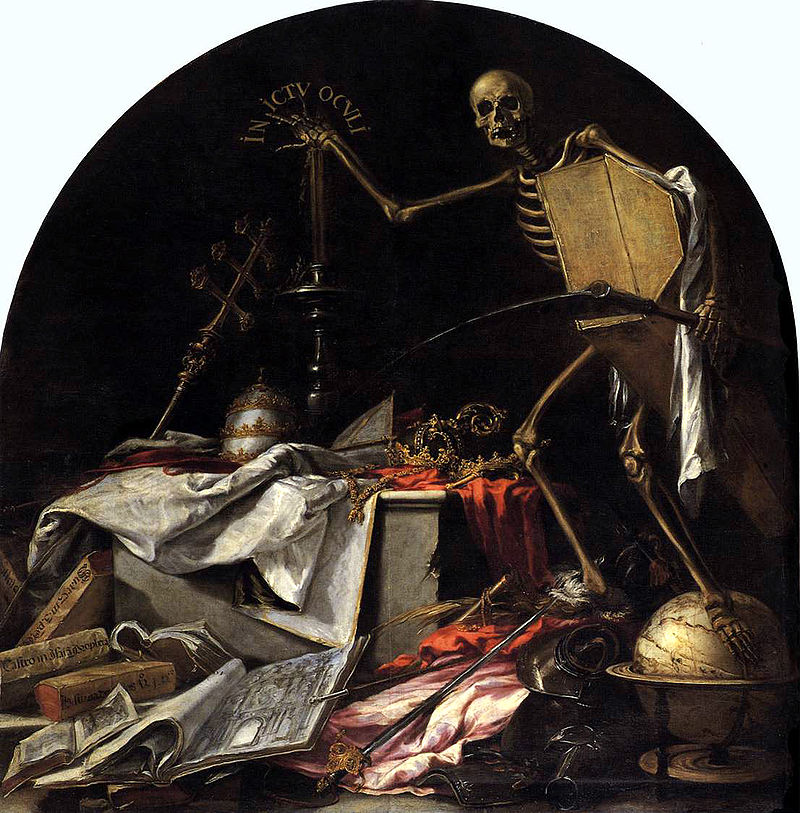
In ictu oculi (“In the blink of an eye”) a vanitas by Juan de Valdés Leal
Submit 250 word abstracts by September 31, 2015.
If you have any questions, please contact Vernon Dickson at vdickson@fiu.edu.
To register for the symposium, please send a check for $125 made out to “FIU Foundation English Discretionary” and add the note “Donation for Shakespeare Symposium” care of:
Gretter Machin
English Department, FIU
Modesto Maidique Campus, DM 453
11200 SW 8 Street
Miami, FL 33199
The Ivy Green
BY CHARLES DICKENS Oh, a dainty plant is the Ivy green, That creepeth o’er ruins old! Of right choice food are his meals, I ween, In his cell so lone and cold. The wall must be crumbled, the stone decayed, To pleasure his dainty whim: And the mouldering dust that years have made Is a merry meal for him. Creeping where no life is seen, A rare old plant is the Ivy green…
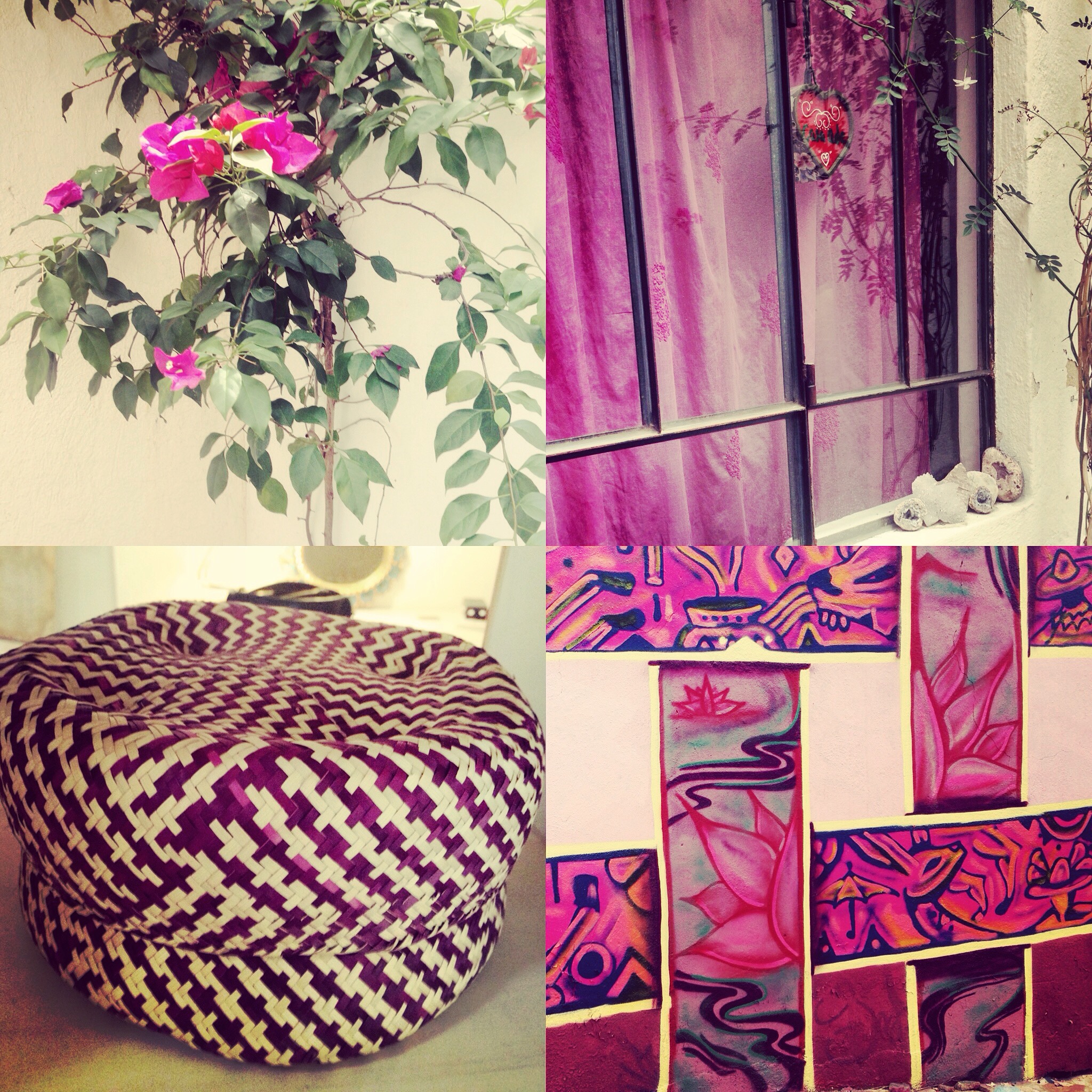
Oaxaca, Mexico August 2015
…And nations have scattered been; But the stout old Ivy shall never fade, From its hale and hearty green. The brave old plant, in its lonely days, Shall fatten upon the past: For the stateliest building man can raise, Is the Ivy’s food at last. Creeping on, where time has been, A rare old plant is the Ivy green.
![Gate of Wisdom, a 1987 bronze sculpture by Ju Ming,[30] standing outside of the University Library.](https://alicecatherinej.com/wp-content/uploads/2015/08/800px-cuhk_e4bbb2e99680.jpg)







 Alice-Catherine