Poetry at the Post: Farewell to Bath, Hello Susa!

Farewell to Bath
BY LADY MARY WORTLEY MONTAGU

(15 May 1689 – 21 August 1762)

To all you ladies now at Bath,
And eke, ye beaux, to you,
With aching heart, and wat’ry eyes,
I bid my last adieu.
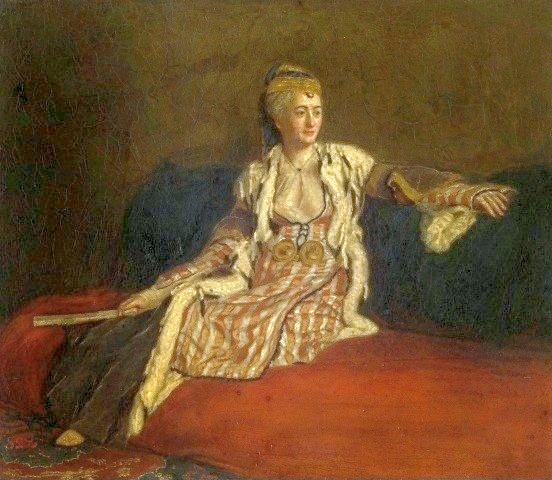
Lady Montagu in Turkish dress by Jean-Étienne Liotard, ca. 1756, Palace on the Water in Warsaw

Having just read Northanger Abbey, England, I was pleased to discover “Farewell to Bath” by Lady Montagu, a poem that captures my own feelings as I say farewell to Jane Austen’s Bath.

This poem was fun to read but I wanted to know more about the poet behind the poem. Who was Lady Montagu?

 Pope makes love to Lady Mary Montagu, 1852. Print from oil on canvas original at Auckland City Art Gallery
Pope makes love to Lady Mary Montagu, 1852. Print from oil on canvas original at Auckland City Art Gallery

Born in an aristocratic family in London, Lady Montagu educated herself via her father’s extensive library. Although she considered herself a poet, Lady Montagu is best remembered for her Letters from Turkey, written while living in Istanbul with her husband, the British Ambassador Edward Wortley Montagu. Given access to the private quarters of Islamic women, Lady Montagu was able to offer her readers a fuller—and quite interesting—picture of 18th century Turkey.

Lady Montagu was witty, intelligent, and quite outspoken. She rejected Alexander Pope’s romantic advances; openly took Jonathan Swift to task for his poetry; and introduced smallpox inoculation to England from Turkey.

A propos of distempers, I am going to tell you a thing, that will make you wish yourself here. The small-pox, so fatal, and so general amongst us, is here entirely harmless, by the invention of engrafting, which is the term they give it. There is a set of old women, who make it their business to perform the operation, every autumn, in the month of September, when the great heat is abated. People send to one another to know if any of their family has a mind to have the small-pox; they make parties for this purpose, and when they are met (commonly fifteen or sixteen together) the old woman comes with a nut-shell full of the matter of the best sort of small-pox, and asks what vein you please to have opened. She immediately rips open that you offer to her, with a large needle (which gives you no more pain than a common scratch) and puts into the vein as much matter as can lie upon the head of her needle , and after that, binds up the little wound with a hollow bit of shell, and in this manner opens four or five veins. (From Letters from Turkey)

Eventually she abandoned England—and her husband—to live abroad..and…well… I am digressing from Bath.

Now is the time to say goodbye to society balls, carriage rides and waters “Hot reeking from the pumps” as we travel back to ancient Persia and Greece.

Our next read in the virtual literary salon is The Persians by Aeschylus. Pride, grief and the folly of vengeance—all rolled up in a script of a mere 23 pages. We begin DECEMBER 1, 2014. Send a message to alicecatherinej@gmail.com to join. Free and open to all.

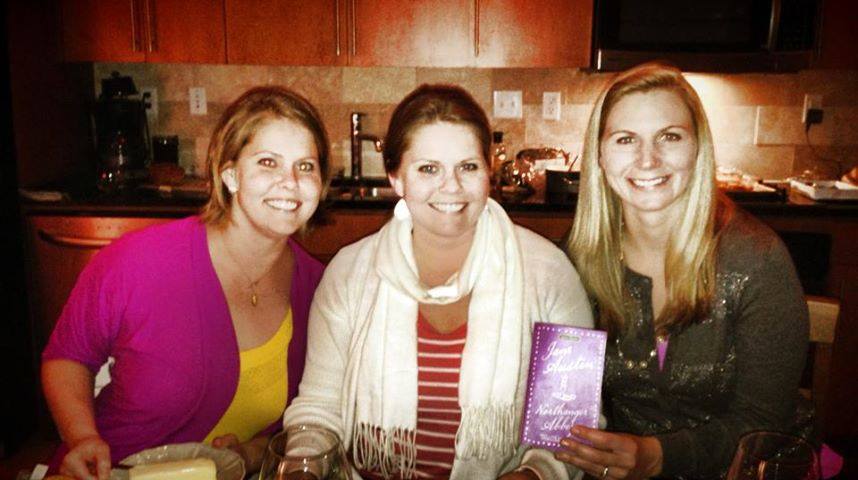
We have a great group of worldwide readers and although we meet online, at times there are surprising personal encounters. Two readers recently met for the first time at a book fair in Scotland while just last Sunday my neighbor—and also a Northanger Abbey reader—stopped by with this nice note a la Jane Austen.

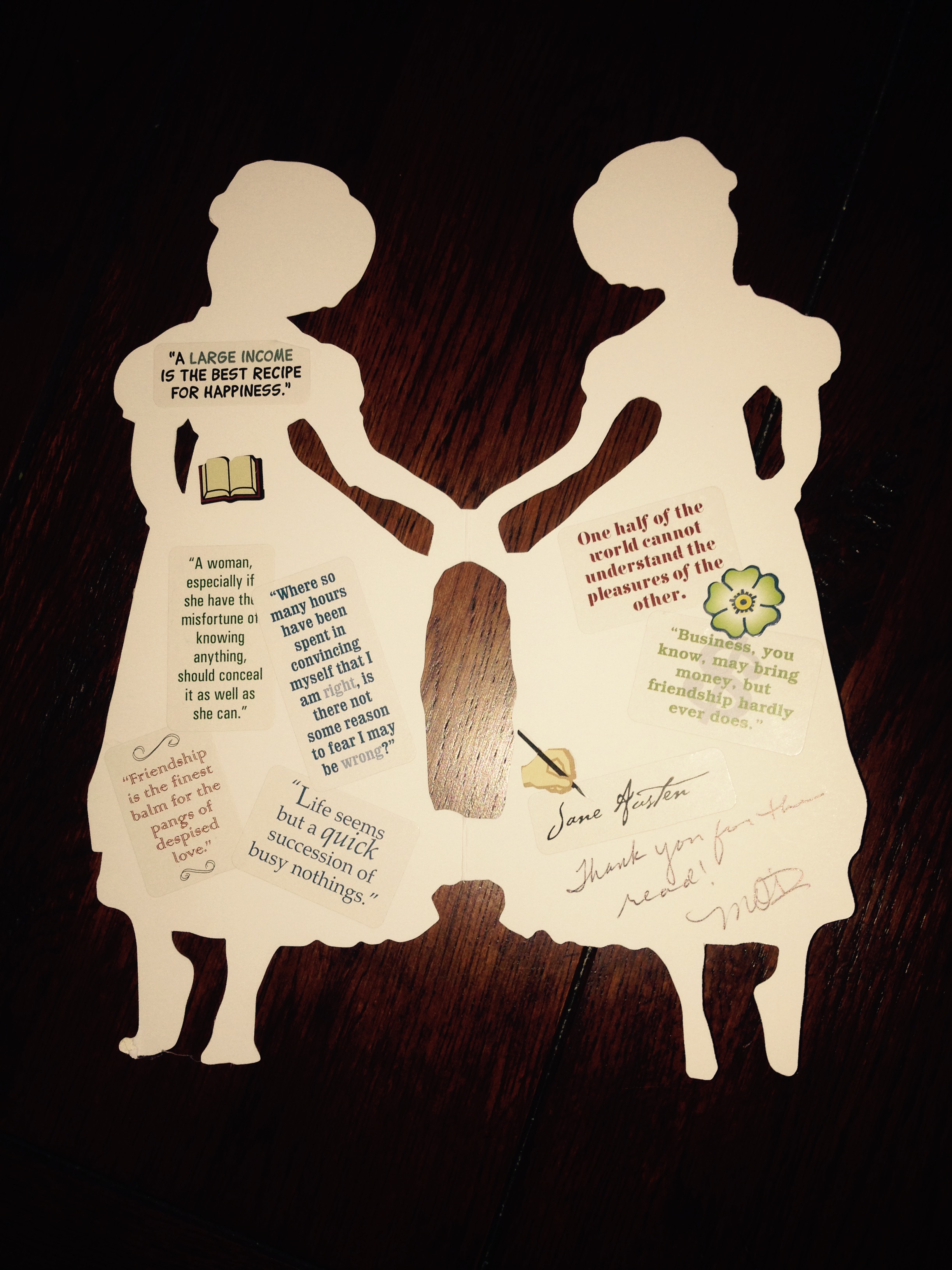
jane austin 1jane austen 2

My heart is full I can no more—
John, bid the coachman drive.

Good-bye Bath, Hello Susa!
Poetry at the Post: Off to Istanbul!

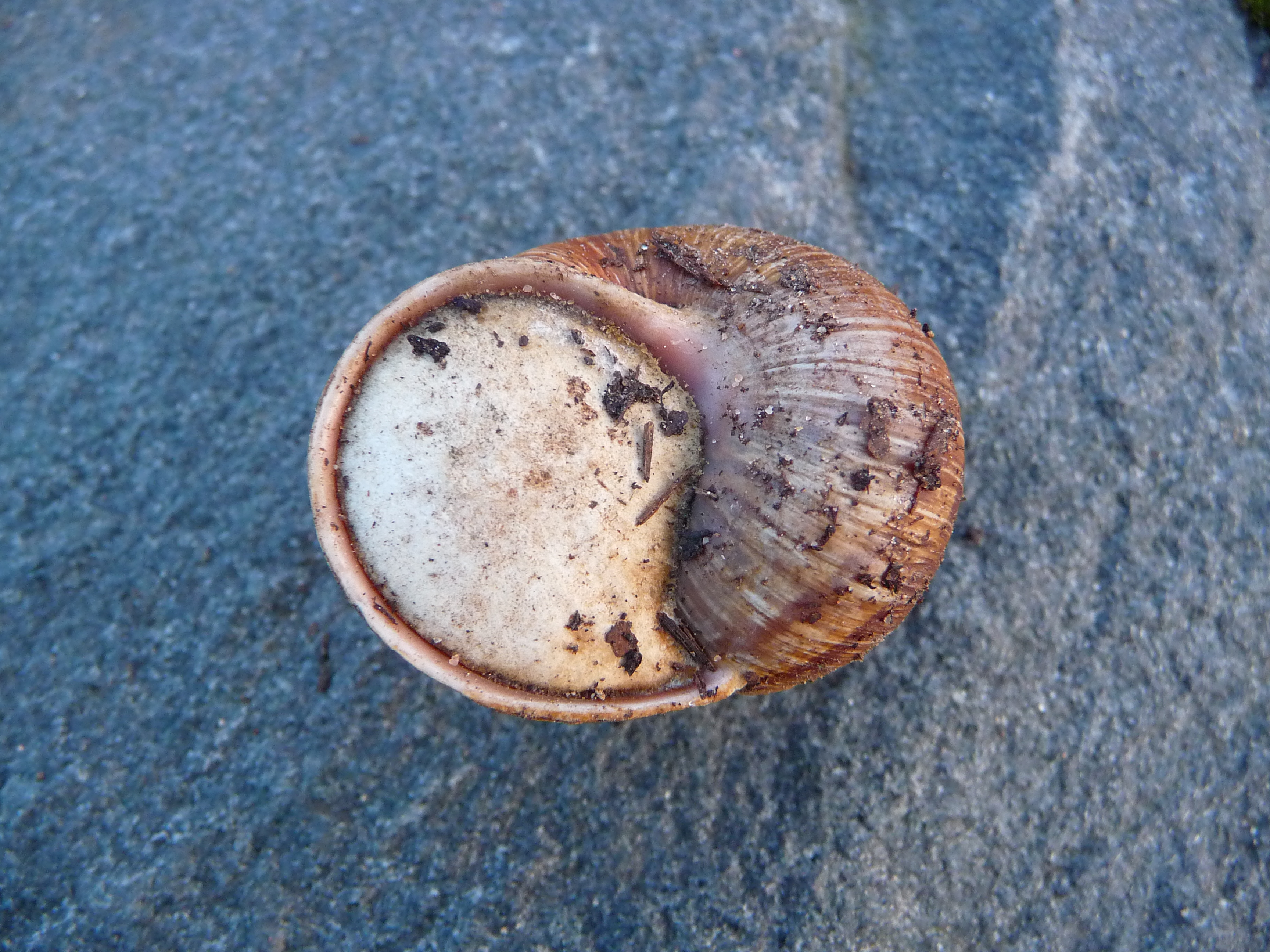
A SNAIL IN ISTANBUL
JAMES SUTHERLAND-SMITH

The sultan of moisture creeps
on a flagstone shadowed by nettles.
He carries his turban on his back.


photo by 4028mdk09 (Own work) [CC-BY-SA-3.0}

I was excited to discover this poem. Not only does it have a connection to Istanbul (my new “home” in one week!) but it is also has an animal at its core. (#mylifeisabestiary).

Its three stanzas correspond to the components of a medieval bestiary: the description of the beast, the intertextual, and the lesson. (I’m still puzzling, however, over the lesson.)

Its connection to an older form heightens the poem’s images and language. All work in tandem to evoke a mysterious and exotic world.

Only in a summer in a palace
The Turkish guidebook labels
The Convent of the Whirling Dervishes

Whirlingdervishes

“A Snail in Istanbul” introduced me to the poetry of James Sutherland-Smith. I discovered he has a nomadic nature. Originally from Aberdeen, Scotland, Sutherland-Smith now lives in Slovakia. You can read more of his poetry at
http://www.jamessutherland-smith.co.uk/about.shtml

Poetry at the Post-Austin: Coffee #3-Cenote & “Your Invitation to a Modest Breakfast”

“Your Invitation to a Modest Breakfast” by Hannah Gamble

Listen. Come over: the cold has already eaten
the summer
.

Cold hadn’t even nibbled at summer in Austin, Texas when I stopped by Cenote for a latte. I’d been trying to stick to breakfast teas but the week had been stressful. I just needed a cup of something stronger.

Cenote East Austin, TX
Cenote
East Austin, TX

Cenote is close by but parking can be a challenge. It was too sunny and hot to linger on one of the picnic tables outside yet sitting inside can be a bit jarring if you are not able to find a seat away from the door or bar. Not always an ideal place to set up your laptop and work, its friendliness and killer breakfast tacos for $3.50 (on non-GMO corn tortillas) make up for the lack of comfortable space. Plus, there is a juice bar on site.

Hannah Gamble’s poem seemed to fit my mood last week. On one hand, it was a week of writerly events like the The One Page Salon and food-filled evenings with friends but also one of anxiety and a sense of life crashing in. It was one of those weeks when I needed “another pair of ears.”

I can’t tell if I’m hearing wind chimes
or some gray woman with failing arms
dropping a pan full of onions and potatoes.

Poetry at the Post: Searching for a Heroine

Philosophia Perennis
BY ANNE WALDMAN

I turned: quivering yellow stars in blackness…

"Pleiades large" by NASA, ESA, AURA/Caltech, Palomar Observatory     The science team consists of: D. Soderblom and E. Nelan (STScI), F. Benedict and B. Arthur (U. Texas), and B. Jones (Lick Obs.) - http://hubblesite.org/newscenter/archive/releases/2004/20/image/a/. Licensed under Public domain via Wikimedia Commons
“Pleiades large” by NASA, ESA, AURA/Caltech, Palomar Observatory The science team consists of: D. Soderblom and E. Nelan (STScI), F. Benedict and B. Arthur (U. Texas), and B. Jones (Lick Obs.) – http://hubblesite.org/newscenter/archive/releases/2004/20/image/a/. Licensed under Public domain via Wikimedia Commons

“Philosophia Perennis” captures the core of “the everywoman,” the one who dreams of being the protagonist, the heroine.

Amidst “The dish, the mop, the stove, the bed, the marriage, “The picture changes & promises the heroine.”

I find this poem powerful—even more so when when I listen to Waldman read it aloud. The “I and I and…” is a mantra that emboldens my spirit.

Catherine Morland of Jane Austin’s Northanger Abbey could probably relate.
By 17, she was an “heroine in training,” yet
“No one who had ever seen Catherine Morland in her infancy would have supposed her born to be an heroine.”

Come join us as we FINALLY read an epic about a WOMAN, in the Global Reading Group*, a virtual literary salon. We launch October 15th. And with “rambling houses, locked doors, and family secrets”—this is the perfect Gothic tale for those dark and spooky October nights.

Northanger Abbey is deliciously instructive, much like Waldman’s poem, “Philosophia Perennis.”

northanger abbey readers

*One book a month.

Poetry at the Post: Ducks, Ducks are Everywhere & Now a Kangaroo!

The Duck and the Kangaroo
BY EDWARD LEAR

Said the Duck to the Kangaroo,
‘Good gracious! how you hop!
Over the fields and the water too,
As if you never would stop!

"Bucephala-albeola-010". Licensed under Creative Commons Attribution-Share Alike 3.0 via Wikimedia Commons - http://commons.wikimedia.org/wiki/File:Bucephala-albeola-010.
“Bucephala-albeola-010”. Licensed under Creative Commons Attribution-Share Alike 3.0 via Wikimedia Commons

With so much rain and water in the desert Southwest, I keep thinking about ducks.

When I first read the poem, “The Duck and the Kangaroo,” I thought it was all nonsense. And, actually it is—a “nonsense poem” that is

Masada (or Sebbeh) on the Dead Sea, Edward Lear, 1858, on display at the California Palace of the Legion of Honor Masada (or Sebbeh) on the Dead Sea, Edward Lear, 1858, on display at the California Palace of the Legion of Honor

Edward Lear (1812-1888) was an English poet, illustrator and artist. He was also a wanderer. I am a wanderer too. Ah ha! Now the poem makes sense! “The Duck and the Kangaroo,” is about Edward—and me. We are “the duck.” We want to go somewhere else, always leaving home.

My life is a bore in this nasty pond,
And I long to go out in the world beyond!
I wish I could hop like you!’
Said the Duck to the Kangaroo.

Lear wandered for almost 40 years before establishing himself in a villa in San Remo,Italy.

Said the Kangaroo, ‘I’m ready!
All in the moonlight pale;
But to balance me well, dear Duck, sit steady!
And quite at the end of my tail!’
So away they went with a hop and a bound,
And they hopped the whole world three times round;

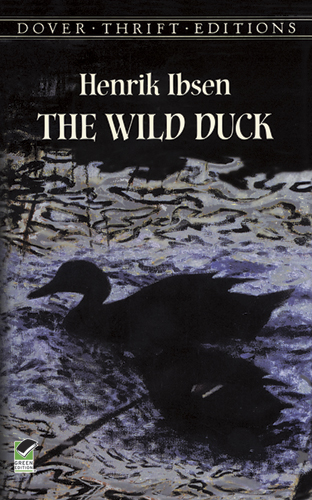
In “The Wild Duck,” a play by Henrik Ibsen, there is a duck and a son who leaves home yet returns after 15 years away. Ibsen’s play is a masterpiece; it is not silly at all. We will begin reading THE WILD DUCK in THE GLOBAL READIN GROUP-THE ANNEX, a virtual literary salon. It is free and open to all. Come join us! You can find out more here: https://alicecatherinej.com/the-global-reading-group-a-virtual-literary-salon/

THE WILD DUCK

Poetry at the Post-Marfa: Coffee #2

[Over a cup of coffee]
BY STEPHEN DOBYNS

Over a cup of coffee or sitting on a park bench or
walking the dog, he would recall…

Monday morning I invited a friend for coffee at “Coffee + Toast+ Magic.”
The coffee I wanted. The magic I needed.

Marfa, Texas is a place that exists on its own time.
Like the Marfa Lights, sometimes things are there and sometimes they are not.
There was a handwritten note posted to the C+T+M’s metal door.
Be back on September 25th.

We headed to my friend’s casita instead. In a some ways, that was better.

In someone’s home, you can move around.
Coffee in the living area then at a table.
You can linger and allow the conversation to meander
to Taos and to Denver and across to Budapest and Berlin.

how he had left long ago to try his luck in
Argentina or Australia.

You dawdle in the present,
imagine the future. You are not rushed.
The time over coffee becomes a journey…

And
although he had no sense of being on a journey,
such memories made him realize how far he had
traveled

Poetry at the Post-Austin: Coffee #1

Prose Poem (“The morning coffee.”)
BY RON PADGETT


The morning coffee. I’m not sure why I drink it.

In search of a local place to read & write, I walked over to East 6th Street’s newest spot, Cuvee Coffee. It’s sleek industrial with a welcoming staff.

Maybe it’s the ritual
of the cup, the spoon, the hot water, the milk,

I like the ritual of going somewhere to write. To be social but not.
To read and drift off.
To “meditate. About what?”
That’s just it…. you don’t know where your mind will wander.

It’s the same way in Ron Padgett’s poem, “The Morning Coffee,,” The narrator begins with a statement about drinking coffee but moves to Pappa Bear and Baby Bear, and
the shattering of a cup.

In a way it’s good that Mama Bear isn’t there. Better that she rest
in her grave beyond the garden, unaware of what has happened to the
world.

If you happen to be in Austin, come join me at Cuvee Coffee.

Poetry at the Post: A Trip to Rouen with May Wedderburn Cannan or “Let’s Give Peace a Chance”

For Veterans Day 2015~

Reposting this poem in memory of the men and women who have suffered and died in war. Let’s say “No More War” and “Give Peace A Chance.” Click here for the video of John Lennon and Yoko singing “All we are saying is give peace a chance.”

Rouen
BY MAY WEDDERBURN CANNAN

1893–1973

For the royal entry of Henry II in Rouen, 1 October 1550

Early morning over Rouen, hopeful, high, courageous morning,
And the laughter of adventure, and the steepness of the stair,

Have you ever traveled to beautiful places where the history of bloody battles, rebellions and executions soaks the stones, the air? You marvel at an historic sight only to discover that most of structure had been burned down or bombed out in a war.

This is how I imagine Rouen, a city with a tortured history going as far back as the Gauls and continuing to massive destruction during World War II. It was here that Joan of Arc was executed in 1431.

Quiet night-time over Rouen, and the station full of soldiers,
All the youth and pride of England from the ends of all the earth;

The poet May Wedderburn Cannan was born in Oxford, England to an intellectual family. In 1915, she spent a month in Rouen helping out at a canteen for soldiers. Her experience in this military supply base during World War I inspired this poem.


Can I forget the passage from the cool white-bedded Aid Post
Past the long sun-blistered coaches of the khaki Red Cross train
To the truck train full of wounded, and the weariness and laughter
And “Good-bye, and thank you, Sister”, and the empty yards again?

Compiègne, France: Château de Compiègne - Musée du Second Empire - Adolphe Yvon: Bataille de Solférino
Compiègne, France: Château de Compiègne – Musée du Second Empire – Adolphe Yvon: Bataille de Solférino

The Red Cross was borne from the aftermath of the Battle of Solferino (June 24, 1859) during the Austro-Sardinian War. In one day, 40,000 soldiers died or were left wounded. In 1867, the first International Conference of the Red Cross and the Red Crescent was held. Austria formed a Red Cross chapter in 1880 and The Hapsburg Empress Elizabeth (or “Sisi”) presided over its inaugural meeting in June of that same year.

Robert Antoine Pinchon, 1905, Le Pont aux Anglais, Rouen, oil on canvas, 38 × 46 cm, private collection

When the world slips slow to darkness, when the office fire burns lower,
My heart goes out to Rouen, Rouen all the world away;

Poetry at the Post-Colorado: “Another Thing” by David Mason

Another Thing
BY DAVID MASON

So why not be the vast, antipodal cloud
you soloed under, riven by cold gales?

Sunset, Breckenridge, CO August 2014 photo courtesy of John Jennings
Sunset, Breckenridge, CO
August 2014
photo courtesy of John Jennings

My weekend #coloradominitrip is embedded on iPhoto but those photos are static. Nowhere can they capture the grandeur of the mountains or the sense that there is the potential in your body to push it more,to go to the limits—to be “another thing.”

USA Pro Challenge Stage 5 Breckenridge, CO August 22, 2014 photo by  Alice Jennings
USA Pro Challenge
Stage 5
Breckenridge, CO
August 22, 2014
photo by Alice Jennings

The others are one thing. They know they are.
One compass needle. They have found their way

Colorado Poet Laureate David Mason’s poem, “Another Thing,” suggests that desire to live life in another way, “to wreck yourself once more against the day.” A poem like the mountains can call us to higher feats. I like that.

#coloradominitrip photo by Alice Jennings
#coloradominitrip
photo by Alice Jennings

Poetry at the Post: It’s a Coronation!

A Crown of Autumn Leaves
BY ANNIE FINCH

Holding past summer’s hold,
Open and strong,
One of the leaves in the crown is gold…

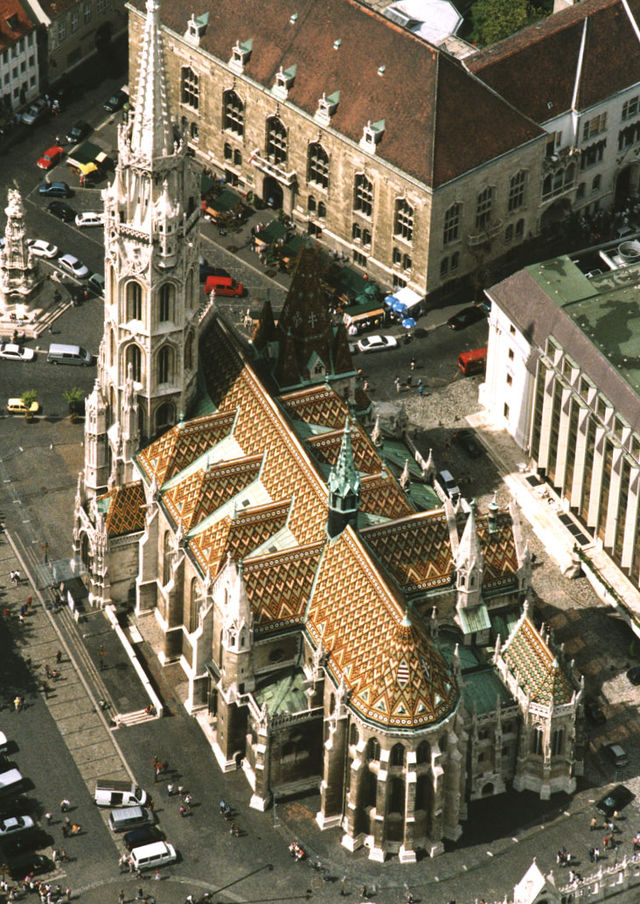
"Buda Castles-Matthias Church". Licensed under Creative Commons Attribution-Share Alike 2.5 via Wikimedia Commons
“Buda Castles-Matthias Church”. Licensed under Creative Commons Attribution-Share Alike 2.5 via Wikimedia Commons

A cool front moving through the West Texas desert makes me think of autumn.

Yet, it is summer. And, it was in the summer of 1867 when Emperor Franz Joseph and his wife, Empress Elisabeth, were crowned King and Queen of Hungary at St. Matthias Church in Budapest.

This was quite the event. The Coronation was one of the most spectacular pageants on the Continent and covered extensively in the papers of Paris and London.

The royal carriage covered
with gems and gold & drawn
by eight white horses, 182
aristocrats elegantly dressed,
a grand procession, maidens
in white with flowers..
St Stephen’s Crown
on a velvet cushion,
five days of banquets…

Even a special Coronation Mass was composed by famous Hungarian Franz Liszt. Here is a selection:

Liszt’s “Benedictus, the invocation for divine help and guidance, is rhythmic and trance-like, similar to a chant.

Annie Finch’s poem, “A Crown of Autumn Leaves” is from her book Calendars, a book of poems organized around ritual chants and the seasons.

This poem is so lovely with the repetition of the vowel sounds. The “o” summons the circling of the crown of fallen leaves.

Here is my crown
Of winding vine,
Of leaves that dropped,
That fingers twined,
another crown
to yield and shine

The crown of leaves shines…but like the King and Queen of Hungary, so soon it is nevermore.