I went to door; an’ out vrom trees above My head, upon the blast by me, Sweet blossoms wer a-cast by me, As if my Love, a-past by me, Did fling em down—a token ov her love.
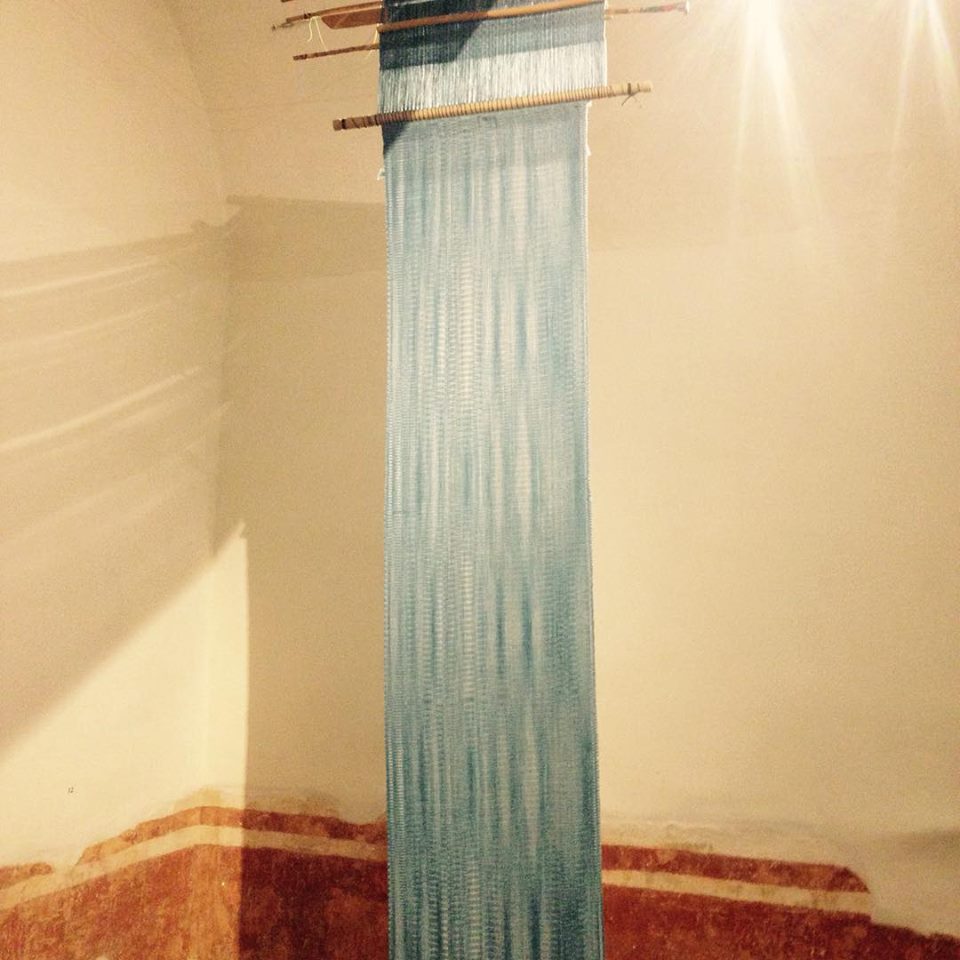
From the series “doors of Oaxaca” by AC Jennings
William Barnes (22 February 1801 – 7 October 1886) was an English writer, poet, and philologist. Despite having a busy life as a clerk, a schoolmaster, a pastor—and tutor to Thomas Hardy, he managed to compose over 800 poems plus a comprehensive English grammar.
Barnes was known as a strong supporter of the Dorset dialect and used this dialect in some of his own works.You can download the complete Poems of Rural Life in the Dorset Dialect by William Barnes here. How cool is that?
William Barnes, poet“Whitcombe – parish church of lost dedication – geograph.org.uk – 533554” by Chris Downer. Licensed under CC BY-SA 2.0 via Wikimedia Commons –
Channel Firing BY THOMAS HARDY
That night your great guns, unawares,
Shook all our coffins as we lay,
And broke the chancel window-squares,
We thought it was the Judgment-day
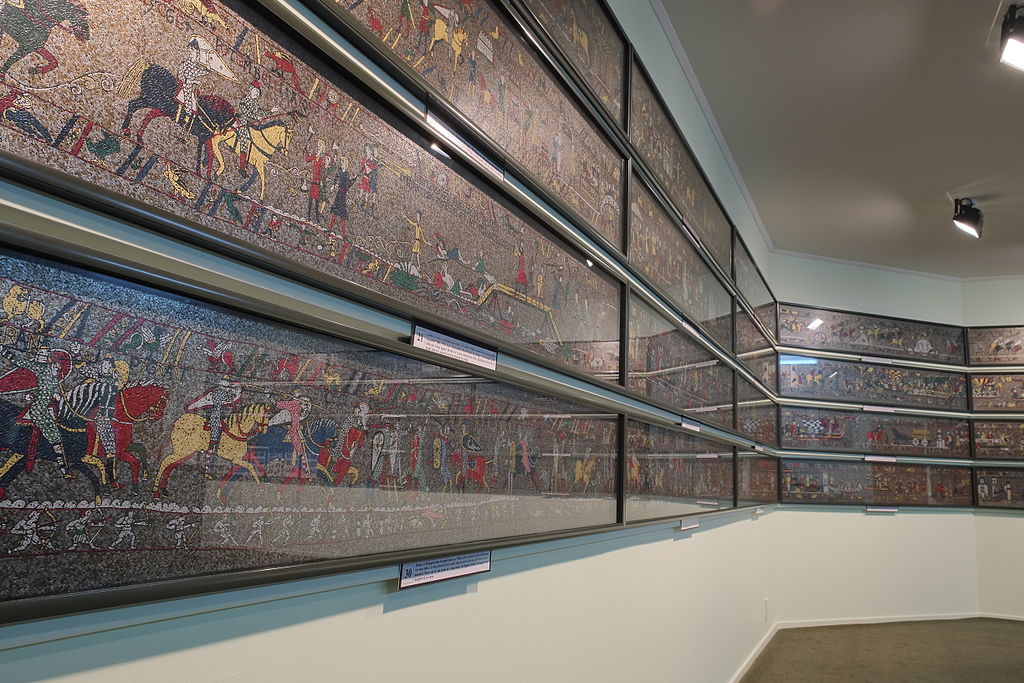
Sections of the 1066 Medieval Mosaic re-creation in New Zealand
Call for Papers
The grief-stricken faces at Edward’s deathbed in the Bayeux Tapestry; the ambiguous ‘ofermod’ in The Battle of Maldon; the body-crumpling anguish of the Virgin witnessing the Man of Sorrows; the mirth of the Green Knight; the apoplectic anger of the mystery plays’ Herod and the visceral visionary experiences of Margery of Kempe all testify to the ways in which the medieval world sought to express, perform, idealise and understand emotion.
Yet while such expressions of emotion are frequently encountered by medievalists working across the disciplines, defining, quantifying and analysing the purposes of emotion and its relationship to gender often proves difficult. Are personal items placed in early Anglo Saxon graves a means for the living to let go of, or perpetuate emotion, and how are these influenced by the body in the grave? Do different literary and historical forms lend themselves to diverse ways of expressing men’s and women’s emotion? How does a character expressing emotion on stage or in artwork use body, gender and articulation to communicate emotion to their viewer? Moreover, is emotion viewed differently depending on the gendered identity of the body expressing it? Is emotion and its reception used to construct, deconstruct, challenge or confirm gender identities?
This conference seeks to explore the manifestations, performances and functions of emotion in the early to late Middle Ages, and to examine the ways in which emotion is gendered and used to construct gender identities.
A segment of the Bayeux Tapestry depicting Odo, Bishop of Bayeux, rallying Duke William’s troops during the Battle of Hastings in 1066
Proposals are now being accepted for 20 minute papers. Topics to consider may include, but are not limited to:
Gender and emotional expression: representing and performing emotion
The emotional body
Philosophies of emotion: theory and morality
Emotional objects and vessels of emotion
Language and emotion and the languages of emotion
Preserving or perpetuating emotion
Emotions to be dealt with: repressing, curtailing, channelling, transforming
Forbidden emotion
Living through (someone else’s) emotion
The emotions of war and peace
The emotive ‘other’
Place and emotion
Queer emotion
We welcome scholars from a range of disciplines, including history, literature, art history, archaeology and drama. A travel fund is available for postgraduate students who would otherwise be unable to attend.
Please email proposals of no more than 300 words to organiser Daisy Black at d.black@hull.ac.uk by the 7th September 2015. All queries should also be directed to this address. Please also include biographical information detailing your name, research area, institution and level of study (if applicable)
The adventure in my next tale The Bretons made into a lai Called “Laustic,” I’ve heard them say, In Brittany; in French they call The “laustic” a “rossignol” And in good English, “nightingale.”
Near St. Malo there was a town (Somewhere thereabouts) of great renown.
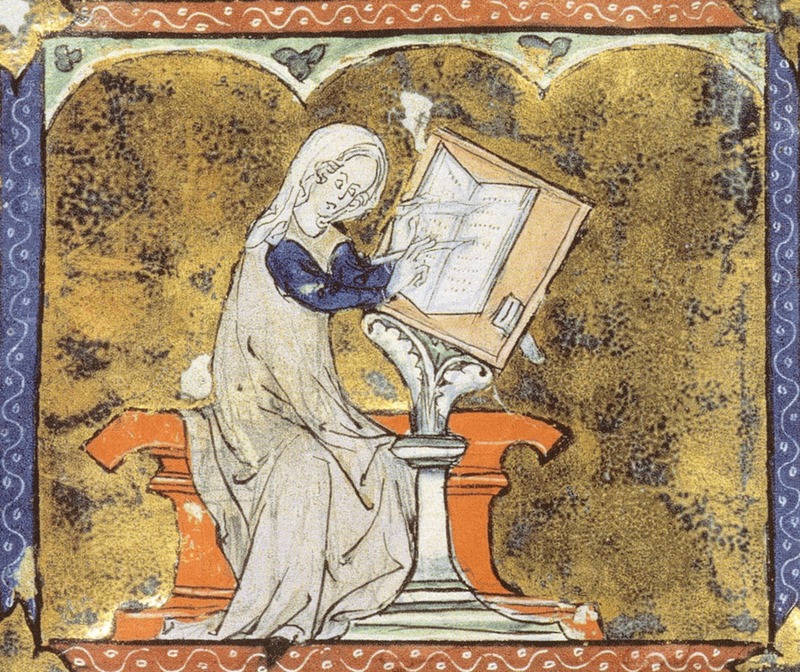
Marie de France, from an illuminated manuscript now in the Bibliothèque nationale de France: BnF, Arsenal Library, Ms. 3142 fol. 256.
My mother died this past February. She was 92. My father died in 1985. He had been a medic during World War II. He landed in Normandy three days after the initial invasion picking up the dead and wounded from the beaches through France and into Germany. His last assignment was at a concentration camp. I don’t know where as he never spoke of it. My mother said he had nightmares for a long while after the war ended and he returned home. He would wake up screaming, “They all want their moms.”
Every hour, she thinks, someone for whom the war was a memory falls out of the world.
—From All The Light We Cannot See by Anthony Doerr
I just finished reading Doerr’s sad but lovely book about a blind girl, a mechanical wizard and two lives caught in an inexplicable time. Much of the book takes place in St. Malo-an historic town almost completely destroyed by the Allies in 1944. If you haven’t read this award-winning novel yet—you must.
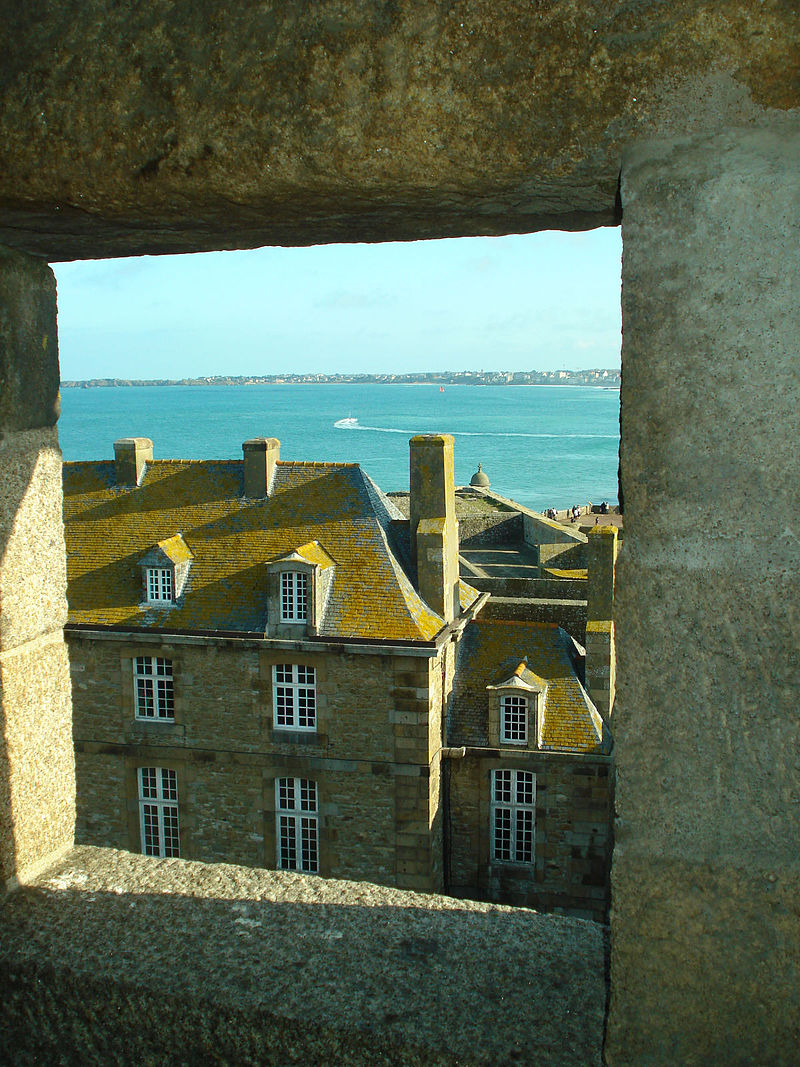
“Saint-Malo Novembre 2011 (10)” by Moustachioed Womanizer – Own work. Licensed under CC BY-SA 3.0 via Wikimedia Commons –
Just past the bin of pastel baby socks and underwear, there are some 49-dollar Chinese-made TVs;
one of them singing news about a far-off war, one comparing the breast size of an actress from Hollywood
to the breast size of an actress from Bollywood.
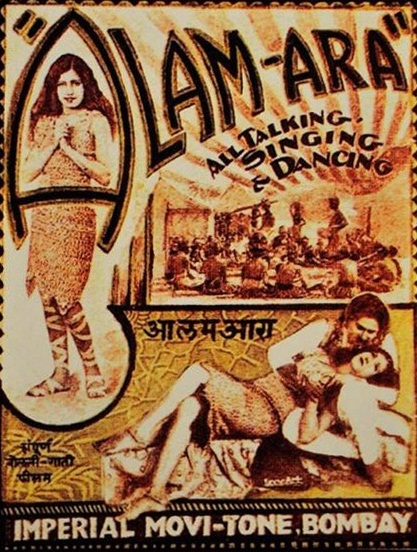
Film poster for first Indian sound film, Ardeshir Irani’s Alam Ara (1931)“GalleriaOne” by Postoak at en.wikipedia. Licensed under CC BY-SA 3.0 via Wikimedia Commons –
When I’m depressed, I watch movies—especially Bollywood films. The more weddings the better so I was on a Bollywood High in Jaipur last January for the opening of Dolly Ki Doli— a 2015 Indian comedy-drama film about a young woman who is a con artist. Because Dolly’s modus operandi is to love them then leave them—with all they own—there are many, many weddings in Dolly Di Doli. Silly and predictable but a whole lot of fun!!!
Alice’s Depresso-fixer rating!
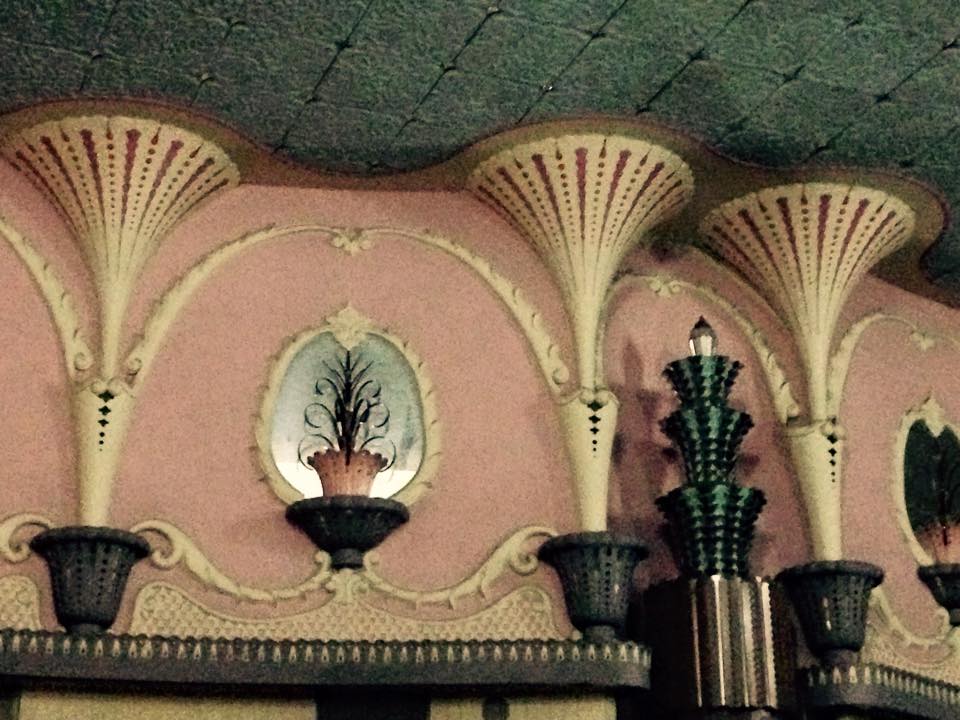
Raj Mandir Cinema by Alice-Catherine Jennings
Doli, a FIVE POINT SOMEONE a looteri dulhan, a high shine thief ululating calls loud whee-oh torry- yu mellow & fluffy she patterns thievery like the colors of
the fern-leaf plastered walls pink blue blue pink crash the boy’s heart then another crashed heart “no need to repeat!
Thanks to the editors of Zoomoozophone Review for first publishing “Raj Mandir Cinema” in Issue 6, June 2015. You can check it out here.
if there is a river more beautiful than this bright as the blood red edge of the moon if
Earthrise taken by Apollo 8 in 1968
“…there was a Mumbanyo man who wanted to kill the moon. He had discovered his wife bled each month and accused her of having another husband. She laughed and told him all women were married to the moon. ” (From Euphoria by Lily King)
Moonrise over Mano Prieto photo courtesy of John M. Jennings, 2013
For so long I wanted to divorce that man in the moon now that I have, I miss him.
When you came, you were like red wine and honey, And the taste of you burnt my mouth with its sweetness. Now you are like morning bread, Smooth and pleasant. I hardly taste you at all for I know your savour, But I am completely nourished.
Lowell as a child
She laughed. ‘Was she wine or bread to you?’
‘What do you mean?’
‘It’s from an Amy Lowell poem we all loved in college.”
—From Euphoria by Lily King
I’m intrigued by the use of intertexuality—why one writer chooses to insert text from another and why I take particular note of it —and how it leads me back to someplace else—like 1966, when I recited Patterns by Amy Lowell in a poetry recitation contest somewhere in Northern Kentucky.
I walk down the garden paths, And all the daffodils Are blowing, and the bright blue squills. I walk down the patterned garden paths In my stiff, brocaded gown.
And then one thing leads to another—such as this awesome scholarship opportunity for poets! $50,000 for one year travel outside the country! Deadline: October 15th. Check it out.
Abstract of the Terms of the Scholarship from Amy Lowell’s Will, as Modified by the Massachusetts Probate and Family Court, Norfolk Division, on January 23, 2008
My trustees shall appoint a committee to be composed of one member of the English Department of Harvard University and of two poets of recognized standing (preference being given to those of progressive literary tendencies) and of the trustees themselves who collectively shall count as one. This committee shall each year name to receive the scholarship a poet of American birth and of good standing or able promise, preference again being given to those of progressive literary tendencies. By accepting the scholarship, the recipient shall agree with the trustees to spend one year outside of the Continent of North America in whatever place the recipient deems best suited to advance the art of poetry as practiced by him, and at the end of the year the recipient is to submit at least three poems for consideration by the committee. The trustees shall pay over to the recipient $50,000 [adjusted annually for inflation after 2008]. Such payments, however, shall cease if the recipient during the year returns to the Continent of North America for any reason or any period which seems unreasonable to the committee, said committee having the sole right to determine what is reasonable. Mere vacations shall not be considered reasonable. At the end of the year upon the submission of at least three poems to the committee, if these poems be considered of sufficient merit, they may award the same poet a second consecutive annual scholarship in the amount determined as set forth above for the succeeding year, so that, in any year in which a scholarship recipient is awarded a second consecutive annual scholarship, there shall be two Amy Lowell Poetry Travelling Scholarships awarded that year, both in the same amount.
The twentieth biennial New College Conference on Medieval and Renaissance Studies will take place 10–13 March 2016 in . The program committee invites 250-word abstracts of proposed twenty-minute papers on topics in European and Mediterranean history, literature, art, music and religion from the fourth to the seventeenth centuries. In celebration of the conference’s twentieth anniversary, abstracts are particularly solicited for a thread of special sessions reflecting the conference’s traditional interdisciplinary focus: that is, papers that blur methodological, chronological, and geographical boundaries, or that combine subjects and/or approaches in unexpected ways. As always, planned sessions are also welcome. The deadline for all abstracts is 15 September 2015; please see the guidelines below.
Further anniversary events will include a retrospective panel on the conference’s forty-year history and a Saturday evening banquet. In addition, the second Snyder Prize (named in honor of the conference’s founder Lee Snyder, who died in 2012), will be given to the best paper presented at the conference by a junior scholar. The prize carries an honorarium of $400.
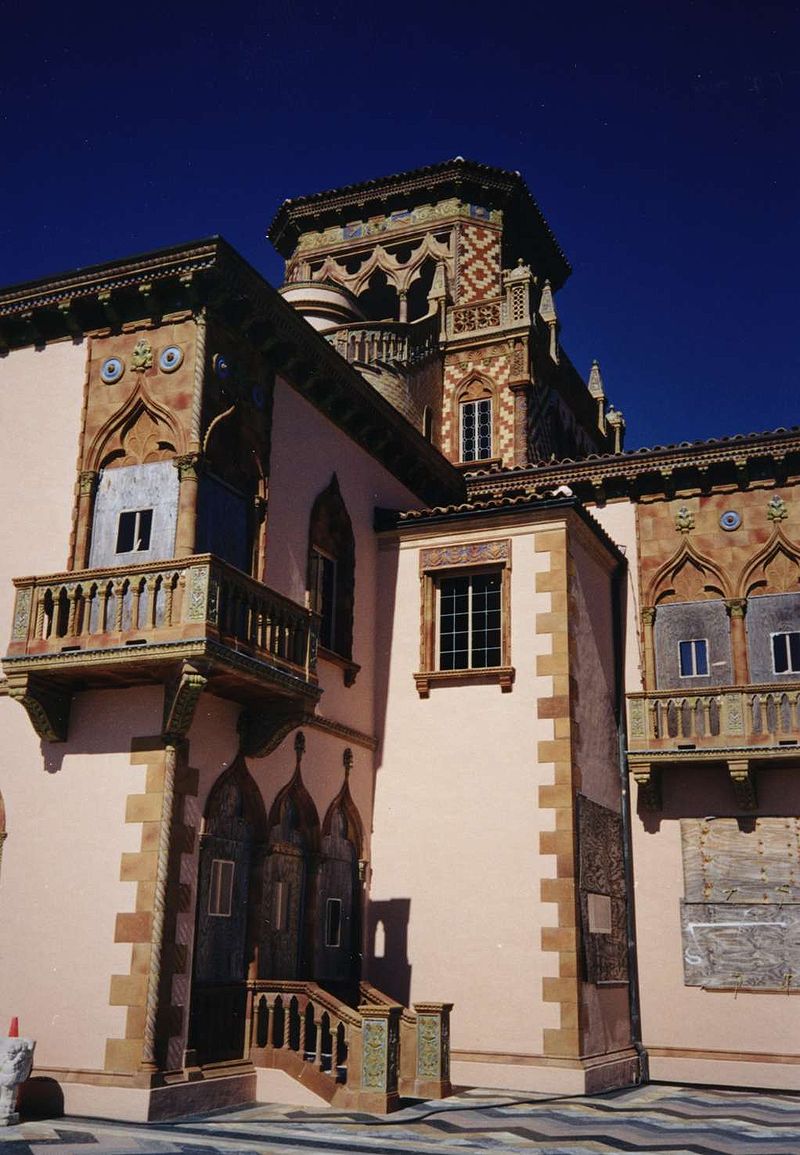
The conference is held on the campus of the honors college of the Florida state system. The college, located on Sarasota Bay, is adjacent to the John and Mable Ringling Museum of Art, which will offer tours arranged for conference participants. Sarasota is noted for its beautiful public beaches, theater, food, art and music. Average temperatures in March are a pleasant high of 77F (25C) and a low of 57F (14C).
More information will be posted here on the conference website (http://www.newcollegeconference.org) as it becomes available, including plenary speakers, conference events, and area attractions.
PLEASE SHARE THIS ANNOUNCEMENT WITH INTERESTED COLLEAGUES.
“Sarasota Ringling estate”. Licensed under CC BY-SA 3.0 via Wikimedia Commons –
If you are considering submitting an abstract or session proposal, please be aware of the following:
1) So that we can accommodate as many scholars as possible, no one may present a paper in more than one session of the conference. Furthermore, no one should commit to more than two out of the following three activities: 1) presenting a paper; 2) chairing a session; and 3) participating in a roundtable. Organizing sessions does not count in these calculations, but session organizers are subject to them along with everyone else (i.e. you may organize as many sessions as you like, but you may only present one paper, and chair a separate session).
2) Session chairs should not also present in the panel they are chairing. Session organizers may either chair or present in a panel that they have arranged, but not both. If you are organizing a planned session, you may either arrange for a chair and include him/her in your proposal, or submit your panel without a chair and conference organizers will assign one. (The acceptance of your panel will not depend on whether or not your planned session already has a chair.)
3) Those organizing planned sessions should also know that the organizing committee strongly prefers sessions that include participants from more than one institution.
Please email info@newcollegeconference.org with any questions.
Note to ekphrastic poets: Check out this upcoming conference at St. Hilda’s College.
There is also a call for contributing artists outside of academia as an exhibition of contemporary art inspired by mystical ideas will be held in the Turl Street Kitchen in central Oxford on Friday evening, January 8, 2016.
The relationship between word and image, and the ways in which medieval art (be it visual, textual, or both) operates as a means of expressing the inexpressible, will be explored in a two-day conference held in Oxford under the auspice of the Mystical Theology Network.
This interdisciplinary conference will bring together theologians, art historians, and literary scholars to examine the ways in which various forms of artistic expression have been and can be used to articulate the mystical or that which cannot easily be spoken. The principal focus will be art and articulation in medieval works and modern responses to them.
The conference will investigate the role of art and its connection to forms of mystical knowing through various strands. From visual art, through optics, apophasis and ekphrasis to mystical theology, this multidisciplinary approach to illumination will shed new light on the role of art in mystical contemplation.
St. Hilda’s College Oxford, UK
CALL FOR PAPERS
We welcome submissions for 20-minute papers and proposals for sessions of three 20-minute papers.
Topics may include, but are by no means confined to:
The interplay between mysticism and art, both visual and textual.
Art (visual, textual or both) as a means of communicating that which is hard to articulate.
Apophasis.
Theorisations of art and beauty and how these relate to notions of mysticism.
Transformative visions and the therapeutic effect of ‘seeing as’.
Medieval and modern ideas on optics, seeing and contemplation/mysticism.
The intersection between visual and textual art.
The role of illuminations and annotations in medieval manuscripts. Ekphrasis.
Please send an abstract of no more than 300 words to the conference organisers by 1st September 2015.
We warmly welcome papers from graduate students.
We also warmly welcome contributions from artists outside of academia. For more information about contributing as an artist please contact Tom de Freston.
(From Lyrics of the Middle Ages, ed. James J. Wilhelm. NY: Garland Publ., 1990, 244.)
“Alfonso wrote or organized the Cantigas de Santa María, a collection of [427] poems in honor of the Virgin, often longish narratives relating her miracles. One of the most important music collections in the Middle Ages, the songs were often sung on pilgrimages. The text for this poem in Alvar-Beltrán, pp. 423-424; music, 441. For a tape of the Cantigas, Astrée E7707.”
Rose of roses and flower of flowers, Lady of ladies, Lord of lords. 1. Rose of beauty and fine appearance And flower of happiness and pleasure, lady of most merciful bearing, And Lord for relieving all woes and cares; Rose of roses and flower of flowers, Lady of ladies, Lord of lords. Rosa das rosas e Fror das frores, Dona das donas, Sennor das sennores. 1. Rosa de beldad’ e de parecer e Fror d’alegria e de prazer, Dona en mui piadosa ser Sennor en toller coitas e doores. Rosa das rosas e Fror das frores, Dona das donas, Sennor das sennores.
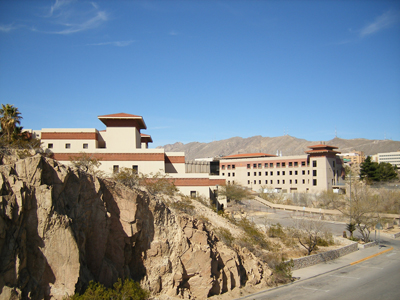
Alfonso X as a judge, from his Libro de los Dados,[2] completed ca. 1280Check out this opportunity to learn more about Mester de Clerecía in El Paso, Texas this Fall.
Why Mester de Clerecía in 2015?
The thirteenth century was a dynamic time in the Iberian Peninsula, as political and cultural changes were occurring throughout the realms that occupied what is now Spain and Portugal. Much of the literature of this period was learned in nature and composed by clerics, and although the works were read and studied individually from the time of composition, they did not see collective examination until the nineteenth century. It was in 1865 that the Spanish scholar Manuel Milà i Fontanals used the term “mester de clerecía” (the cleric’s craft) for the first time to refer to this learned literary production.
The study of the mester de clerecía is now 150 years old, and an international conference entitled “The Cleric’s Craft: Crossroads of Medieval Spanish Literature and Modern Critique” will be convened in 2015 to mark this important milestone, to reassess this literature and its study, as well as to chart new directions for the field.














![Alfonso X as a judge, from his Libro de los Dados,[2] completed ca. 1280](https://alicecatherinej.com/wp-content/uploads/2015/07/800px-librodesjuegasalfonxandcourt.jpg)

 Alice-Catherine
