Notations: The Imagined Diary of Julian of Norwich

I am deeply moved and honored to have a selection of poems from my new manuscript in process Notations: The Imagined Diary of Julian of Norwich accepted by The Sigh Press, an online literary and art journal for writers of English in Tuscany.
Someday you are lucky enough to find yourself in a residency at Tenuta di Spannocchia, Italy. It sparks an interest in Dante and medieval mystical poets—and Voila! one day years later you find yourself writing poetry about an anchoress in England.

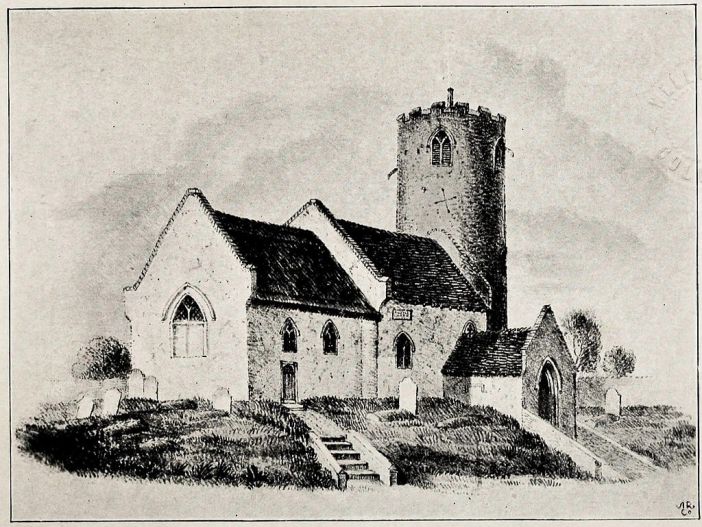
St_Julian's_Church_Norwich
The Original Church of St Julian, Norwich

Katherine of Aragon: A Collection of Poems

My new chapbook Katherine of Aragon: A Collection of Poems is now available for preorder from Finishing Line Press. You can order it online here.

“Henry Tudor’s Spanish wife Katherine, perhaps the oldest and best-known member of the First Wives Club, comes back to life in the pages of Alice Jennings’s moving poetic debut. In Katherine of Aragon, Jennings’s poems sizzle and hiss with historic detail, imagined insight, and poetic power. Her poems give us a fresh look into the 16th century English intrigue we thought we already knew well.”

–Kathleen Driskell, poet, author of best-selling Seed Across Snow and Next Door to the Dead


 Final Jennings_Alice_COV-3 copy 2


Poetry at the Post: Katherine of Aragon in Oaxaca

Katherine on Her Wedding Night to Henry VIII

For years your thighs with reddish hairs I sought
with lust that liveth in my thought.

I’ll be reading from my forthcoming chapbook, Katherine of Aragon: A Collection of Poems  tomorrow night, Saturday the 16 of January, in Oaxaca, Mexico. Please come if you happen to find yourself in town. We begin at 6:54 pm (not a typo). And btw, the book goes on sale at Finishing Line Press within the next few weeks.

poster 2


Poetry at the Post: Holy Dust and Liquids

Requiem Shark
BY RAD SMITH

I want
another look at the terrible
eye with its nictitating membrane,
those extravagant fins,
the ampullae of Lorenzini freckling its snout,

Madonna_and_Child_Rogier_van_der_Weyden
Virgin and Child (left wing of Diptych of Philip de Croÿ with The Virgin and Child), oil on panel, circa 1460, Huntington Library, San Marino. ((Public domain)

Re//Generate conference – A Call for papers

The University of St Andrews School of Art History in collaboration with the St Andrews Institute of Medieval Studies (SAIMS) present Re/generate: Materiality and the Afterlives of Things in the Middle Ages, 500-1500, an interdisciplinary conference on reuse and recycling in medieval Europe taking place on 6-7th May 2016.

In recent years, the discipline of Art History has been grappling with the concept of materiality, the very thingness of art. The material of medieval art, be it parchment, precious metal, gem, bone or stone, has emerged as a spearheading topic. Unsurprisingly, this “material turn” has prompted intriguing questions. To what extent does an ivory figure of the Virgin and Child embody the divine, rather than merely represent it? What exactly did pilgrims do with the holy dust or liquid which they carried away from saints’ shrines in little ampullae? It is within this context that we wish to explore how recycling was part of the medieval (re)creative process.

This conference will investigate the different ways in which medieval people used and reused goods, materials, and other elements from existing forms to create (or recreate) new art and architecture. Why did medieval people preserve, conserve, and recycle art and materials from a different era? Did such appropriation go beyond mere economic practicality? Could the very materiality of an object have been the reason for its retention or reinvention? The two-day conference is aimed at postgraduates and early career academics from a range of disciplines including, but not limited to history, art history, museum studies, archaeology, book studies and literature.

We invite twenty-minute papers on the following range of topics and their relationship to the study of materiality, recycling and reuse in middle ages:

Second-hand materiality of medieval art and/or everyday objects;
The concept of refuse/garbage and its reuse;
The medieval and post-medieval afterlives of things;
Theoretical approaches to medieval materiality; Thing theory and Stuff theory;
Semiotics and anthropology of medieval recycling and recreation;
Issues of authorship, circulation and ownership of recycled art;
Genealogy of recycled materials: spoils, heirlooms, relics, ruins and remnants;
Conservation, preservation and restoration in medieval thought and practice.

Papers on other issues related to the study of materiality and reuse of materials in the Middle Ages or of medieval materials in post-medieval practice are also welcome. Please direct your submissions (250 word abstract) along with a short biography (100 word) to regenerate2016@st-andrews.ac.uk no later than 1st of February 2016.

Poetry at the Post: Mediated Phenomena and a Grapefruit Too!

Meditation on a Grapefruit
BY CRAIG ARNOLD
To wake when all is possible
before the agitations of the day
have gripped you

Caligrapefruit

Call for Papers
The Virginia Graduate Colloquium in Theology, Ethics, and Culture

University of Virginia, May 6-8, 2016

Keynote Speaker: Talal Asad

The 2016 Virginia Graduate Colloquium invites creative submissions by graduate students on the conference theme: “Religion and Media.” We are honored to present as our keynote speaker renowned anthropologist Professor Talal Asad, whose transformative work on the genealogical mediations of religious and “secular” traditions has deeply influenced the study and practice of religion today.

Religion is often described as a “mediated” phenomenon, whether ritually, doctrinally, aesthetically, communally, politically, narratively, and/or violently. Potential topics could include: material histories of the Gutenberg press, oral epic traditions, Qur’anic calligraphy, televangelism, propaganda posters and wartime radio broadcasts, Mormon architecture, illuminated medieval manuscripts, and iconoclastic controversies. What, for example, is the significance of an online presence for religious authorities, like the Dalai Lama via Twitter? What is the function of “scientia media,” or middle knowledge, regarding divine omniscience in analytic philosophy? How is Christ depicted as “the Mediator” by Christian theologians? How is God both immediately and transcendently One within the Islamic intellectual tradition? What is the interpretation of Jehovah-rapha and covenantal remediation before and after the Holocaust? In short, the conference will initiate a dialogue about “media,” construed not only as a “mode of transmission” but also as a process of (re-)/mediation and repair, to open new lines of investigation for theological and religious studies.

We welcome a broad range of submissions including, but certainly not limited to:

Technology and Society

Race/Gender/Queer Studies

Scriptural Hermeneutics

Biomedical Ethics

American Religious History

Political & Material Cultures

Aesthetics & Literature

Digital Humanities/Media Theory

Philosophy of Religion

Religious Ethics

Interfaith/Inter-tradition Dialogue

Theology/Lived Theology

For more information, click here. 
Poetry at the Post: A Trip to the North Atlantic via Denver

North
BY SEAMUS HEANEY

I returned to a long strand,
the hammered curve of a bay,
and found only the secular
powers of the Atlantic thundering.

1280px-Nuuk_city_below_SermitsiaqNuussuaq district in Nuuk, the capital of Greenland, with the Sermitsiaq mountain in background
CFP: Seafaring, An Early Medieval Conference on the Islands of the North Atlantic (University of Denver)Seafaring: An Early Medieval Conference on the Islands of the North Atlantic

University of Denver, Denver, CO: 3-4 November 2016
Due: 15 March 2016

Seafaring: an early medieval conference on the islands of the North Atlantic is a three-day national conference that brings together scholars of early medieval Ireland, Britain, and Scandinavia to imagine cooperative, interdisciplinary futures for the study of North Atlantic archipelagos during the early medieval period. Seafaring invites proposals for two kinds of sessions, seminars and workshops/forums, that will help imagine more collective and cooperative futures for scholars of the so-called “British” archipelago and/or reinvigorate the interdisciplinary mandate of early medieval studies.

Designed less around traditional conference presentations than as a “workspace,” Seafaring: an early medieval conference on the islands of the north Atlantic invites proposals that will engage participants in mini-tutorials, masterclasses, writing workshops, and learning laboratories—all of which are designed to widen their linguistic competence, interdisciplinary methods, geographic familiarity, and temporal scope, within and beyond the early medieval period.

For more information, please visit the conference website: http://www.du.edu/ahss/english/news-events/seafaring-conference.html.

Poetry at the Post: Sipping a Negroni in Sorrento

In the Grips of a Sickness Transmitted by Wolves
BY MONICA FERRELL

Sorrento, at night the long fingers of your orange lights
Prick me in the sizzling streets, where the pinnacles
Of other people ring tinny and papier-mâché…


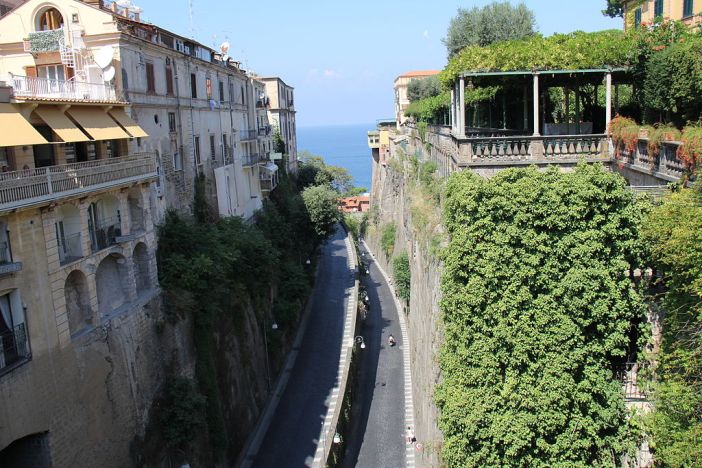
Sorrento_from_Piazza_Tasso

I’ve been drooling this week over the reissue of a special edition by epicurious on the food and wine of Italy. Not only are there great photos. recipes and regional info, but there is a list of restaurants and cafes to try when traveling—including links to their websites, like the Fauno Bar in Sorrento which according to epicurious writers is a good place to sip on a Negroni as you wait for your ferry to Capri (and read a poem by Monica Ferrell.)


Poetry at the Post: Comparsa in Oaxaca—A Haiku Calavera

I’m so honored to have my poem “Comparsa in Oaxaca, MX” published in the November 2015 La Voz de Esperanza Peace & Justice Center in San Antonio, TX.
This 17th edition of La Voz de Esperanza with Literary Ofrendas & Calaveras is dedicated to all victims of police brutality.
‪#‎nevertakeyourhumanrightsforgranted‬

Oaxaca, 2011 photo courtesy of John M. Jennings
Oaxaca, 2011
photo courtesy of John M. Jennings

Poetry at the Post: Reading Poetry in Alphabetical Order—Stuck on “D” or A Home for Every Syrian Refugee Family

St. Francis of Assisi *
The View
by W. S. Di Piero


September, thirsting,
sings our Hosannah..

Legend of St. Francis, Sermon to the Birds, upper Basilica of San Francesco d'Assisi
Legend of St. Francis, Sermon to the Birds, upper Basilica of San Francesco d’Assisi

#RefugeesWelcome

“Pope Francis has called on every European parish, religious community, monastery and sanctuary to take in one refugee family, as thousands of people from war-torn countries continued to stream into Germany via Austria.” (Aljazeera).  And, refugee families will be offered shelter in the two parishes within the jurisdiction of Vatican City. (Washington Post)

This pope rocks! I love that he is living the gospel and the way of St. Francis but can the churches of Europe absorb all the refugees? Not hardly as hundreds of European churches have been closed or are being repurposed. (The Wall Street Journal) and the war in Syria is worsening causing even more Syrians to flee. According to statistics from MercyCorps, “Four million Syrians have registered or are awaiting registration with the United Nations High Commission of Refugees…” The current Syrian refugee crisis is the worst since the Rwandan genocide of 1994.

So, what if every US church were to take in one refugee family? That could make a significant dent in the problem as there are estimated to be about 450,000 churches in the United States. I’m churchless and believe in the daily walk of meditation but if you have a church in Marfa, Fort Davis, Alpine or Austin, Texas that wants to sponsor a refugee family, contact me. I can help.

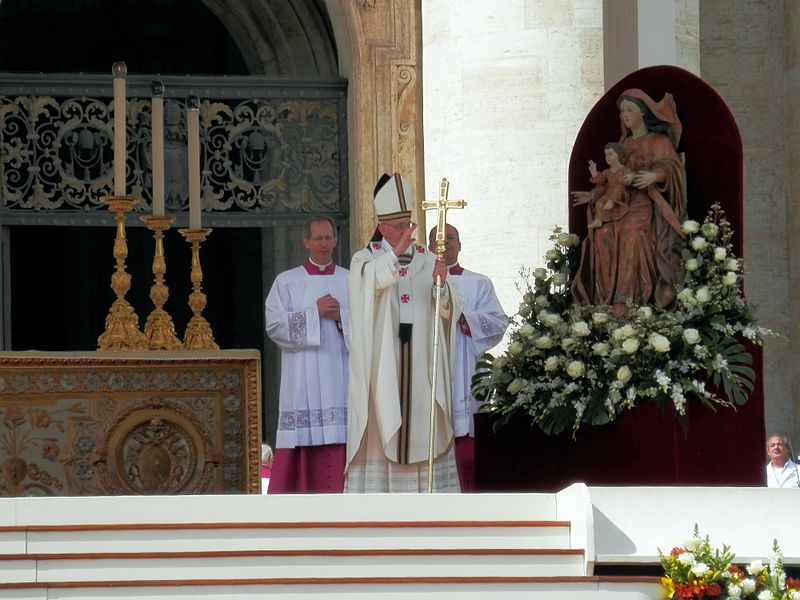
“Francis Inauguration fc10” by Fczarnowski – Own work. Licensed under CC BY-SA 3.0 via Commons –

Meanwhile, the Episcopal Ministries Services, has outlined 3 simple steps you can take that will make a difference:
1. Contact one of their local resettlement partners and volunteer to welcome refugees as they arrive in the United States. This can mean anything from donating household items to helping our new American friends and neighbors learn their way around your community. Find a partner near you: http://bit.ly/EMMpartners
2. Join the ‪#‎RefugeesWelcome‬ global social media campaign urging governments to welcome refugees to their countries. See the sample photos from our resettlement partner in New Haven: IRIS – Integrated Refugee & Immigrant Services.
3. Sign the White House petition asking the President and the government to pledge to resettle at least 65,000 Syrians by 2016: http://1.usa.gov/1L6zh9l.

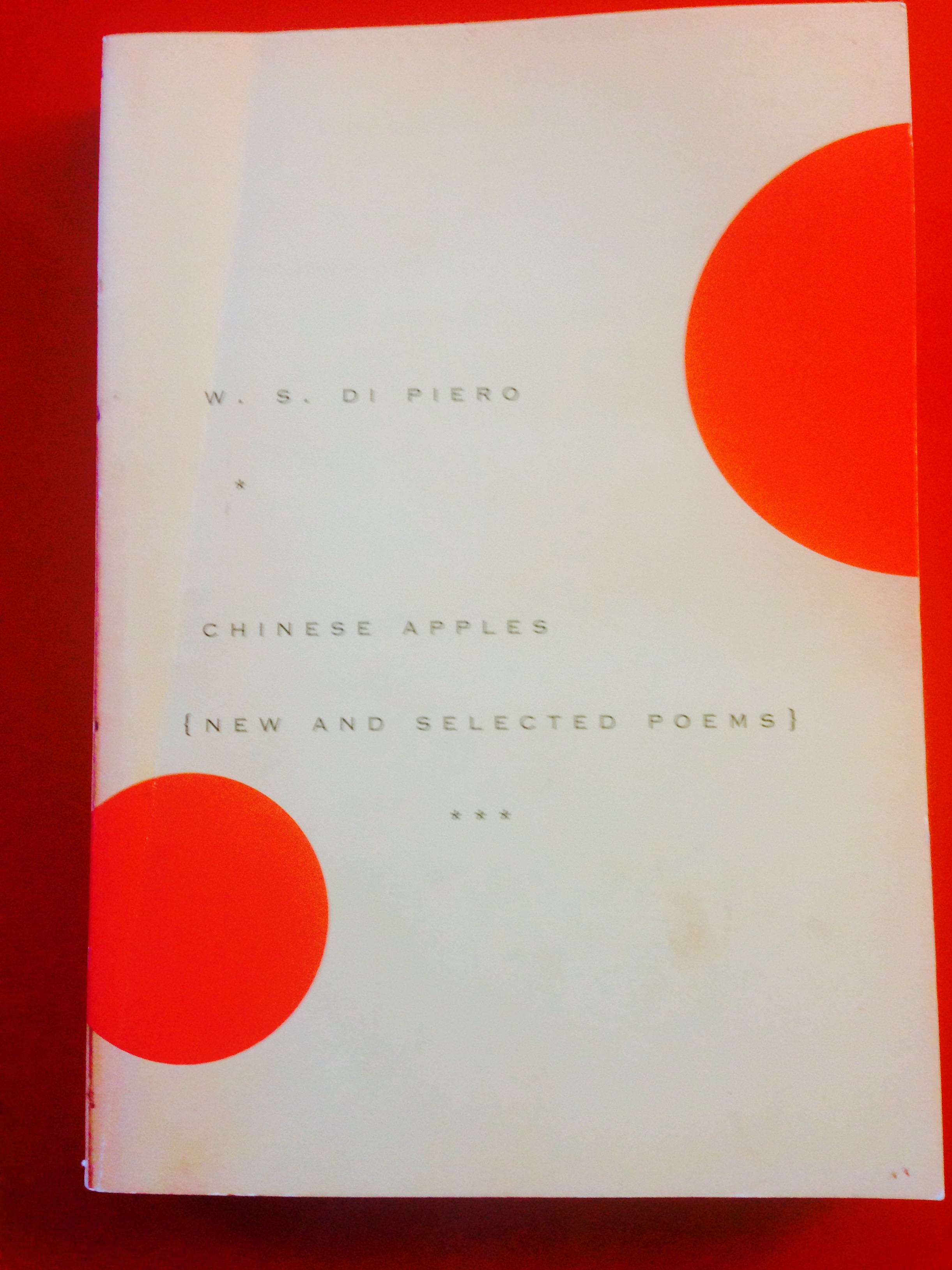
  • From Chinese Apples [New and Selected Poems] by W. S. Di Piero, Alfred A. Knopf, 2009.

chinese apples