CFP: Travel the Silk Road to Portland

Portland State University is pleased to announce its upcoming conference on October 12, 2017

The Art & Archaeology of the Silk Road
1024px-Silk_route
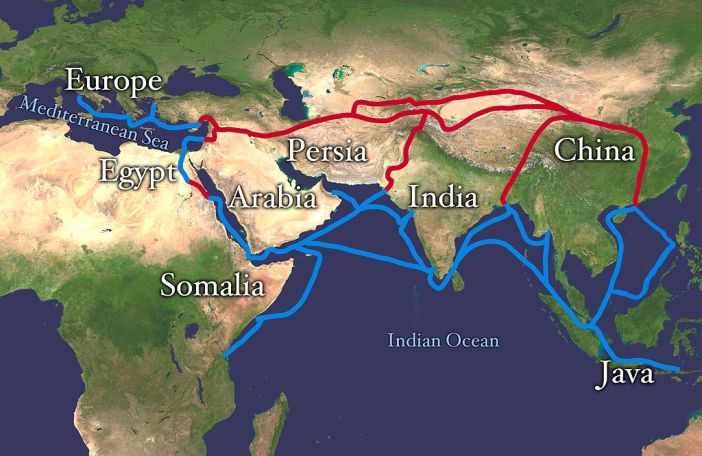
Extent of Silk Route/Silk Road. Red is land route and the blue is the sea/water route.

We invite papers that explore the portable arts and built environment of the Silk Road from its beginnings through the period of its fragmentation under the Mongol Empire. Papers may investigate case studies in specific visual and material culture topics or archeological sites or take a broader, comparative approach. We are particularly interested in having a geographic range of topics represented in the material shared at the conference in order to explore possible themes such as diplomacy in art, hybridity, exoticism, regionalism, and globalization.

Westerner_on_a_camel

Sogdian man on a Bactrian camel, sancai ceramic glaze, Chinese Tang Dynasty (618-907)

The language of the conference presentations will be English, and the presentations will be 20-minute papers grouped around themes for discussion panels following each set of talks. Please submit an approximately 300-word abstract and curriculum vitae to Professors Junghee Lee and Anne McClanan.

Key Dates

Abstract Submission Deadline:
January 15, 2017

Acceptance Notification:
March 1, 2017

Early Registration Deadline:
August 15, 2017

Registration Deadline:
September 29, 2017

Conference Date:
October 12, 2017

#SilkRoadSymp

CFP: Christianity and the Literature of the Vikings

Special Topic: Christianity and the Literature of the Vikings (Spring 2017)

DEADLINE: October 15, 2016

Intégrité: A Journal of Faith and Learning (Missouri Baptist University)

Intégrité is a scholarly journal published biannually by the Faith and Learning Committee and the Humanities Division at Missouri Baptist University in St. Louis, Missouri. Published both online (www.mobap.edu/integrite) and in print, it welcomes essays for a special issue (Spring 2017) on “Christianity and the Literature of the Vikings.” Essays may explore the intersection of the Christian faith and Old Norse literature. As a faith and learning journal, Intégrité also invites pedagogical essays that address teaching Old Norse literature at faith-based institutions of higher learning.


800px-Edda
Print edition of Snorri’s Edda of 1666

Some possible topics include:

CF• The consequences and quality of Iceland’s national conversion to Christianity in 1000 A.C.E. and its treatment in the Icelandic Family Sagas (Íslendingasögur)

• Christianity and the supernatural in any saga genre

• The influence of Christianity on the writings of Icelandic historian and poet Snorri Sturluson

• The relationship between Christianity and Old Norse paganism

• Christianity and the medieval Icelandic legal system

• Medieval Icelandic devotional texts

• The value of Old Norse for literary study in faith-based institutions of higher learning

For this issue the journal also welcomes reviews of scholarly books published since 2010 that explore topics related to Christianity, literature, and pedagogy.

Essays should be 10-25 pages in length, and book reviews should be 5-8 pages. For citation style, refer to the current edition of the MLA Handbook for Writers of Research Papers. Articles should include in-text citations in parentheses, a list of endnotes (if applicable), and an alphabetical listing of works cited at the end. Proposals and abstracts may be submitted until October 15, 2016. Essays are due no later than March 1, 2017. Please send submissions as Word attachments.

Matthew Bardowell, Ph.D.

Assistant Professor of English

Missouri Baptist University

St. Louis, MO 63141

(314) 744-7608

matthew.bardowell@mobap.edu

CFP: Get Your FOLKTALES on in UTRECHT (July 6-9, 2017)

CFP: World Mythologies and Folktales/ Mythologies and Folktales of the World: Literary Interpretations

American Comparative Literature Association ACLA 
July 6-9, 2017
Utrecht, The Netherlands

Deadline for submissions: September 23, 2016

Oppler-strandszene-utrecht
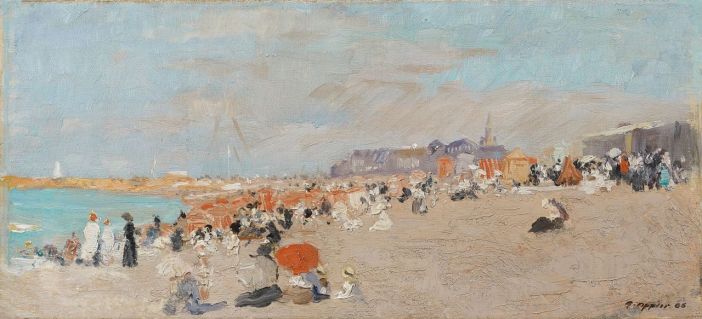
Beach of Utrecht“, Painting by Ernst Oppler, c. 1910CFP

Organizer: Nivin El Asdoudi

Co-Organizer: Doaa Omran

“The relationship between myth and literature is …problematic…On the one hand, myth is a sub-category of literature, on the other hand, it is a more general form of it”(Kenan).The complex relationship between myth/ folktales and literature has always been the concern of critics and writers. Borghes, for example, states that “myth is at the beginning of literature and at its end.” In Dreamtigers, he argues that there is always a tension between reality and fiction in works of literature that have myths, folktales or romances at their heart. He arrives at the conclusion that time can blur the difference between reality and fiction and that fiction can easily turn into myth over time, as in Don Quixote. Myths have always inspired writers from different periods and cultures such as Callimachus, Cavafy, Rilke, Banker and El Hakim. The attitude towards myths and folktales vary from one author to another. While medievalism influenced Tolkein’s mythology in Lord of the Rings, the debunking of folktales and fairytales was the main purpose of Marie de France and Carter. Writers such as Achebe and Asturias drew heavily on African and South American folklore in order to offer the reader a post-colonial counter-discourse. Myths and folktales can be also found at the core of magical realist works or works with magical realist elements such as in the case of Okri’s and Oddoul’s writings.

The aim of this panel is to explore adaptations of myths and folktales in world literature whether classical, medieval, modern or contemporary. We seek papers that analyze these literary works from a comparative perspective. Comparisons of literary adaptations /re-readings /questionings or debunking of myths and folktales from different cultures and /or periods are highly encouraged. Modes of reading include but are not restricted to the following:

Psychoanalytical
Philosophical
Feminist
Postcolonial
Marxist
Structuralist /Poststructuralist
Some of the key questions include:

How do writers use re-readings of myths /folktales as a tool to challenge or consolidate notions of gender and in what way is their cultural background a decisive element?
How do women writers deploy myths /folktales as a means of feminist empowerment?
How do magical realist authors use myths/folktales as sources of magic in their writings?
How do authors employ myths /folktales as sub-texts that define their attitude towards nationalism and in what way does a comparative reading highlight this issue?

Submission : through ACLA website by September 23rd.

Queries: domran@unm.edu

nivinela@gmx.de

Utrecht_Oude_Gracht_Hamburgerbrug_(LOC)
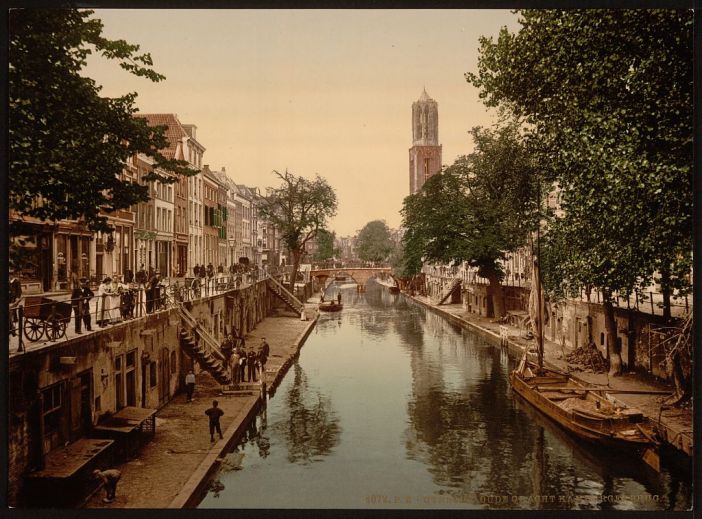
The Oudegracht c. 1890.

Colliding in a Mash Up with Nancy Drew

How absolutely delightful to discover that my poem “Nancy Drew in The Kalevala” will be included in the NANCY DREW ANTHOLOGY: A Collection of Poetry, Prose, Art & Photography Featuring Everyone’s Favorite Female Sleuth to be published by Silver BirchPress in October 2016.

Stratemeyerposing

Edward Stratemeyer conceived the character and wrote plot outlines but hired Mildred Wirt Benson to ghostwrite the first volumes in the series under the pseudonym Carolyn Keene.

CFP: Othello’s Island 2017, Nicosia Cypress

Call for Papers
Othello’s Island 2017

800px-Othello_and_Desdemona_by_Alexandre-Marie_Colin
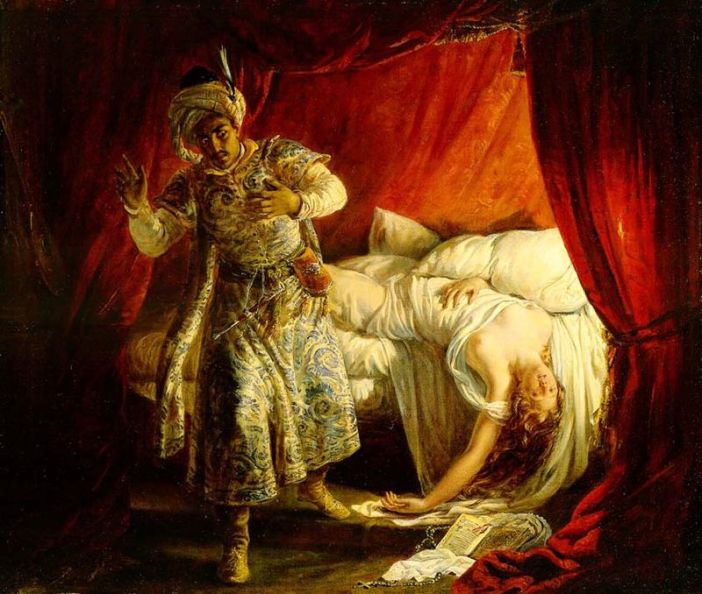
Othello and Desdemona by Alexandre-Marie Colin, 1829

The 5th annual multidisciplinary conference on medieval, renaissance and early modern studies and their later legacies

Venue: Centre for Visual Arts and Research (CVAR)

Nicosia, Cyprus, 6 to 8 April 2017

with optional historic-site visits on 9 April

Acollaborative event organised by academics from CVAR, Northern Arizona University, Sheffield Hallam University, SOAS University of London the University of Kent and the University of LeedsCFR

The deadline for submissions of proposals is 1 January 2017. Early submission is strongly advised.

CFP: Hunting for the Animal Subject

Hunting for the Animal Subject in Anglo-Saxon England: a Roundtable (Kalamazoo 2017):
52nd International Congress on Medieval Studies – Kalamazoo, MI – May 11-14, 2017

800px-Perindens.jpg

A recent trend in medieval studies and the humanities at large has been a “turn” to the animal. While medievalists have long been interested in bestiaries, beast epics, and other texts populated with nonhumans, the research that is produced is inevitably concerned with what those works say about human culture rather than what they can reveal about perceptions of animals as animals. The field of animal studies (alternatively known as critical animal theory), in contrast, focuses on how humans have sought to differentiate themselves from nonhuman animals and how this perceived seperation has determined the human treatment of and responses to nonhumans. Animal studies seeks to critique the past and present mistreatment of nonhumans but also to envision an affirmative and ethical form of response to the animal, to move beyond the hierarchical, Cartesian (and Augustinian) dualism that to date has largely defined the human-animal relationship.

While Jeffrey Jerome Cohen, Susan Crane, and Karl Steel have recently brought such concerns to bear on medieval literature in invaluable studies, the focus of their work is usually on the later Middle Ages. This roundtable discussion will thus take as its focus human-animal interactions in the literary and material culture of Anglo-Saxon England. Presenters will be invited to discuss, in a 10-minute talk, an animal-related question in their own research and to reflect on their methods for understanding how animals were perceived by the Anglo-Saxons. Given the limited corpus of written texts that survive from Anglo-Saxon England, the question of the animal in this period is by necessity a multidisciplinary one, and specialists in fields as varied as philology, literary criticism, philosophy, art history, and archaeology are welcome.

Please submit an abstract (preferably 300 words or less) as well as a completed Participant Information Form (found here: https://wmich.edu/medievalcongress/submissions) to Matt Spears (mes94@cornell.edu) no later than September 15, 2016.